Aug 2026· Zenodo (CERN European Organization for Nuclear Research)
Abstract
This dataset contains the 6-month Standardized Precipitation Index (SPI-6) monthly time series for all 331 Divisional Secretariat (DS) divisions of Sri Lanka, spanning 1981 to 2024. SPI-6 values were computed using the SPI_SL_6.exe software, developed in line with World Meteorological Organization (WMO) recommendations, from monthly precipitation data interpolated across the 331 DS-divisions via Kriging from 62 meteorological stations operated by the Department of Meteorology, Sri Lanka. The dataset supports the manuscript "SPI-Based Spatiotemporal Drought Frequency and Trends across the Divisional Secretariat Divisions in Sri Lanka" (Pramudi et al., submitted to Natural Hazards and Earth System Sciences, manuscript ID egusphere-2026-5234), which uses these SPI-6 values to derive drought frequency across five severity categories and to assess long-term monotonic trends at the DS-division scale using the Mann–Kendall test and Sen's slope estimator.
This publication proposes a definition and a classification of agile software development approaches and analyses ten software development methods that can be characterized as being "agile" against the defined criterion.
P. Abrahamsson, O. Salo, Jussi Ronkainen et al.· arXiv.org· 727 citations· ⚡54
The study shows that agile practices improve both informal and formal communication, but indicates that, in larger development situations involving multiple external stakeholders, a mismatch of adequate communication mechanisms can sometimes even hinder the communication.
M. Pikkarainen, Jukka Haikara, O. Salo et al.· Empirical Software Engineeri...· 401 citations· ⚡48
The results indicate that software engineering work practices are chosen opportunistically, adapted and configured to provide value under the constrains imposed by the startup context.
Nicolò Paternoster, Carmine Giardino, M. Unterkalmsteiner et al.· Information and Software Tec...· 394 citations· ⚡54
The results show that the embedded industry has been able to apply agile methods in its development processes and that the appreciation of the agile methods and their individual practices appears to increase once adopted and applied in practice.
O. Salo, P. Abrahamsson· IET Software· 238 citations· ⚡9
Consequences of happiness and unhappiness that are beneficial and detrimental for developers' mental well-being, the software development process, and the produced artifacts are found.
D. Graziotin, Fabian Fagerholm, Xiaofeng Wang et al.· Journal of Systems and Softw...· 236 citations· ⚡13
The Mobile-D approach is briefly outlined here and the experiences gained from four case studies are discussed, which helped develop an agile development approach for mobile application development.
P. Abrahamsson, Antti Hanhineva, H. Hulkko et al.· Conference on Object-Oriente...· 225 citations· ⚡18
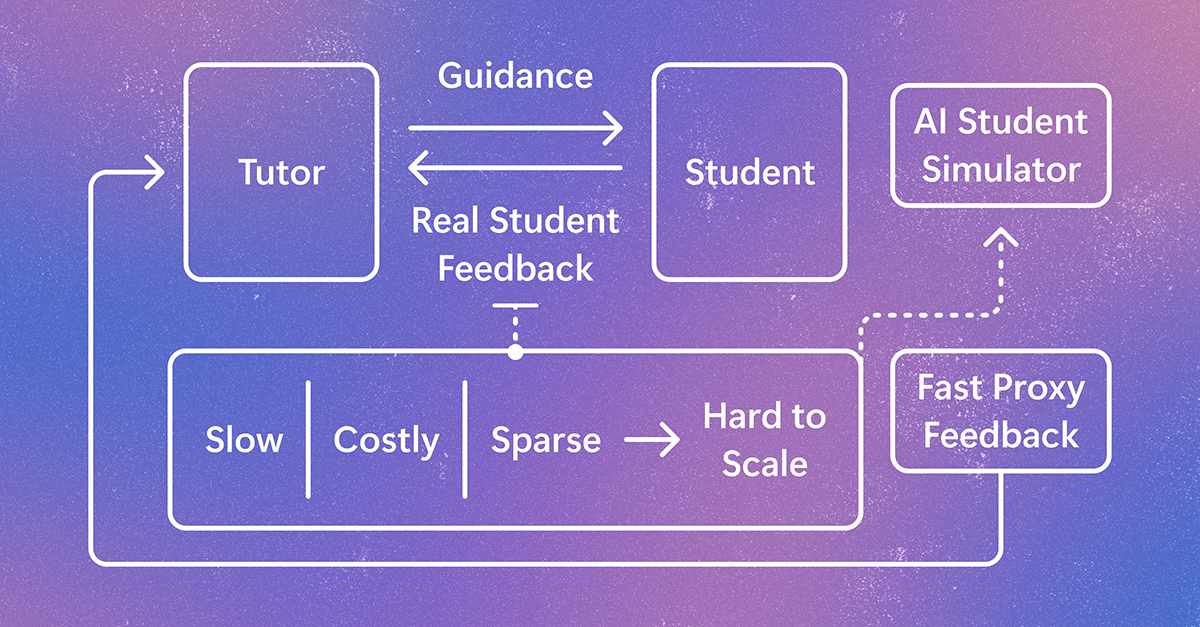
StudentSim is a research system for evaluating and improving AI tutoring tools before they are tested with learners. It models how individuals may engage with tutors, giving feedback to improve tutor performance across subjects like chess, writing, and mathematics. The post Simulating student learning for better AI tutoring appeared first on Microsoft Research.
MIT News · Artificial Intelligence· news.mit.eduOct 6, 2026
Writing as a participant and researcher, PhD student JS Tan SM ’22 has co-authored a new book about the rise of tech worker protests and the employer backlash that followed.
We use cookies to run the site and, with your consent, for analytics and to show ads.
See our Cookie Policy.