Skip to content
#federated learning Review Open access

Artificial intelligence and radiomics in lung cancer: from imaging to clinical care

Sep 2026 · Academia Medical Imaging and Radiation Therapy · 0 citations · 47 references
Radiomics and Machine Learning in Medical Imaging

Abstract

Artificial intelligence (AI) and radiomics have emerged as promising approaches in lung-cancer imaging by extracting quantitative features from routine medical images beyond visual assessment alone. Proof-of-concept studies span pulmonary nodule characterisation, molecular biomarker prediction, treatment-response assessment and prognostication, but clinical translation remains limited. This focused narrative mini-review explains the radiomics workflow, summarises representative applications and critically examines methodological, imaging-physics and implementation barriers. Attention is given to reconstruction kernel, slice thickness, radiation dose, image noise, contrast administration, segmentation and phantom-based quality assurance. Evidence remains heterogeneous and is dominated by retrospective, single-centre studies with small or selectively curated datasets, inconsistent external validation and limited assessment of incremental clinical value. Standardisation, harmonisation, explainable AI, federated learning and multimodal integration may address specific barriers but have not demonstrated reliable benefit at scale. Future research should prioritise task-matched multicentre validation, calibration, prospective workflow studies, decision impact, cost-effectiveness and patient outcomes. AI–radiomics therefore remains a promising quantitative imaging framework with established proof of concept but insufficient evidence for routine widespread implementation.

Read PDF

Similar papers

#machine learning Review Open access Oct 2014

Software development in startup companies: A systematic mapping study

The results indicate that software engineering work practices are chosen opportunistically, adapted and configured to provide value under the constrains imposed by the startup context.

Nicolò Paternoster, Carmine Giardino, M. Unterkalmsteiner et al. · 394 citations · ⚡54
#machine learning Review Open access Jun 2014

Why Early-Stage Software Startups Fail: A Behavioral Framework

This state-of-practice investigation was performed using a literature review followed by a multiple-case study approach and presents how inconsistency between managerial strategies and execution can lead to failure by means of a behavioral framework.

Carmine Giardino, Xiaofeng Wang, P. Abrahamsson · 175 citations · ⚡19
#machine learning Review Open access Oct 2016

“Failures” to be celebrated: an analysis of major pivots of software startups

This study conducts a case survey study based on the secondary data of the major pivots happened in 49 software startups, and demonstrates that customer need pivot is the most common among all pivot types.

Sohaib Shahid Bajwa, Xiaofeng Wang, Anh Nguyen-Duc et al. · 127 citations · ⚡15
#machine learning Review Open access May 2016

Key Challenges in Software Startups Across Life Cycle Stages

It is found that what perceived as biggest challenges by software startups do vary across different life cycle stages, even though its significance decreases when the learning focuses of the startups move from problem to solution and their products mature.

Xiaofeng Wang, Henry Edison, Sohaib Shahid Bajwa et al. · 62 citations · ⚡6

Related blog posts

Microsoft Research Blog Sep 30, 2026

Forecasting space weather risks on power grids

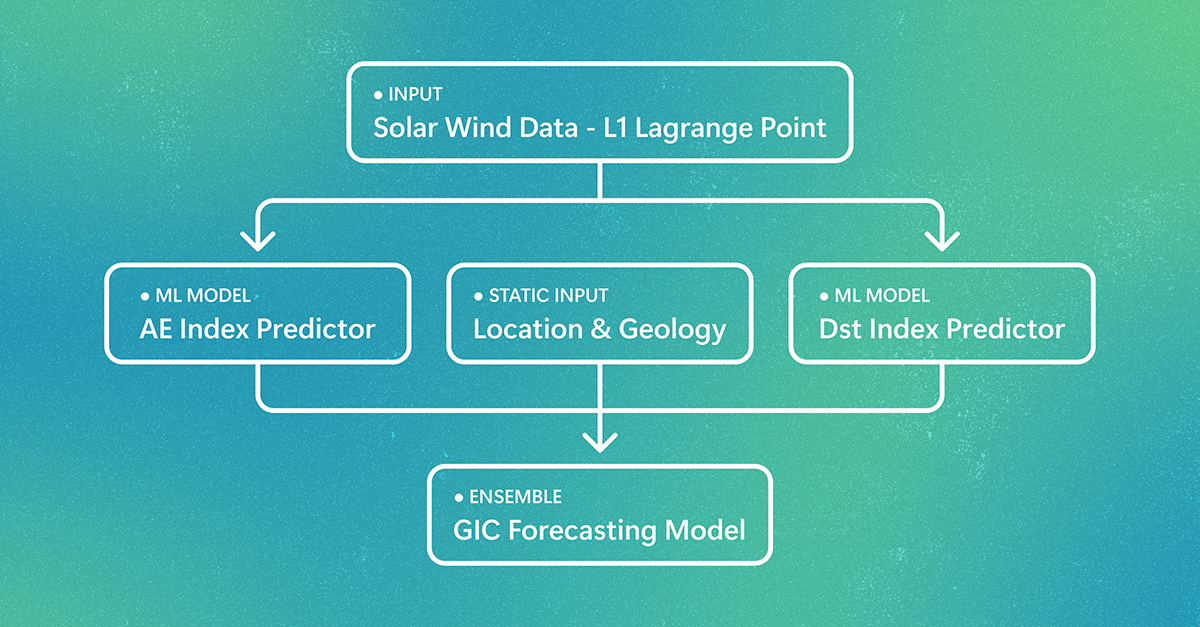
Extreme space-weather events can damage power systems on Earth and degrade GPS accuracy and satellite operations. A new machine learning system can predict where damage is likely to occur 30-60 minutes before a storm arrives. The post Forecasting space weather risks on power grids appeared first on Microsoft Research.

We use cookies to run the site and, with your consent, for analytics and to show ads. See our Cookie Policy.