This paper proposes FedCAMP-IDS, a Federated Cluster-Aware Memory-Augmented Prototypical Network for privacy-preserving intrusion detection in distributed network environments, and integrates Cluster-Aware Contrastive Pretraining, memory-augmented few-shot prototypical learning, adaptive prototype mixing, and Extreme Value Theory-based open-set recognition within a unified federated learning architecture.
Federated learning (FL) is a promising approach for IoT intrusion detection because it enables distributed clients to collaboratively train models without pooling raw network-flow records. However, IoT traffic is often heterogeneous across monitoring sites, devices, and attack scenarios, which can degrade federated mod...
Hassan A. Shafei· 2026 IEEE 1st International...· 0 citations
AF-BKM is presented, an Adaptive Federated Baseline K-Means that repairs the federated mechanism with two label-free, statistics-only enhancements, and identifies merge-induced precision decay under non-IID workers as an open gap.
Federated Bandit Intrusion Detection (FBID), a novel adaptive PFL framework to address this limitation through server-side personalization control, employs a contextual multi-armed bandit at the server to dynamically regulate each client's local training intensity according to its observed behavior and update quality.
A. Bui, C. T. Nguyen, Hoang-Anh Pham et al.· 0 citations
The Internet of Things (IoT) generates massive, privacy-sensitive traffic across heterogeneous, resource-constrained devices, making centralized intrusion detection systems (IDS) increasingly impractical due to scalability, latency, and privacy limitations. Existing federated learning (FL) based IDS solutions partially...
Healthcare Internet of Things (HIoT) deployments generate sensitive patient telemetry data on resource-constrained edge devices, which are prime targets for network intrusions. Centralizing raw telemetry for training intrusion detection system (IDS) models violates patient privacy and contravenes data-protection regula...
Nutan Gusain, J. Alzubi· International Journal on Com...· 0 citations
Related blog posts
MIT News · Artificial Intelligence· news.mit.eduOct 2, 2026
Martin Trust Center Managing Director Bill Aulet introduces Dear Dreamer, a free platform for middle and high school students who want to learn about entrepreneurship.
Microsoft Research Blog· microsoft.comSep 30, 2026
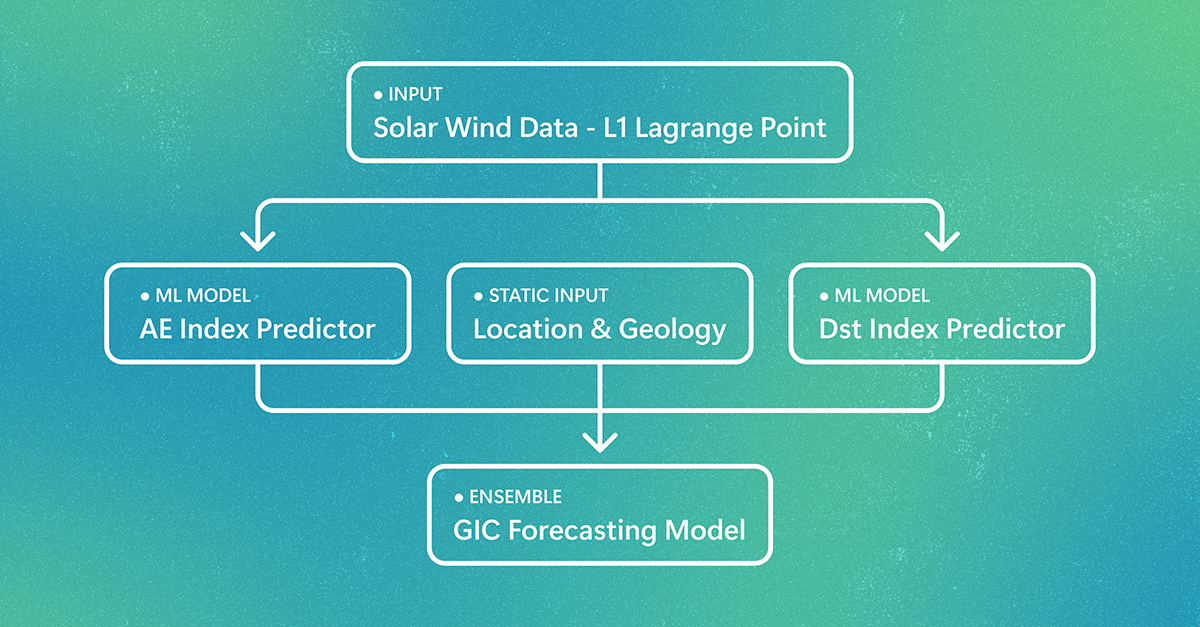
Extreme space-weather events can damage power systems on Earth and degrade GPS accuracy and satellite operations. A new machine learning system can predict where damage is likely to occur 30-60 minutes before a storm arrives. The post Forecasting space weather risks on power grids appeared first on Microsoft Research.
We use cookies to run the site and, with your consent, for analytics and to show ads.
See our Cookie Policy.