Encrypted training relies on keeping server-side updates low-degree. This constraint traditionally excludes models whose weights inhabit a compact Lie group (notably variational quantum circuits, where every trainable weight is an $\mathrm{SU(2)}$ rotation). Expressed in Euler angles or discrete alphabets, these updates appear transcendental, historically demanding prohibitive costs: one client--server round per gate, or upwards of $25{,}000$ operations per weight. This penalty is strictly an artefact of coordinates. In the unit-quaternion (spin) chart, group composition is exactly bilinear (degree two, with coefficients in $\{-1,0,+1\}$). Consequently, encrypted rotation updates cost one multiplicative level and federated averaging costs zero in any levelled homomorphic scheme, completely eliminating bootstrapping. This implementation-independent algebraic property is confirmed across two cryptographic backends, introducing only $0.0$ and $-2.0\times10^{-12}$ rad of aggregation error. Leveraging this reduction yields a non-interactive protocol for encrypted federated training of hybrid quantum--classical networks. It includes correctness proofs for aggregation and sign handling, plus a compilation lemma proving parameterised entanglers add only constant-factor overhead without altering the depth class. Empirically, a paired five-seed study confirms zero measurable utility tax ($\Delta=+9\times10^{-6}$ MSE, $p=0.92$), and a noise-budget ablation falsifies the hypothesis that encryption noise regularises. These convergence trends replicate across datasets and scale to $20$ clients. Finally, hardware validation on a $156$-qubit processor achieves $0.9918$ fidelity against a $0.99957$ unencrypted control.
This publication proposes a definition and a classification of agile software development approaches and analyses ten software development methods that can be characterized as being "agile" against the defined criterion.
P. Abrahamsson, O. Salo, Jussi Ronkainen et al.· arXiv.org· 727 citations· ⚡54
The study shows that agile practices improve both informal and formal communication, but indicates that, in larger development situations involving multiple external stakeholders, a mismatch of adequate communication mechanisms can sometimes even hinder the communication.
M. Pikkarainen, Jukka Haikara, O. Salo et al.· Empirical Software Engineeri...· 401 citations· ⚡48
The results indicate that software engineering work practices are chosen opportunistically, adapted and configured to provide value under the constrains imposed by the startup context.
Nicolò Paternoster, Carmine Giardino, M. Unterkalmsteiner et al.· Information and Software Tec...· 394 citations· ⚡54
The possibility of inferring high-dimensional data inference in a model that consists of a prior and an auxiliary differentiable constraint given some additional information is considered, thereby allowing a range of potential applications in adapting models to new domains and tasks.
Alexandros Graikos, Esmeralda S. Whitammer, N. Jojic et al.· Neural Information Processin...· 316 citations· ⚡15
A weeklong summer workshop brought higher education faculty to campus to explore how AI and machine learning materials can be adapted for their classrooms.
MIT News · Artificial Intelligence· news.mit.eduAug 27, 2026
A new machine-learning framework aims to improve the success rate of computational protein design while moving away from results that reproduce sequences found in nature.
Microsoft Research Blog· microsoft.comAug 20, 2026
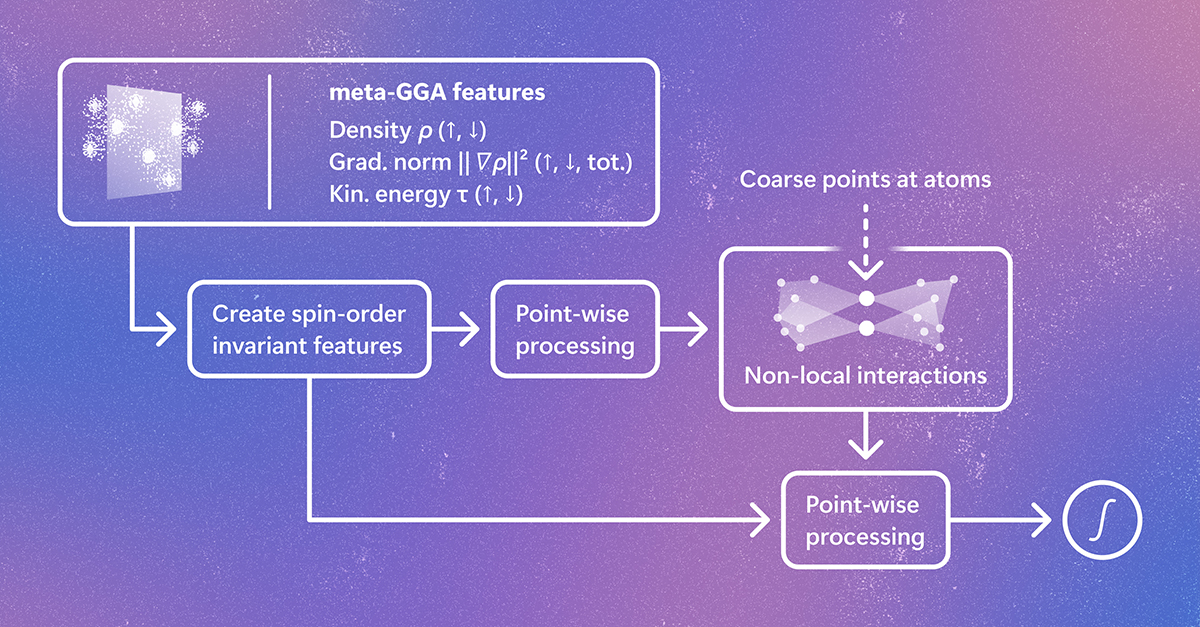
Skala 1.1, the updated deep-learning exchange-correlation functional from Microsoft Research, provides greater accuracy, expanded accessibility across the computational chemistry ecosystem, and a living benchmark to track computational performance. The post Broadening access to Skala creates a faster path to predictive DFT appeared first on Microsoft Research.
We use cookies to run the site and, with your consent, for analytics and to show ads.
See our Cookie Policy.