Skip to content

Scale-invariant Gaussian derivative residual networks

Mar 2026 · arXiv.org · Vol abs/2603.02843 · 0 citations · 97 references
Computer Science

TL;DR

This paper presents provably scale-invariant Gaussian derivative residual networks (GaussDerResNets), constructed out of scale-covariant Gaussian derivative residual blocks coupled in cascade, aimed at addressing the topic of multi-object detection in a provably scale-invariant manner.

Abstract

Generalisation across image scales remains a fundamental challenge for deep networks, which often fail to handle images at scales not seen during training (the out-of-distribution problem). In this paper, we present provably scale-invariant Gaussian derivative residual networks (GaussDerResNets), constructed out of scale-covariant Gaussian derivative residual blocks coupled in cascade, aimed at addressing this problem. By adding residual skip connections to the previous notion of Gaussian derivative layers, deeper networks with substantially increased accuracy can be constructed, while preserving very good scale generalisation properties. Explicit proofs are provided for the underlying scale-covariant and scale-invariant properties in arbitrary dimensions. To analyse the ability of GaussDerResNets to generalise to new scales, we apply them on a new rescaled version of the STL-10 dataset, where training is done at a single fixed scale and evaluation is performed on copies of the test set, each rescaled to a distinct spatial scale, with scale factors extending over a range of 4. We also conduct similar systematic experiments on the rescaled versions of Fashion-MNIST and CIFAR-10 datasets, and the existing STIR datasets. Experimentally, we demonstrate that the GaussDerResNets have strong scale generalisation and scale selection properties on all the four considered datasets with scaling variations. In our ablation studies, we investigate different architectural variants of GaussDerResNets, demonstrating that basing the architecture on depthwise-separable convolutions reduces the number of parameters and computations, with reasonably maintained accuracy and scale generalisation. We conclude by outlining how the proposed GaussDerResNets can be extended to joint local spatial and scale selection, to address the topic of multi-object detection in a provably scale-invariant manner.


View source

Similar papers

#artificial intelligence Conference Open access Jun 2018

Gibson Env: Real-World Perception for Embodied Agents

This paper investigates developing real-world perception for active agents, proposes Gibson Environment for this purpose, and showcases a set of perceptual tasks learned therein.

F. Xia, Amir Zamir, Zhi-Yang He et al. · 1,069 citations · ⚡112
#computer vision Review Sep 2017

Agile Software Development Methods: Review and Analysis

This publication proposes a definition and a classification of agile software development approaches and analyses ten software development methods that can be characterized as being "agile" against the defined criterion.

P. Abrahamsson, O. Salo, Jussi Ronkainen et al. · 727 citations · ⚡54
#computer vision Jun 2008

The impact of agile practices on communication in software development

The study shows that agile practices improve both informal and formal communication, but indicates that, in larger development situations involving multiple external stakeholders, a mismatch of adequate communication mechanisms can sometimes even hinder the communication.

M. Pikkarainen, Jukka Haikara, O. Salo et al. · 401 citations · ⚡48
#machine learning Review Open access Oct 2014

Software development in startup companies: A systematic mapping study

The results indicate that software engineering work practices are chosen opportunistically, adapted and configured to provide value under the constrains imposed by the startup context.

Nicolò Paternoster, Carmine Giardino, M. Unterkalmsteiner et al. · 394 citations · ⚡54

Diffusion models as plug-and-play priors

The possibility of inferring high-dimensional data inference in a model that consists of a prior and an auxiliary differentiable constraint given some additional information is considered, thereby allowing a range of potential applications in adapting models to new domains and tasks.

Alexandros Graikos, Esmeralda S. Whitammer, N. Jojic et al. · 316 citations · ⚡15

Related blog posts

MIT News · Artificial Intelligence Oct 28, 2026

Making machines that can listen

Professor Paris Smaragdis develops computers with superhuman hearing for applications like speech recognition, music understanding, and environmental monitoring.

Microsoft Research Blog Aug 11, 2026

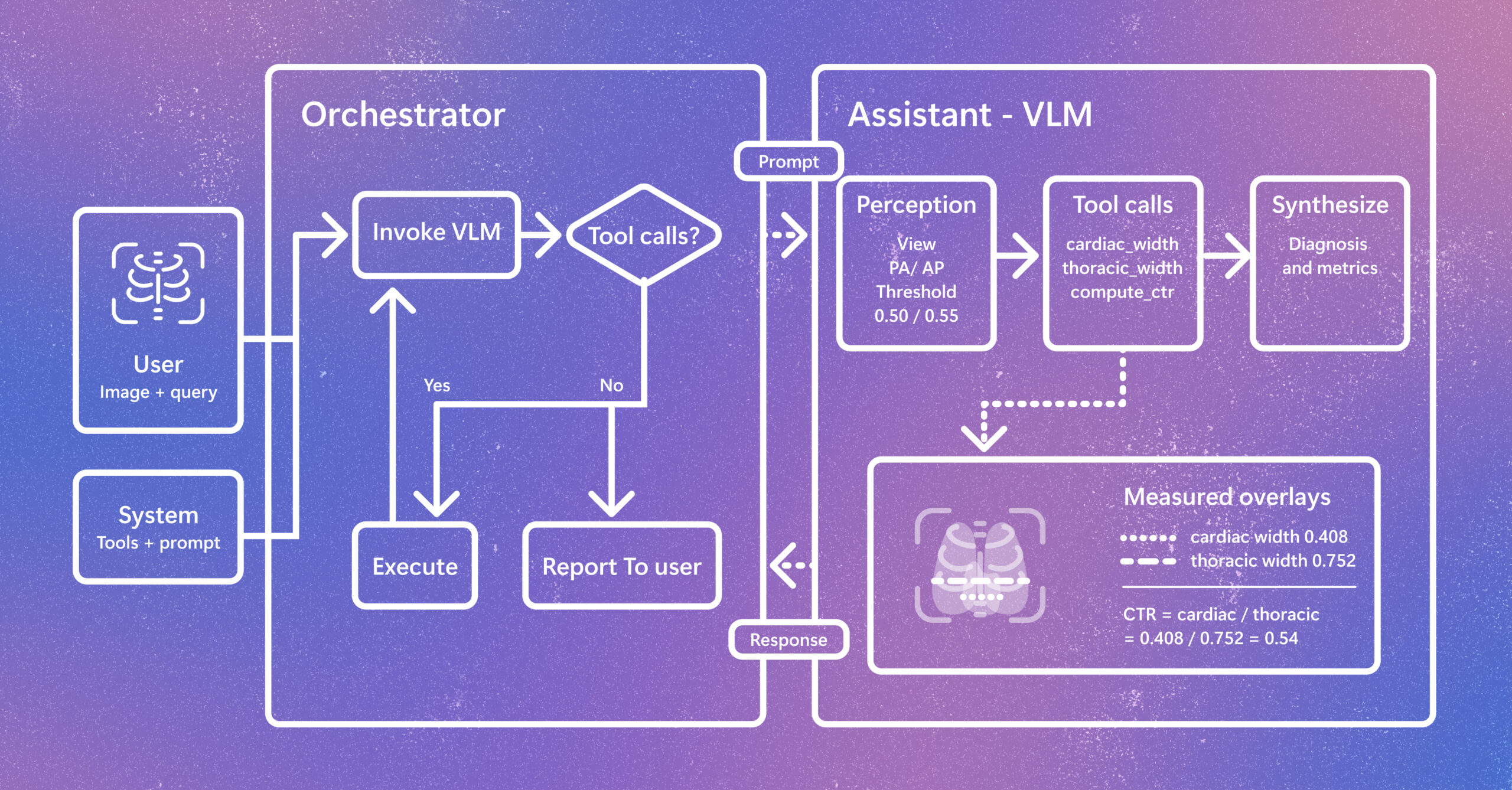
Introducing CARE-X: Towards Clinically Useful Radiology VLMs with Auxiliary Supervision, Reward-Aligned Learning, and Tool-Augmented Measurement

Radiology AI is evolving beyond report generation. CARE-X explores a unified approach that combines flexible reasoning, calibrated predictions, and measurement-based tools for chest X-ray interpretation. The post Introducing CARE-X: Towards Clinically Useful Radiology VLMs with Auxiliary Supervision, Reward-Aligned Learning, and Tool-Augmented Measurement appeared first on Microsoft Research.

We use cookies to run the site and, with your consent, for analytics and to show ads. See our Cookie Policy.