Skip to content

FAVoR: Measuring and Mitigating Author-Style Homogenization in Federated Personalized Generation

Sep 2026 · 0 citations · 29 references
Computer Science

TL;DR

FAVoR (Federated Authorial Voice Retention), an author-style residual mechanism for federated PEFT, improves author-style retention over standard and personalized federated PEFT baselines and is supported by component ablations, external verification, and cold-start transfer.

Abstract

Large language models are increasingly used as personalized writing assistants, but adapting a model across many authors can compromise individual writing style by pulling author-specific signals toward a shared register. Federated parameter-efficient fine-tuning (PEFT) offers a data-local setting for this multi-author adaptation problem: clients keep author text local while sharing compact adapter updates. However, we show that standard aggregation can preserve continuation utility while making different authors'generations less distinguishable in style space, a failure mode we define as author-style homogenization. We evaluate author-style retention with Angular Style Classification Encoder (ASCE)-based diagnostics on our main BlogText benchmark and ASCE-independent external authorship verification. Using this protocol, we find that common federated PEFT baselines can preserve semantic utility while averaging out author-specific signals. To address this homogenization, we instantiate FAVoR (Federated Authorial Voice Retention), an author-style residual mechanism for federated PEFT. FAVoR uses a shared-private adapter design: clients upload shared-adapter updates while retaining author-specific residual corrections locally. Across BlogText and external Mythos-Reddit validation, FAVoR improves author-style retention over standard and personalized federated PEFT baselines. These gains come with small continuation-utility trade-offs and are supported by component ablations, external verification, and cold-start transfer.


View source

Similar papers

#natural language process... Preprint Sep 2026

HyperStyler: Low-resource Authorship Style Transfer via Context-aware Style Navigation and Hypernetworks

This work proposes HyperStyler, a novel architecture that decouples LAST into style selection and style realization, and demonstrates that HyperStyler consistently outperforms prior methods including LLM-based approaches and generalizes robustly across domains.

Jongkyung Shin, Minguk Jeon, Chanwoo Park et al. · 0 citations
#generative ai Open access Sep 2026

FedMuse: A Privacy-Aware Federated Framework for Multi-Style Text-to-Image Art Generation

FedMuse is proposed, a privacy-aware federated framework for multi-style text-to-image art generation, in which distributed clients collaboratively train a shared generative model while keeping their private art data local, and an adaptive privacy regularizer is introduced to reduce memorization risk while maintaining...

Shu-Yi Wang, Bao-Ping Wang · 0 citations
Preprint Aug 2026

PersonalBench: Measuring the Authorship Gap in LLM Personalization

PersonalBench is introduced, a benchmark that evaluates inference-time personalization methods through three independent lenses: LUAR (a trained authorship verification model), an LLM-as-judge, and automated stylometrics, which finds that personalization methods do produce author-differentiated output but this differen...

Yashwant Sawant · 1 citation
Review Open access Aug 2026

EchoTwin Privacy-Aware Personalized Email Reply Generation with Low Rank Adaptation

Email continues to serve as a primary medium for both professional and personal communication. Although contemporary assistance systems, including Smart Reply and Smart Compose, enhance writing efficiency, they generally do not explicitly model or adapt to an individual’s unique communication patterns. This paper prese...

Thomas Iskander, Mohammed Abdelwahab, Hanaa A. Atwa et al. · 0 citations
Book Open access Sep 2026

GradSup: Gradient Superposition for Personalised and Scalable LLM Recommendation

Experiments conducted on movie, book and electronics benchmark datasets demonstrate that GradSup outperforms iterative fine-tuning to provide scalable and personalised recommendation that is consistently sustained above the frozen LLM backbone.

Kanishka Dandeniya, C. Dasanayaka, Daswin de Silva et al. · 0 citations
Book Open access Aug 2026

A Unified Model for Personalization: Language-Steerable Generative Recommendation, Search, and User Understanding

NEO is introduced, a framework that adapts a pre-trained decoder-only LLM into a tool-free, catalog-grounded generator and treats SIDs as a distinct modality and study design choices for integrating discrete entity representations into LLMs via staged alignment and instruction tuning.

Marco De Nadai, Edoardo D'Amico, Maksym Lefarov et al. · 0 citations

Related blog posts

Microsoft Research Blog Oct 22, 2026

Flint-interactive: A language for creating interactive data visualizations

Flint-interactive gives AI agents a language for creating interactive visualizations. Click a chart, filter data, highlight related content, and explore beyond the view the author originally chose. The post Flint-interactive: A language for creating interactive data visualizations appeared first on Microsoft Research.

MIT News · Artificial Intelligence Oct 15, 2026

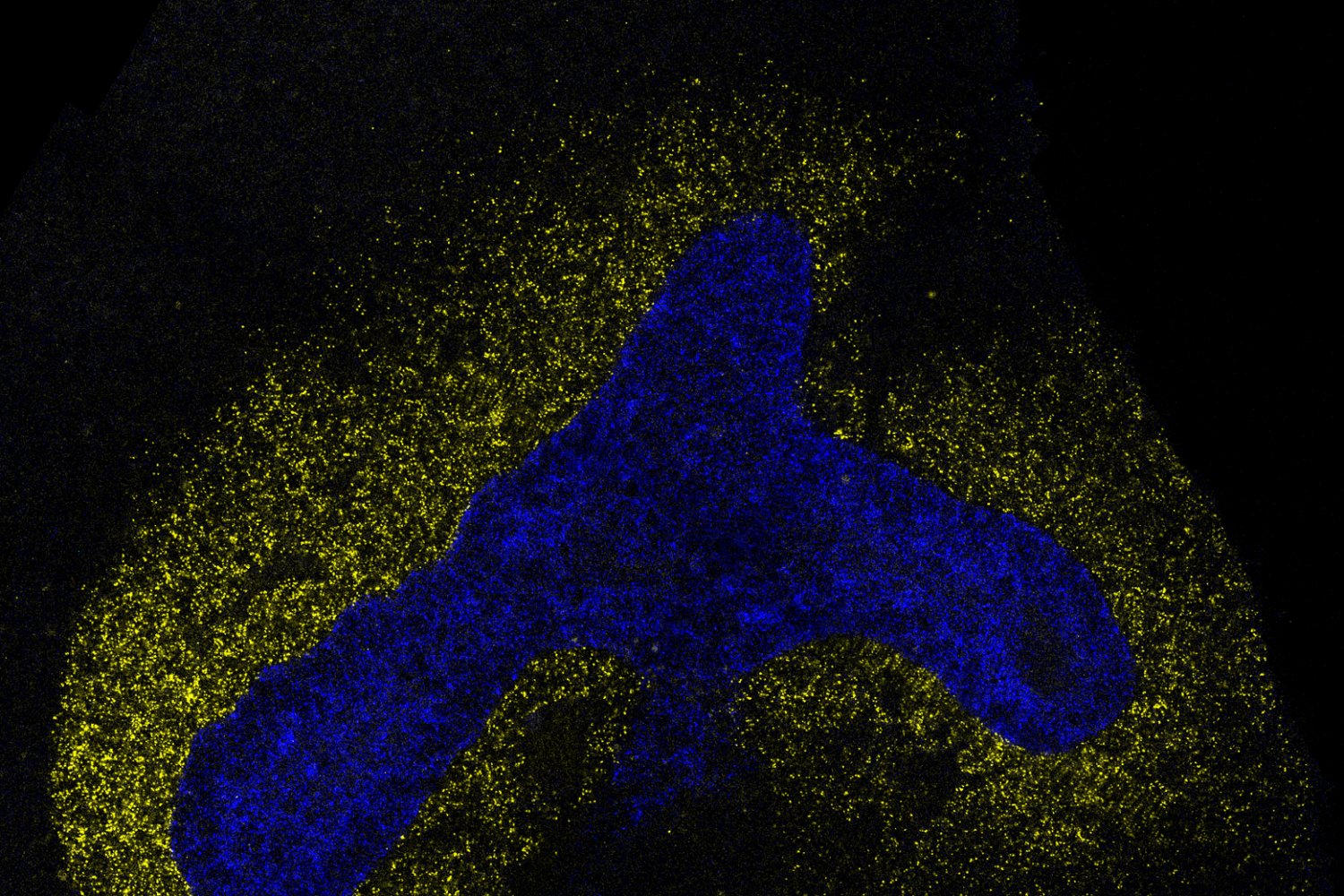
AI model decodes the language cells use to communicate

A new computational approach reveals how cells communicate to assemble into tissues. This could accelerate stem cell engineering, improve disease models, and inform therapies.

Microsoft Research Blog Oct 15, 2026

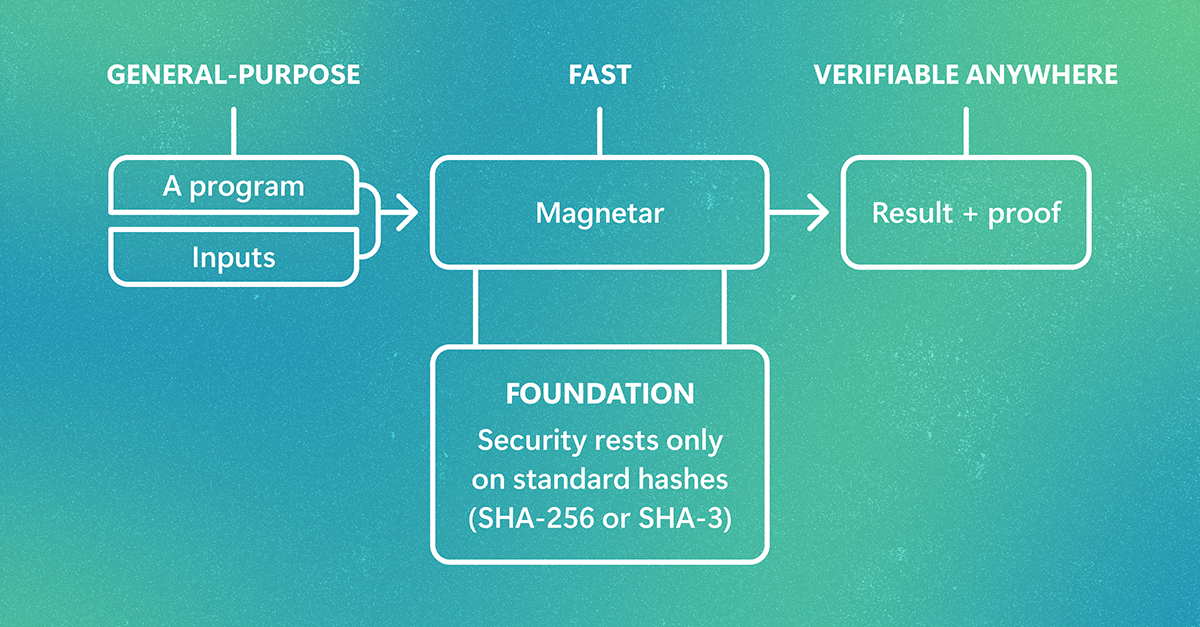
Proof-based general-purpose computing with Magnetar

Zero-knowledge proofs can verify computing results without rerunning workloads or exposing sensitive data. Magnetar helps bring them into the mainstream with support for standard programming languages, major speed gains, and quantum-resistant security. The post Proof-based general-purpose computing with Magnetar appeared first on Microsoft Research.

We use cookies to run the site and, with your consent, for analytics and to show ads. See our Cookie Policy.