Skip to content

Performance changes in automated lesion detection under federated learning with sequential institution addition.

Sep 2026 · International Journal of Computer Assisted Radiology and Surgery · 0 citations · 15 references
Medicine

TL;DR

Sequential institution addition under FL may improve CAD software performance when combined with appropriate FT strategies, and FT that updates only a subset of layers may achieve performance changes comparable to those of FFT while requiring substantially fewer trainable parameters across different lesion detection tasks.
Abstract

Purpose

Federated learning (FL) enables multiple institutions to collaboratively train machine learning models while keeping data local and has attracted attention in medical image processing, including computer-aided detection (CAD). In FL, performance is expected to improve through retraining as additional institutions participate. The purpose of this study was to investigate how CAD software performance changes as the number of participating institutions is sequentially increased within an FL framework.

Methods

We used two types of CAD software for cerebral aneurysm detection in magnetic resonance (MR) angiography images and brain metastasis detection in contrast-enhanced T1-weighted MR images. Datasets from different institutions or scanner vendors were treated as independent FL clients and incorporated sequentially. Training strategies included from-scratch training, fine-tuning (FT) of selected layers, and full fine-tuning (FFT) of all parameters. Performance was assessed using the competition performance metric on test sets from the initial institutions as well as from all participating institutions.

Results

For both CAD software types, sequential institution addition combined with FT generally showed higher median performance changes than from-scratch training. FT showed performance comparable to that of FFT while requiring substantially fewer trainable parameters. Performance improvements generally accumulated with sequential institution addition, whereas simultaneous addition resulted in less consistent improvements.

Conclusions

Sequential institution addition under FL may improve CAD software performance when combined with appropriate FT strategies. FT that updates only a subset of layers may achieve performance changes comparable to those of FFT while requiring substantially fewer trainable parameters across different lesion detection tasks.

Read PDF

Similar papers

Sep 2026

Spectral CTPA-based multi-modal deep learning model for acute pulmonary embolism detection and segmentation.

OBJECTIVES To develop a multi-modal deep learning (DL) model based on spectral CTPA for automated detection and segmentation of acute pulmonary embolism (APE). METHODS In this retrospective study, 526 participants (126 with APE) who underwent spectral CTPA across three cohorts were included and assigned to training,...

Pengxin Yu, Hai-Bo Xiao, Peng-Yu Wu et al. · 0 citations
Open access Sep 2026

LPC-transformer: a training strategy optimized framework for multiclass pneumonia medical image classification

Lung imaging enables direct visualization of lesions and is vital for pneumonia diagnosis. However, current deep learning models show unsatisfactory classification accuracy and generalization for multi-class lung disease recognition, limiting their clinical decision-support value. To tackle this issue, we present LPC-T...

Hong-Wei Chang, Tao Hu · 0 citations
Aug 2026

Attention Mechanism-Enhanced Deep Learning for the Differential Diagnosis of Idiopathic Pulmonary Fibrosis on Computed Tomography.

INTRODUCTION/OBJECTIVE Many other diseases can produce a similar pattern; therefore, the diagnosis of IPF is made by exclusion, based on the absence of alternative pathologies. To differentiate IPF from other pathologies, the study developed a deep learning model with an attention mechanism to improve performance. ME...

Hüseyin Alper Kızıloğlu, Kenan Zengin · 0 citations

Related blog posts

MIT News · Artificial Intelligence Oct 2, 2026

Documenting the tech worker movement

Writing as a participant and researcher, PhD student JS Tan SM ’22 has co-authored a new book about the rise of tech worker protests and the employer backlash that followed.

Microsoft Research Blog Sep 30, 2026

Forecasting space weather risks on power grids

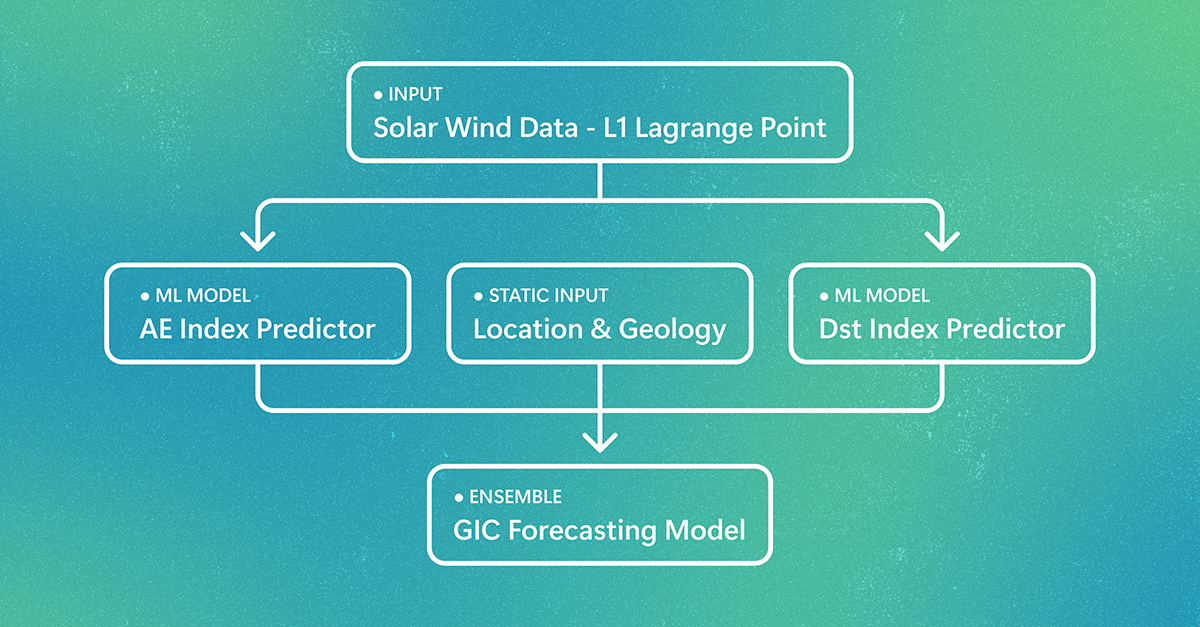
Extreme space-weather events can damage power systems on Earth and degrade GPS accuracy and satellite operations. A new machine learning system can predict where damage is likely to occur 30-60 minutes before a storm arrives. The post Forecasting space weather risks on power grids appeared first on Microsoft Research.

We use cookies to run the site and, with your consent, for analytics and to show ads. See our Cookie Policy.