Skip to content

SkillRubric: Co-Evolving Actor Guidance and Evaluator Rubrics for Multimodal Agents

Sep 2026 · 0 citations · 57 references
Computer Science

Abstract

Recent work incorporates reusable skills distilled from past interactions into multimodal agent training, providing procedural guidance for long-horizon planning and tool use. However, policy optimization in these methods remains driven primarily by sparse outcome rewards, providing little supervision for intermediate decisions. Rubric-based rewards address this limitation through explicit intermediate criteria, but reliable rubrics are difficult to construct at scale and often disconnected from the procedure followed by the actor. We observe that a well-structured skill naturally specifies both how to act and what successful execution should achieve. Based on this insight, we introduce SkillRubric, which represents each skill through aligned actor-facing guidance and an evaluator-facing rubric. A multimodal verifier evaluates skill-defined goals using screenshots and tool outputs, assigning completion and progress rewards to the responsible turns. We further introduce an alternating co-evolution scheme that validates guidance revisions through paired rollouts under a frozen policy and rubric revisions offline under fixed guidance. Experiments across diverse multimodal agent benchmarks demonstrate consistent performance gains, while controlled paired rollouts further show that evolved skills provide more effective guidance for planning and tool use than their preceding versions.


View source

Similar papers

#artificial intelligence Open access May 2023

Evaluating the Performance of Large Language Models on GAOKAO Benchmark

GAOKAO-Bench is introduced, an intuitive benchmark that employs questions from the Chinese GAOKAO examination as test samples, including both subjective and objective questions that contribute a robust evaluation benchmark for future large language models and offers valuable insights into the advantages and limitations...

Xiaotian Zhang, Chun-yan Li, Yi Zong et al. · 216 citations · ⚡17
#artificial intelligence Open access Jul 2024

Gender, Race, and Intersectional Bias in Resume Screening via Language Model Retrieval

This work investigates the possibilities of using LLMs in a resume screening setting via a document retrieval framework that simulates job candidate selection and finds that the MTEs are biased, significantly favoring White-associated names in 85% of cases and female-associated names in only 11.1% of cases.

Kyra Wilson, Aylin Caliskan · 131 citations · ⚡8

PRISM: Self-Pruning Intrinsic Selection Method for Training-Free Multimodal Data Selection

Empirically, PRISM reduces the end-to-end time for data selection and model tuning to just 30% of conventional pipelines, and achieves this efficiency while simultaneously enhancing performance, surpassing models fine-tuned on the full dataset across eight multimodal and three language understanding benchmarks.

Jinhe Bi, Yifan Wang, Danqi Yan et al. · 73 citations · ⚡4

Grammar-Aligned Decoding

This paper proposes adaptive sampling with approximate expected futures (ASAp), a decoding algorithm that guarantees the output to be grammatical while provably producing outputs that match the conditional probability of the LLM's distribution conditioned on the given grammar constraint.

Kanghee Park, Jiayu Wang, Taylor Berg-Kirkpatrick et al. · 70 citations · ⚡5
#artificial intelligence Conference Open access Apr 2020

ECCOLA - a Method for Implementing Ethically Aligned AI Systems

The method, ECCOLA, is presented, which aims at making the high-level AI ethics principles more practical, making it possible for developers to more easily implement them in practice.

Ville Vakkuri, Kai-Kristian Kemell, P. Abrahamsson · 64 citations · ⚡6

Let the Flows Tell: Solving Graph Combinatorial Optimization Problems with GFlowNets

This paper designs Markov decision processes (MDPs) for different combinatorial problems and proposes to train conditional GFlowNets to sample from the solution space and demonstrates that GFlowNet policies can efficiently find high-quality solutions.

Dinghuai Zhang, H. Dai, Esmeralda S. Whitammer et al. · 59 citations · ⚡8

Related blog posts

MIT News · Artificial Intelligence Sep 29, 2026

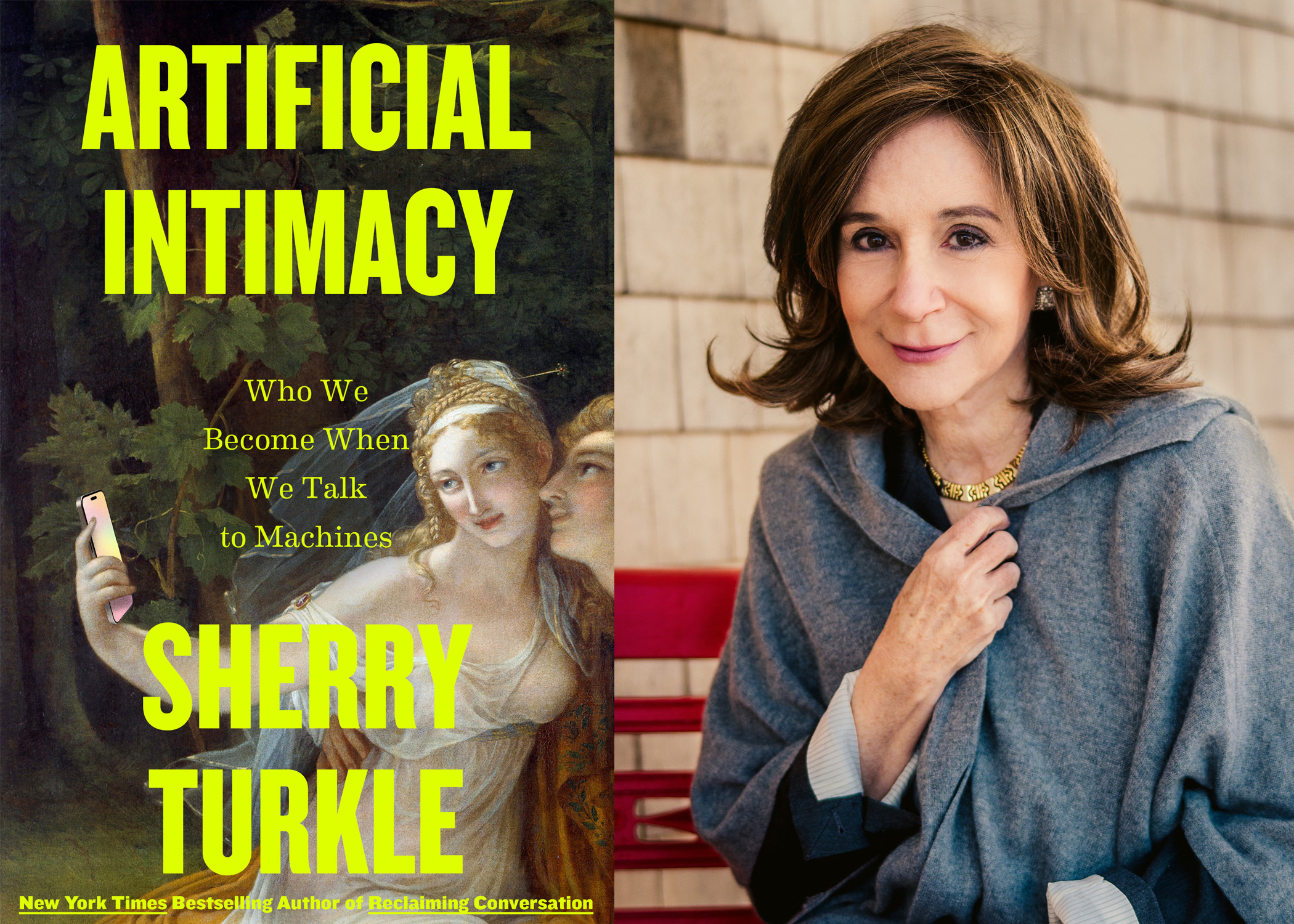
Who we become when we talk to machines

Professor Sherry Turkle’s new book, “Artificial Intimacy,” offers a withering critique of chatbots and the antisocial dynamics she believes they encourage.

We use cookies to run the site and, with your consent, for analytics and to show ads. See our Cookie Policy.