Skip to content

Handwritten Digit Leakage from Smartphone Motion Sensors Across Unseen Users and Phone Models

Sep 2026 · 0 citations · 34 references
Computer Science

TL;DR

Digits are thus predictable beyond familiar users and phone models under assumed segmentation, while acquisition-order shortcuts limit conclusions about practical privacy exposure.

Abstract

Smartphone motion sensors support interactive applications, but their readings may also reveal touchscreen input beyond their intended use. Assuming known drawing intervals, we study whether handwritten digits remain predictable across users and devices, as a 10-class problem on 19,628 HuMIdb recordings from 481 participants. We compare handcrafted features with classical machine learning algorithms, MiniRocket kernels, and a compact sensor patch transformer on accelerometer, linear acceleration, gyroscope, and gravity signals. The transformer achieves 57.74\% accuracy and 82.64\% top-3 accuracy on 75 unseen participants, and 58.77$\pm$0.95\% over 3 seeds for unseen participants on 9 unseen phone models. Low motion recordings remain informative, accuracy is not monotonic in motion level, and the tested contrastive pretraining, augmentation, and derived signals give no consistent gains. Digits are thus predictable beyond familiar users and phone models under assumed segmentation, while acquisition-order shortcuts limit conclusions about practical privacy exposure. Code available at: https://github.com/Arritmic/motion-digit-leakage.

View source

Similar papers

Open access Sep 2026

Investigation of Word Recognition Methods for Japanese Fingerspelling Using Large Language Models

A visual-language integration framework that combines dynamic visual representations derived from a single RGB video stream with the lexical knowledge of Large Language Models (LLMs), allowing the language model to compensate for uncertainty or errors in the visual representation.

You-Sun Kang, Renta Kuzuyama, Naoto Tsuta et al. · 0 citations
Sep 2026

Empirical Limitations of Gesture-Driven Air-Writing for Mathematical Symbol Recognition on Edge Devices

Advances in computer vision have made contactless, hardware-free interaction with computers increasingly viable, with applications in education, medicine, and virtual reality. However, high classification accuracy on curated benchmark datasets may not reliably reflect real-world usability. This study evaluates that gap...

Muhammad Hamza, Hafiz Azfar Umar Sheikh, M. Asif · 0 citations
Conference Sep 2026

Smart-Glasses IMU Streams as Cybersecurity Side Channels

Smart glasses continuously collect inertial signals for head tracking, stabilization, interaction, and context awareness. From a cybersecurity perspective, these apparently operational signals form a behavioral side channel: they may allow an untrusted application or compromised sensing pipeline to infer what a user is...

Siva Durga Adduri, Habiba Elsayed, Sakina Bagalkot et al. · 0 citations

Non-Invasive Hand Gestures Recognition With Machine Learning Algorithms

This study introduces an innovative, non-contact, and privacy-preserving hand gesture recognition system that leverages X-band and S-band radar technology and machine learning algorithms.

H. Hameed, Mostafa Elsayed, Muhamamd Farooq et al. · 0 citations

Related blog posts

MIT News · Artificial Intelligence Nov 17, 2026

Learning the language of machine learning

By studying the computational foundations of language learning, Associate Professor Jacob Andreas builds intelligent systems that can communicate effectively with humans.

Microsoft Research Blog Nov 16, 2026

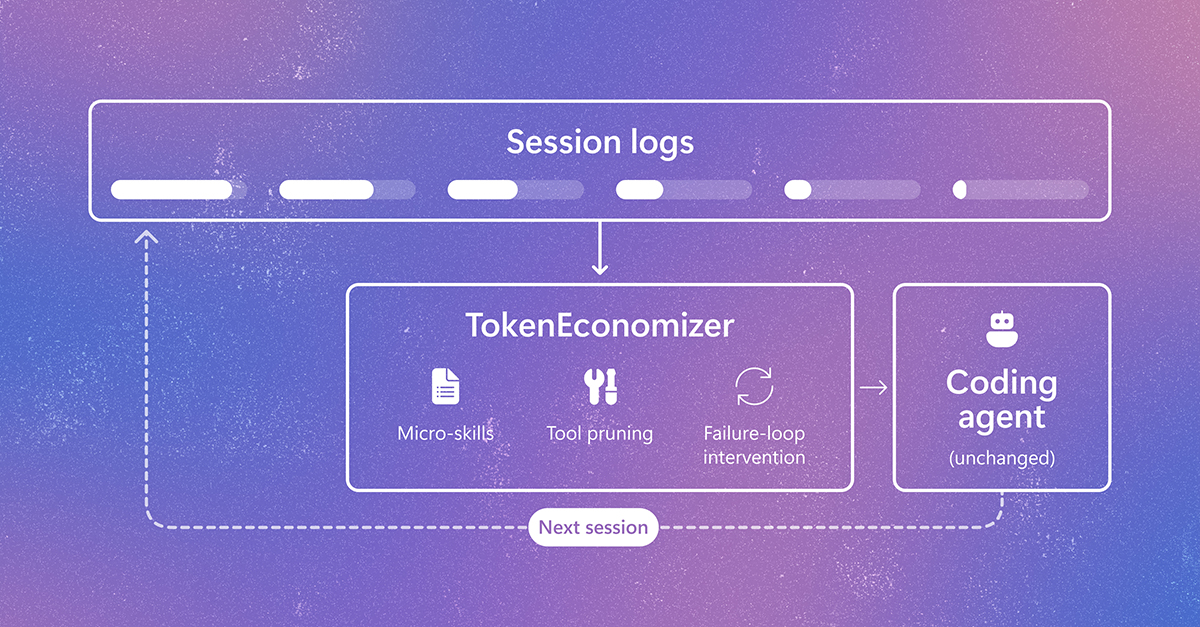
TokenEconomizer: Learning from Experience to Make AI Coding Agents More Efficient

AI coding agents are increasingly help developers fix bugs and build features largely on their own, but every interaction with their models consumes tokens. In each session, an agent sends instructions, tool descriptions, and session history to its model. Most efforts to reduce this cost focus on individual tasks. Yet developers return to the same […] The post TokenEconomizer: Learning from Experience to Make AI Coding Agents More Efficient appeared first on Microsoft Research.

MIT News · Artificial Intelligence Oct 28, 2026

Making machines that can listen

Professor Paris Smaragdis develops computers with superhuman hearing for applications like speech recognition, music understanding, and environmental monitoring.

We use cookies to run the site and, with your consent, for analytics and to show ads. See our Cookie Policy.