Large language models can generate several records within one autoregressive completion, making earlier answers available as context for later records. This paper shows that such shared-completion batching can distort relationships among variables in the resulting synthetic data, using controlled tests on synthetic survey respondents. In a matched experiment on 2,000 European Social Survey profiles, generating ten rather than one respondent per request increases mean absolute error in within-country correlations by 48-58% for Qwen3.8-27B and 114-127% for Llama-3.3-70B-Instruct across three seeds, holding profiles, examples, questions and decoding parameters fixed. The distortion primarily reflects exaggerated relationship strength, while retaining substantial agreement with the human ordering of correlations. Controlled interventions establish answer history as a causal channel: re-pairing the same preceding values, with profiles and marginal distributions fixed, changes correlations among subsequently generated responses. Hiding preceding answers reduces correlation error in the tested settings but worsens marginal accuracy. Exploratory corrections across social-attitude, health and economic data likewise show that lower correlation error can coexist with worse marginal distributions and regression estimates. Request construction is therefore part of the data-generating process, and synthetic-data validity must be evaluated against the analyses the generated data are intended to support.
This publication proposes a definition and a classification of agile software development approaches and analyses ten software development methods that can be characterized as being "agile" against the defined criterion.
P. Abrahamsson, O. Salo, Jussi Ronkainen et al.· arXiv.org· 727 citations· ⚡54
The results indicate that software engineering work practices are chosen opportunistically, adapted and configured to provide value under the constrains imposed by the startup context.
Nicolò Paternoster, Carmine Giardino, M. Unterkalmsteiner et al.· Information and Software Tec...· 394 citations· ⚡54
The possibility of inferring high-dimensional data inference in a model that consists of a prior and an auxiliary differentiable constraint given some additional information is considered, thereby allowing a range of potential applications in adapting models to new domains and tasks.
Alexandros Graikos, Esmeralda S. Whitammer, N. Jojic et al.· Neural Information Processin...· 316 citations· ⚡15
It is proved that any global minimizer of the trajectory balance objective can define a policy that samples exactly from the target distribution, and empirically demonstrate the benefits of the trajectories balance objective for GFlowNet convergence, diversity of generated samples, and robustness to long action sequenc...
Esmeralda S. Whitammer, Moksh Jain, Emmanuel Bengio et al.· Neural Information Processin...· 302 citations· ⚡60
Consequences of happiness and unhappiness that are beneficial and detrimental for developers' mental well-being, the software development process, and the produced artifacts are found.
D. Graziotin, Fabian Fagerholm, Xiaofeng Wang et al.· Journal of Systems and Softw...· 236 citations· ⚡13
The Mobile-D approach is briefly outlined here and the experiences gained from four case studies are discussed, which helped develop an agile development approach for mobile application development.
P. Abrahamsson, Antti Hanhineva, H. Hulkko et al.· Conference on Object-Oriente...· 225 citations· ⚡18
Related blog posts
MIT News · Artificial Intelligence· news.mit.eduAug 27, 2026
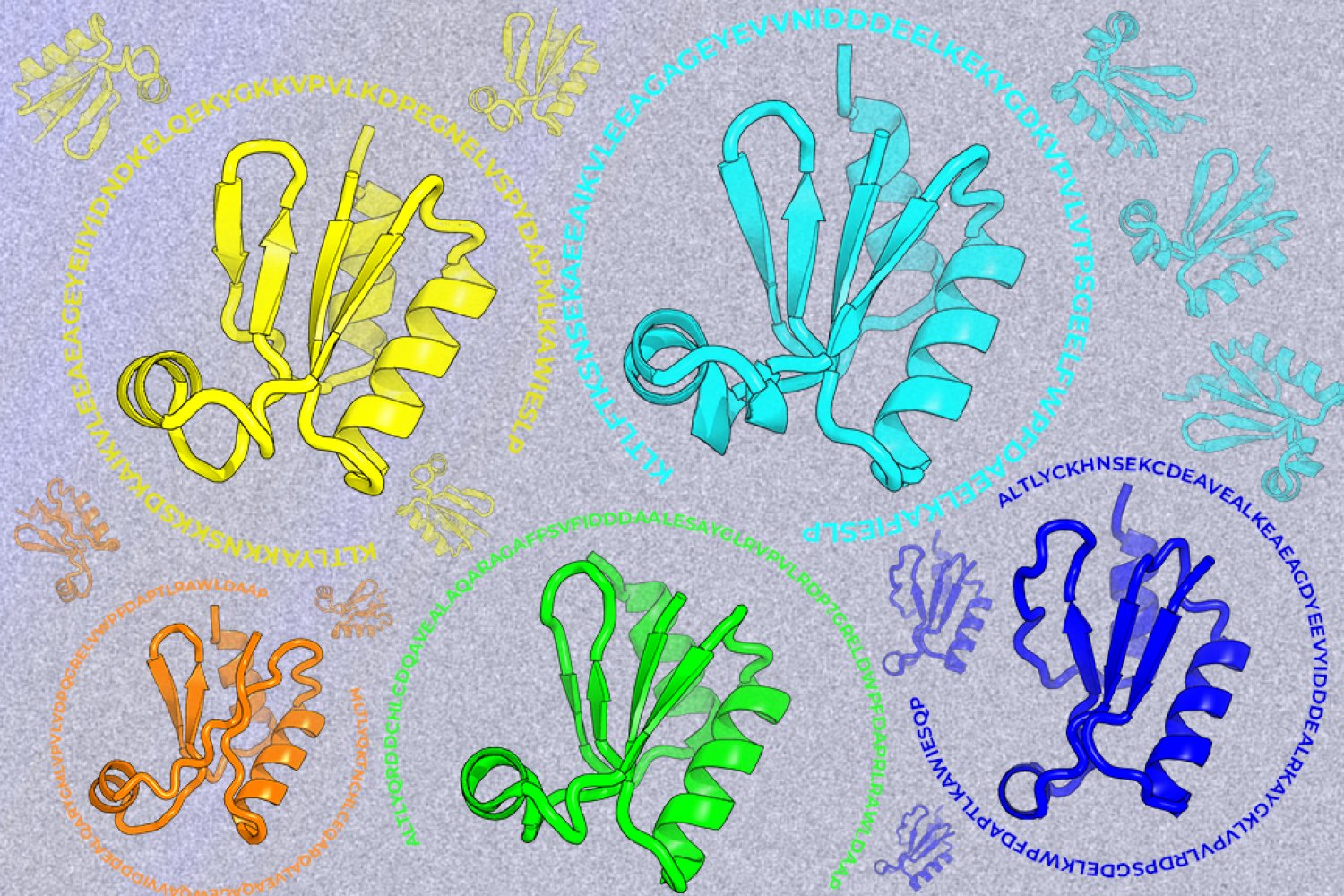
A new machine-learning framework aims to improve the success rate of computational protein design while moving away from results that reproduce sequences found in nature.