Looped language models separate computational depth from parameter count by repeatedly applying the same transformer block. Adapting these models requires a shared update that remains effective as hidden states evolve throughout the recurrent computation. Our empirical analysis reveals a pronounced late-loop bias in standard low-rank adaptation (LoRA): the shared update is more effective at later loop positions. This imbalance motivates training shared updates under varying combinations of their applications. Randomly omitting adapter applications alone, however, does not improve task performance; it reduces expected update strength during training while leaving inference unchanged. We introduce Loop Dropout, which couples stochastic masking of adapter applications with inverse-survival rescaling to preserve expected update strength and promote effective adaptation across loops. Extensive experiments demonstrate improved mathematical reasoning across model sizes, adapter ranks and training recipes, with benefits extending to general instruction tuning and code generation. Loop Dropout outperforms existing LoRA variants and adapter regularizers, while further analysis shows stronger early-loop adaptation. Every backbone loop remains active, and inference applies the adapter at all loops using standard LoRA without additional trainable parameters or inference computation.
This publication proposes a definition and a classification of agile software development approaches and analyses ten software development methods that can be characterized as being "agile" against the defined criterion.
P. Abrahamsson, O. Salo, Jussi Ronkainen et al.· arXiv.org· 727 citations· ⚡54
The results indicate that software engineering work practices are chosen opportunistically, adapted and configured to provide value under the constrains imposed by the startup context.
Nicolò Paternoster, Carmine Giardino, M. Unterkalmsteiner et al.· Information and Software Tec...· 394 citations· ⚡54
The possibility of inferring high-dimensional data inference in a model that consists of a prior and an auxiliary differentiable constraint given some additional information is considered, thereby allowing a range of potential applications in adapting models to new domains and tasks.
Alexandros Graikos, Esmeralda S. Whitammer, N. Jojic et al.· Neural Information Processin...· 316 citations· ⚡15
It is proved that any global minimizer of the trajectory balance objective can define a policy that samples exactly from the target distribution, and empirically demonstrate the benefits of the trajectories balance objective for GFlowNet convergence, diversity of generated samples, and robustness to long action sequenc...
Esmeralda S. Whitammer, Moksh Jain, Emmanuel Bengio et al.· Neural Information Processin...· 302 citations· ⚡60
Consequences of happiness and unhappiness that are beneficial and detrimental for developers' mental well-being, the software development process, and the produced artifacts are found.
D. Graziotin, Fabian Fagerholm, Xiaofeng Wang et al.· Journal of Systems and Softw...· 236 citations· ⚡13
The Mobile-D approach is briefly outlined here and the experiences gained from four case studies are discussed, which helped develop an agile development approach for mobile application development.
P. Abrahamsson, Antti Hanhineva, H. Hulkko et al.· Conference on Object-Oriente...· 225 citations· ⚡18
Related blog posts
MIT News · Artificial Intelligence· news.mit.eduAug 27, 2026
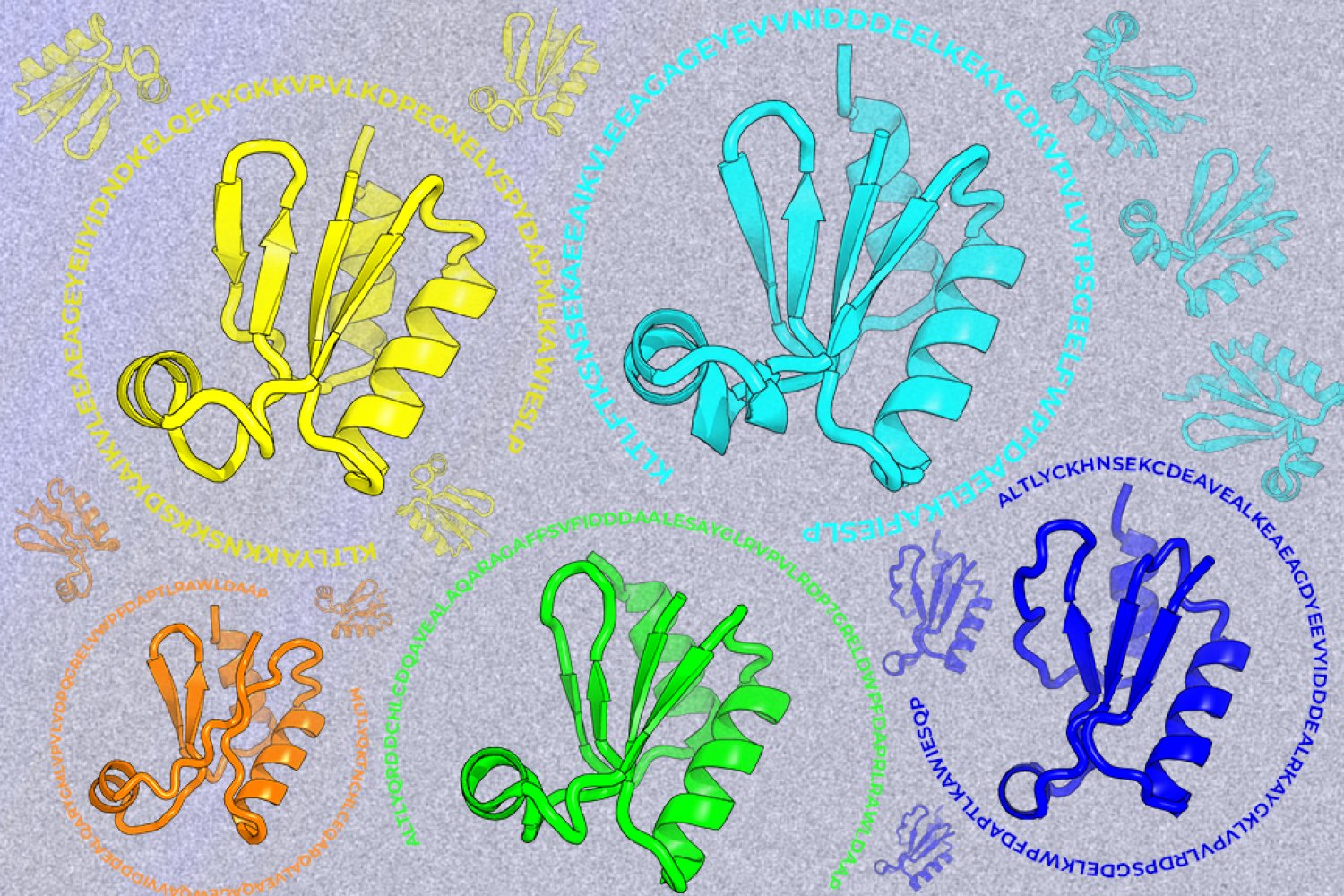
A new machine-learning framework aims to improve the success rate of computational protein design while moving away from results that reproduce sequences found in nature.