Overall, the literature is detection-dominated, genuine future risk prediction remains uncommon, and complete translational evidence chains are rare.
Abstract
Artificial-intelligence studies using computed tomography (CT) for lung cancer are often broadly labelled"prediction"despite addressing clinically distinct tasks. We systematically mapped CT/low-dose CT (LDCT)-centered lung-cancer AI using five-database retrieval, full-text eligibility assessment, role-aware modality/omics extraction, clinical-task classification, and a Multi-Tier Evidence Graph (MTEG). The final corpus comprised 293 studies (2016-2026): 230 Detection, 8 future Risk-prediction, and 55 Other studies. Clinical variables (96.2%), 3D CT/LDCT (73.0%), and radiomics (63.5%) predominated, whereas external validation (29.0%), calibration (20.5%), decision-curve analysis (13.0%), longitudinal CT (17.7%), and saliency/attribution XAI (21.5%) were less frequent. The MTEG comprised 377 nodes and 3,444 edges; only 31 studies (10.6%) completed the six-tier substantive evidence chain, with greatest attrition at reasoning/explanation. Overall, the literature is detection-dominated, genuine future risk prediction remains uncommon, and complete translational evidence chains are rare.
This narrative, state‑of‑the‑art translational review synthesizes evidence on AI‑enabled integration of clinical risk, LDCT‑derived imaging features, radiomics, longitudinal imaging, and molecular or experimental biomarkers for early lung cancer detection and pulmonary nodule triage.
Hao-Jing Li, Yun-Xian Zhu, Xiao-Min Li· Cancer Treatment and Researc...· 0 citations
Artificial-intelligence (AI) research on lung cancer in 2026 shows rapid growth across lightweight convolutional networks, CNN–transformer hybrids, capsule-inspired models, segmentation-driven pipelines, radiomics, multimodal fusion and reader-assistance systems. Model selection is now more than accuracy maximisation:...
A. Sirajdeen, S. Rajakumaran· Scholar Journal of Commerce...· 0 citations
Background: Radiotherapy-related complications can impair long-term outcomes in nasopharyngeal carcinoma (NPC), while high-volume literature screening remains a bottleneck in evidence synthesis. Methods: Four databases were searched through January 2026. After deduplication, 4916 records underwent two-stage manual scre...
This work screened 1,915 CT scans from three TCGA-RCC databases and, following a meta-data-based exclusion step, used an automated segmentation model to generate initial kidney and lesion masks, which are openly available at https://zenodo.org/records/20719257 .
Sarah de Boer, H. Häntze, S. Ziegelmayer et al.· 0 citations
Contrast-enhanced computed tomography (CT) is central to the diagnosis, staging, and follow-up of patients with renal cell carcinoma (RCC). As artificial intelligence research into computer-aided solutions continues to grow, the need for curated and annotated datasets becomes increasingly important. Imaging-based artif...
Sarah de Boer, H. Häntze, S. Ziegelmayer et al.· Machine Learning for Biomedi...· 3 citations· ⚡1
Background: Low-dose computed tomography (CT) screening for lung cancer can impose a substantial and clinically under-recognised psychosocial burden, with published studies reporting clinically significant anxiety among 30%–45% of screen-positive individuals, driven by a 96.4% benign false-positive rate and prolonged d...
Reddy Shiva Shankar, N. Deshai, Chigurupati Ravi Swaroop et al.· Journal of Clinical and Tran...· 0 citations
Related blog posts
MIT News · Artificial Intelligence· news.mit.eduNov 17, 2026
By studying the computational foundations of language learning, Associate Professor Jacob Andreas builds intelligent systems that can communicate effectively with humans.
Microsoft Research Blog· microsoft.comNov 16, 2026
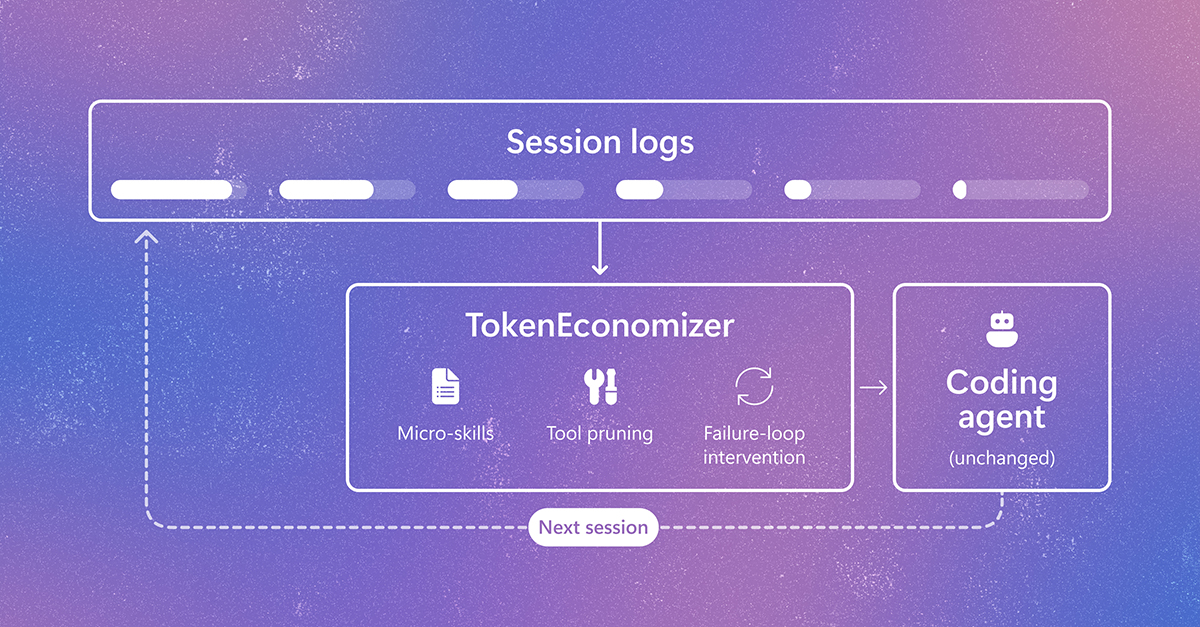
AI coding agents are increasingly help developers fix bugs and build features largely on their own, but every interaction with their models consumes tokens. In each session, an agent sends instructions, tool descriptions, and session history to its model. Most efforts to reduce this cost focus on individual tasks. Yet developers return to the same […] The post TokenEconomizer: Learning from Experience to Make AI Coding Agents More Efficient appeared first on Microsoft Research.
MIT News · Artificial Intelligence· news.mit.eduNov 13, 2026