Skip to content

Dithered Gaussian Mechanism for Randomness-Efficient Differential Privacy

Jul 2026 · arXiv.org · Vol abs/2607.06320 · 1 citation · 53 references
Computer Science

TL;DR

The dithered Gaussian mechanism is presented, an alternative to the discrete Gaussian mechanism for differential privacy that discretizes the private output rather than the noise distribution itself, and it is shown that cryptographically secure noise generation with reduced exposure to floating-point vulnerabilities can be achieved with modest practical overhead.

Abstract

We present the dithered Gaussian mechanism, an alternative to the discrete Gaussian mechanism for differential privacy that discretizes the private output rather than the noise distribution itself.By interpreting this discretization as post-processing of the Gaussian mechanism, our construction directly inherits the privacy guarantees of the standard Gaussian mechanism while avoiding vulnerabilities caused by finite-precision floating-point outputs. In addition, the mechanism is provably randomness-efficient: by sampling the discretized output values directly, the number of high-quality random bits required for privacy can be reduced significantly and made independent of the noise level. This is achieved by separating the randomness into two sources: a high-quality source used for the privacy-critical sampling step, and a high-performance public source, possibly known to the adversary, that supplies the additional randomness needed for randomized discretization. This separation enables the use of cryptographically secure randomness without substantial performance loss. As an application, we study model training with DP-SGD and show that cryptographically secure noise generation with reduced exposure to floating-point vulnerabilities can be achieved with modest practical overhead.

View source

Similar papers

Preprint Aug 2026

Revisiting Continuous Noise Sampling for Multi-Party Differential Privacy

This paper revisits the continuous noise sampling protocols and makes several improvements in both security and efficiency and turns to discrete sampling at the granularity of individual biased bits to address the security and efficiency issues together.

Yu-Cheng Fu, Tianhao Wang · 1 citation
Preprint Sep 2026

Empirical Analysis of Randomness Quality in Differential Privacy Mechanisms

Differential Privacy (DP) relies on carefully calibrated random noise to protect individual privacy in statistical analyses. While theoretical work has analyzed DP under weakened randomness assumptions, the practical consequences of entropy degradation remain poorly understood. We present a systematic empirical investi...

Cesare Gerolimetto Fabrello, Valeria Rossi, Alberto Trombetta et al. · 0 citations

via Sparse Pseudorandom Generators

This work presents a new approach for constructing a pseudorandom correlation generator (PCG) for securely generating n independent instances of UV correlations of any polynomial length B, and reduces such sparse PRGs to local PRGs over large alpha-bets.

Amit Agarwal, Elette Boyle, N. Gilboa et al. · 0 citations
Preprint Sep 2026

Making the most of leftovers: Improved privacy amplification for quantum key distribution

The amount of secret key that can be obtained from a quantum key distribution run depends on both the physically observed error rates and the mathematical bounds used to certify security. For finite datasets, conservative bounds force users to discard a substantial fraction of the potentially available key. Here we fur...

M. Tan, Bartosz Regula, Marco Tomamichel · 1 citation

Related blog posts

Microsoft Research Blog Nov 3, 2026

Learn the rules: The hacker mindset

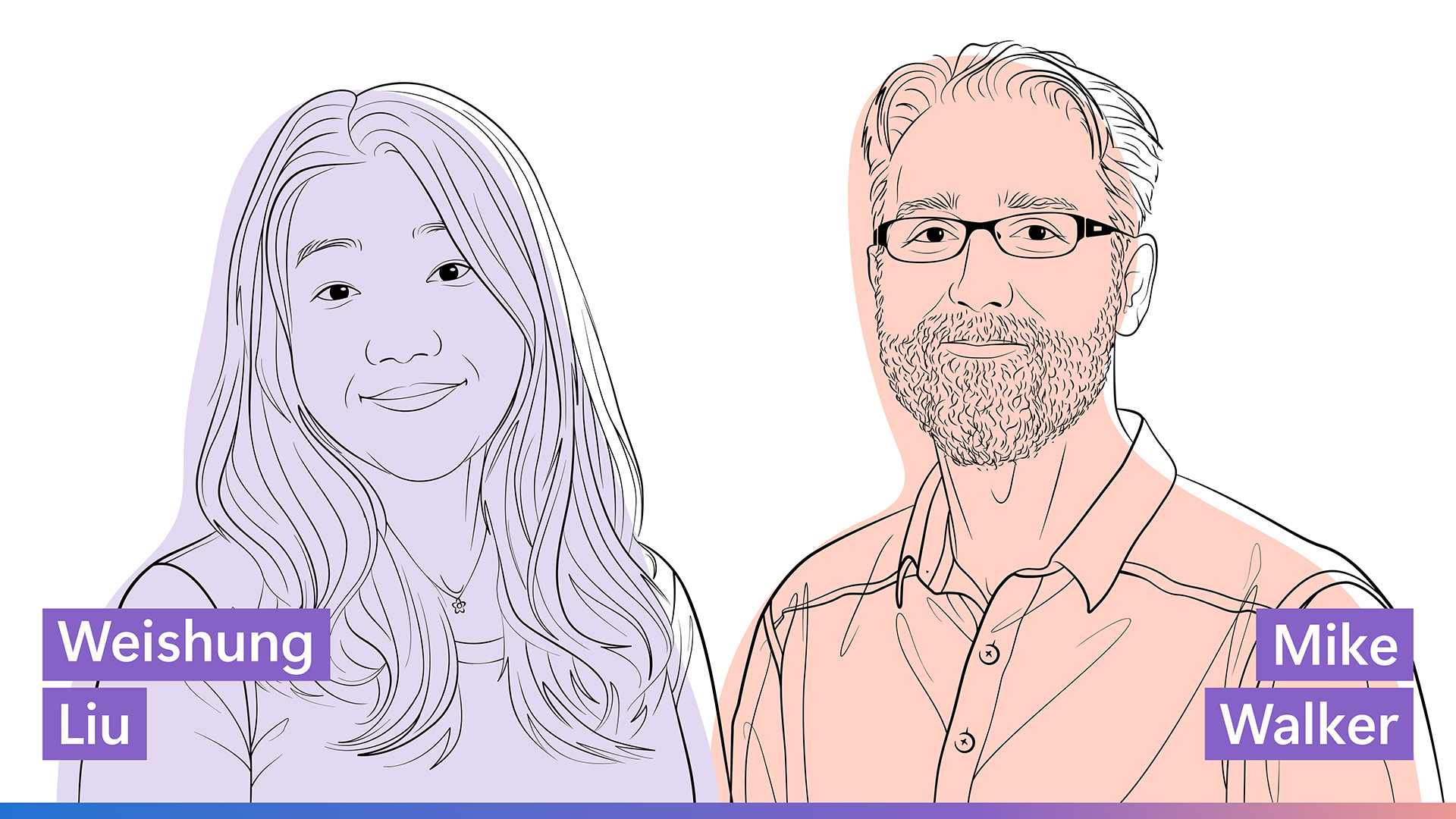
Research Manager Mike Walker reflects on a career spanning hacker culture, cybersecurity, and AI, sharing lessons about trust, teamwork, leadership, and why solving difficult problems requires curiosity, judgment, agility—and an understanding of the rules. The post Learn the rules: The hacker mindset appeared first on Microsoft Research.

MIT News · Artificial Intelligence Nov 17, 2026

Learning the language of machine learning

By studying the computational foundations of language learning, Associate Professor Jacob Andreas builds intelligent systems that can communicate effectively with humans.

Microsoft Research Blog Nov 16, 2026

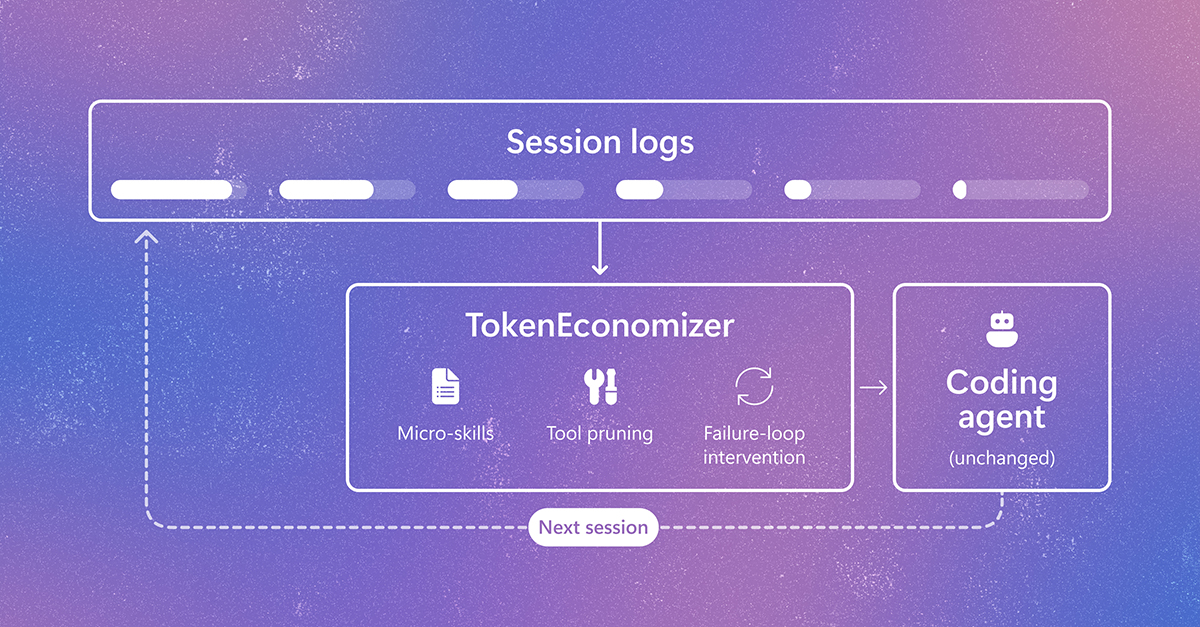
TokenEconomizer: Learning from Experience to Make AI Coding Agents More Efficient

AI coding agents are increasingly help developers fix bugs and build features largely on their own, but every interaction with their models consumes tokens. In each session, an agent sends instructions, tool descriptions, and session history to its model. Most efforts to reduce this cost focus on individual tasks. Yet developers return to the same […] The post TokenEconomizer: Learning from Experience to Make AI Coding Agents More Efficient appeared first on Microsoft Research.

We use cookies to run the site and, with your consent, for analytics and to show ads. See our Cookie Policy.