Skip to content
#federated learning Review Open access

A Review of Data Privacy Protection Technologies in the Big Data Environment

Sep 2026 · Applied and Computational Engineering · 0 citations
Privacy-Preserving Technologies in Data

TL;DR

Each technology in the big data environment has its own strengths and weaknesses in terms of privacy protection; currently, no single technology can simultaneously meet all requirements, and there is a fundamental core conflict between privacy protection and data utility.

Abstract

With the rapid development and widespread application of big data technologies, while personal data generates immense social value, the risk of privacy breaches is also escalating. How to effectively protect personal privacy while ensuring data usability has become a central issue of shared societal concern. Existing reviews often focus on describing individual privacy protection technologies, lacking a multidimensional, cross-comparative analysis of various technical approaches. This paper reviews mainstream privacy protection technologies in the big data environment, classifying them into three major categories: data distortion, data encryption, and data anonymization, while also introducing emerging solutions such as federated learning and trusted execution environments. Through a comparative analysis of various technologies across three dimensions—privacy protection strength, data utility, and computational efficiency—this paper finds that each technology has its own strengths and weaknesses in terms of privacy protection; currently, no single technology can simultaneously meet all requirements, and there is a fundamental core conflict between privacy protection and data utility. In practice, appropriate technologies should be selected based on specific business scenarios, or an implementation approach combining multiple technologies should be adopted.


Read PDF

Similar papers

Open access Sep 2026

Data Fusion Scheme Based on the Intersection of Privacy Sets

A three-party data fusion method based on the intersection of marked privacy sets, in which two platforms privately compute their common data categories while a government agency acts as a keyless comparer, is proposed.

Xu Gu, Jia-Zheng Cui, Zhao-Wang Hu et al. · 0 citations
Review Aug 2026

Privacy and Human Rights in the Digital Age: Challenges of a Technology- Centric Society

The review finds harm results from collecting too much data, lack of oversight over the data collected, unfairness in automated decisions made with respect to data and limited access to remedies.

Shivika Jain, Jageshwar Nath Singh · 0 citations
Review Open access Sep 2026

Analyzing personal data privacy protection: a DEMATEL-ISM-MICMAC approach

A five-dimensional policy package is proposed that reinforces regulatory drivers, institutionalises trust-repair mechanisms, leverages trauma-induced learning effects, optimises transmission pathways, and implements full-cycle collaborative governance, thereby offering a systemic intervention framework to resolve the d...

Ting Zhang, Zhong-Xian Duan · 0 citations
Review Open access Aug 2026

Recent Advances and Trends in Privacy-Preserving Data Publishing for Healthcare with Enhanced Data Utility

This survey provides a comprehensive examination of current research directions in PPDP within the healthcare sector, emphasizing techniques that balance privacy assurances with high data utility and classify and evaluate recent advancements in methods such as differential privacy, federated learning, homomorphic encry...

Mohd Arfian Ismail, M. F. Ab. Aziz, Mohd Haziq Asyraff Razali et al. · 0 citations
Open access 2025

Privacy and Data Protection: Ensuring Compliance with Federated Learning in the Digital Age

The experiment showed that Autoencoder Based Federated Learning was a scalable, secure, and privacy-efficient solution to applications tailored for healthcare, finance, and other sensitive data environments.

Guman Singh Chauhan, venkata Surya Teja Gollapalli, Kannan Srinivasan et al. · 0 citations
Open access Aug 2026

Privacy-Enhancing Technologies and Privacy-By-Design for Medical AI.

The analysis highlights how privacy-enhancing technologies offer benefits beyond anonymisation by embedding privacy-by-design values to support responsible innovation and protect sensitive patient data throughout the design, training, and validation of medical AI systems.

Yasmine Zoya · 0 citations

Related blog posts

MIT News · Artificial Intelligence Nov 17, 2026

Learning the language of machine learning

By studying the computational foundations of language learning, Associate Professor Jacob Andreas builds intelligent systems that can communicate effectively with humans.

Microsoft Research Blog Nov 16, 2026

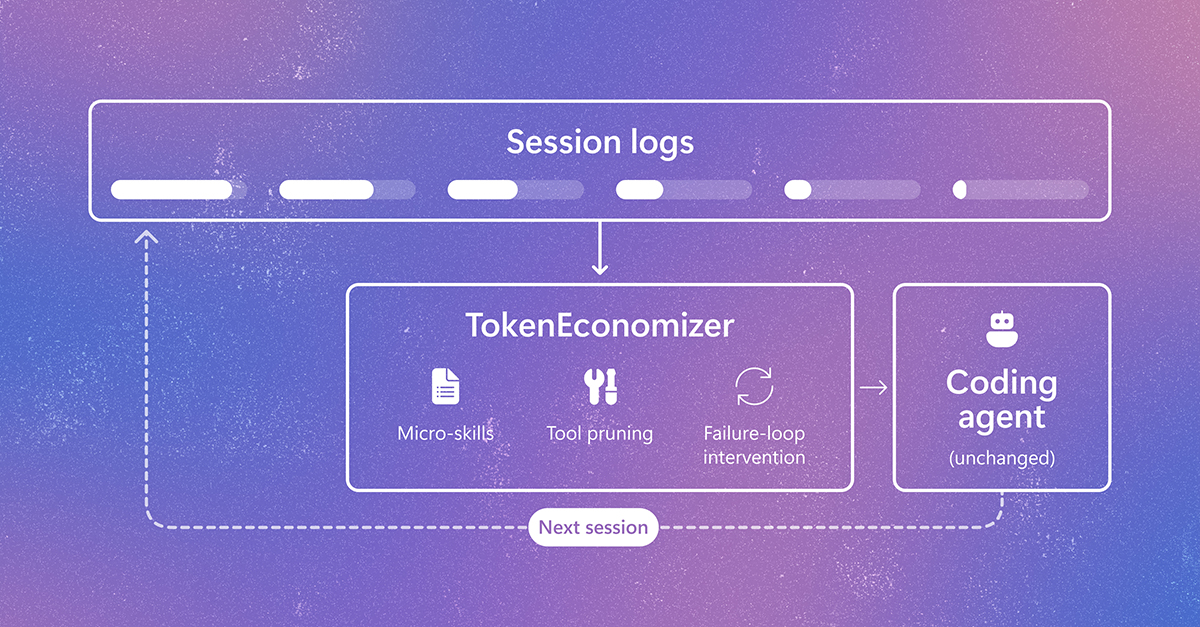
TokenEconomizer: Learning from Experience to Make AI Coding Agents More Efficient

AI coding agents are increasingly help developers fix bugs and build features largely on their own, but every interaction with their models consumes tokens. In each session, an agent sends instructions, tool descriptions, and session history to its model. Most efforts to reduce this cost focus on individual tasks. Yet developers return to the same […] The post TokenEconomizer: Learning from Experience to Make AI Coding Agents More Efficient appeared first on Microsoft Research.

We use cookies to run the site and, with your consent, for analytics and to show ads. See our Cookie Policy.