Skip to content
#reinforcement learning Dataset Open access

A Digital Twin Framework for Autonomous Kinetic Facades: Bio-inspired SMA Actuation with Reinforcement Learning Control for Tropical Climates

Sep 2026 · Zenodo (CERN European Organization for Nuclear Research)

Abstract

Building envelope automation is limited by heavy motor-driven shading and reactive rule-based controllers. This paper presents an autonomous Digital Twin framework for kinetic facades, integrating bio-inspired Shape-Memory Alloy [SMA] actuation with a Reinforcement Learning [RL] control policy. Conceived as a Robotic Skin, Nitinol SMA wires act as artificial muscles mimicking plant stomatal turgor, enabling silent, high energy-density, joint-free actuation. A Python 3.10 Digital Twin (Pandas, NumPy, Scikit-learn) simulates a south-facing 10 m² facade [SHGC 0.60] in Da Nang, Vietnam, a tropical coastal city with high insolation and salt-air corrosion. Observed hourly weather data for Da Nang International Airport [WMO 488550, TMYx 2011-2025, 8760 hours] is split into 6552 training and 2208 test hours. Control is modeled as an MDP [State: GHI, T_out, T_in; Action: {Open, Partially Shaded, Closed}; Reward: -Energy + Comfort], solved by Q-Learning with ε-greedy decay [1.0→0.05] over 10,000 iterations across n=10 seeds. On held-out data, RL achieves 8.67 ± 0.95 kWh cooling load versus 37.34 kWh static and 21.71 kWh PID, reductions of 76.8% and 60.1%, with 74.1% peak load and 86.5% solar gain cuts. An IoT feedback loop and anti-corrosive encapsulation support coastal resilience.
View source

Similar papers

#machine learning Review Open access Oct 2014

Software development in startup companies: A systematic mapping study

The results indicate that software engineering work practices are chosen opportunistically, adapted and configured to provide value under the constrains imposed by the startup context.

Nicolò Paternoster, Carmine Giardino, M. Unterkalmsteiner et al. · 394 citations · ⚡54
#machine learning Review Open access Jun 2014

Why Early-Stage Software Startups Fail: A Behavioral Framework

This state-of-practice investigation was performed using a literature review followed by a multiple-case study approach and presents how inconsistency between managerial strategies and execution can lead to failure by means of a behavioral framework.

Carmine Giardino, Xiaofeng Wang, P. Abrahamsson · 175 citations · ⚡19
#machine learning Review Open access Oct 2016

“Failures” to be celebrated: an analysis of major pivots of software startups

This study conducts a case survey study based on the secondary data of the major pivots happened in 49 software startups, and demonstrates that customer need pivot is the most common among all pivot types.

Sohaib Shahid Bajwa, Xiaofeng Wang, Anh Nguyen-Duc et al. · 127 citations · ⚡15
#machine learning Review Open access May 2016

Key Challenges in Software Startups Across Life Cycle Stages

It is found that what perceived as biggest challenges by software startups do vary across different life cycle stages, even though its significance decreases when the learning focuses of the startups move from problem to solution and their products mature.

Xiaofeng Wang, Henry Edison, Sohaib Shahid Bajwa et al. · 62 citations · ⚡6

Related blog posts

Microsoft Research Blog Sep 30, 2026

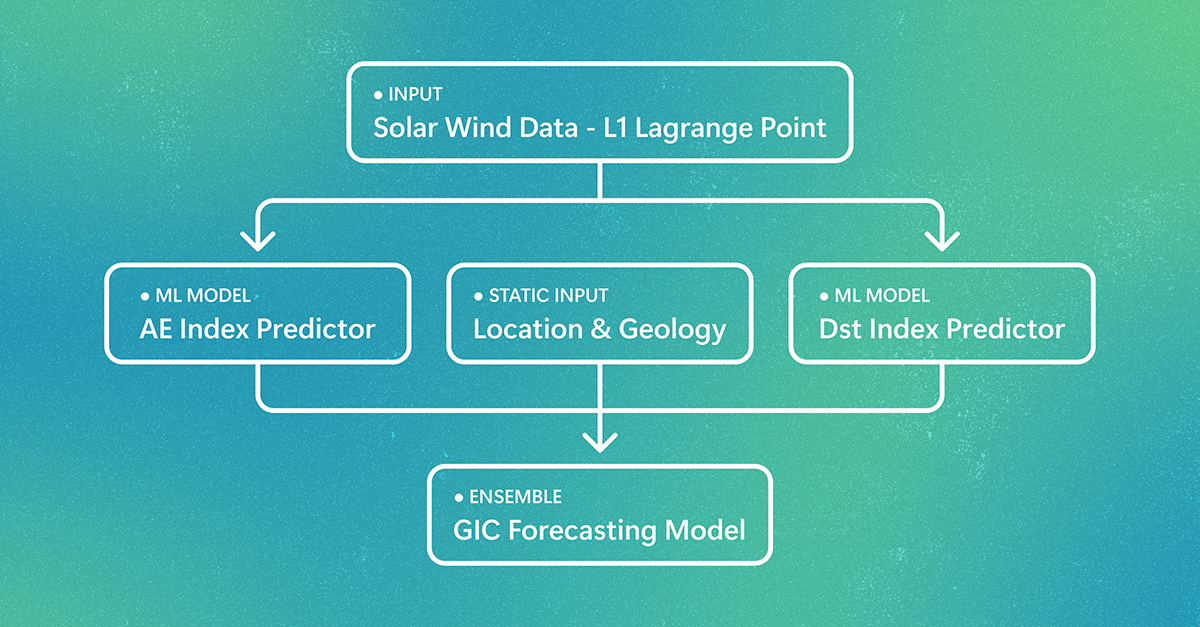
Forecasting space weather risks on power grids

Extreme space-weather events can damage power systems on Earth and degrade GPS accuracy and satellite operations. A new machine learning system can predict where damage is likely to occur 30-60 minutes before a storm arrives. The post Forecasting space weather risks on power grids appeared first on Microsoft Research.

We use cookies to run the site and, with your consent, for analytics and to show ads. See our Cookie Policy.