Jul 2026· Zenodo (CERN European Organization for Nuclear Research)
Quantum Mechanics and Applications
Abstract
Proposals that physical states and laws jointly determine one another are often presented through fixed-point equations. Yet any ordinary fixed-law theory can be rewritten in joint fixed-point form by adding a constant law-update map. Fixed-point form alone therefore carries neither empirical content nor a distinctive metaphysics. This article turns that objection into a constructive philosophy-of-physics programme. First, it proves a trivial-embedding result and identifies six non-vacuity conditions for substantive state-law co-determination: non-constant physical dependence, representation invariance, counterfactual rigidity, compositional closure, recovery of a declared baseline, and cross-context discriminability. Second, it extends the existence question beyond finite-dimensional compactness by formulating a conditional weak-* fixed-point result on the state space of a unital C*-algebra. Third, it supplies an explicit bipartite quantum-statistical model in which a correlation-dependent law parameter is selected jointly with a Gibbs state. The model has a complete tensor-product rule, an exact bifurcation condition, and a no-signalling operational stage based on local completely positive trace-preserving maps. Finally, it shows how empirical content arises only when one law-selection parameter must compress observations across multiple intervention contexts; a single context remains observationally equivalent to a fixed-law description. The resulting account replaces the metaphor of a “recursive universe” with a more disciplined claim: state-law closure is scientifically meaningful only when it imposes invariant, compositional, and risky relations across possible experiments.
This publication proposes a definition and a classification of agile software development approaches and analyses ten software development methods that can be characterized as being "agile" against the defined criterion.
P. Abrahamsson, O. Salo, Jussi Ronkainen et al.· arXiv.org· 727 citations· ⚡54
The study shows that agile practices improve both informal and formal communication, but indicates that, in larger development situations involving multiple external stakeholders, a mismatch of adequate communication mechanisms can sometimes even hinder the communication.
M. Pikkarainen, Jukka Haikara, O. Salo et al.· Empirical Software Engineeri...· 401 citations· ⚡48
The results indicate that software engineering work practices are chosen opportunistically, adapted and configured to provide value under the constrains imposed by the startup context.
Nicolò Paternoster, Carmine Giardino, M. Unterkalmsteiner et al.· Information and Software Tec...· 394 citations· ⚡54
The perception of the impact of agile methods is predominantly positive, and several challenge areas were discovered, but based on this study, agile methods are here to stay.
M. Laanti, O. Salo, P. Abrahamsson· Information and Software Tec...· 260 citations· ⚡20
Related blog posts
Microsoft Research Blog· microsoft.comSep 29, 2026
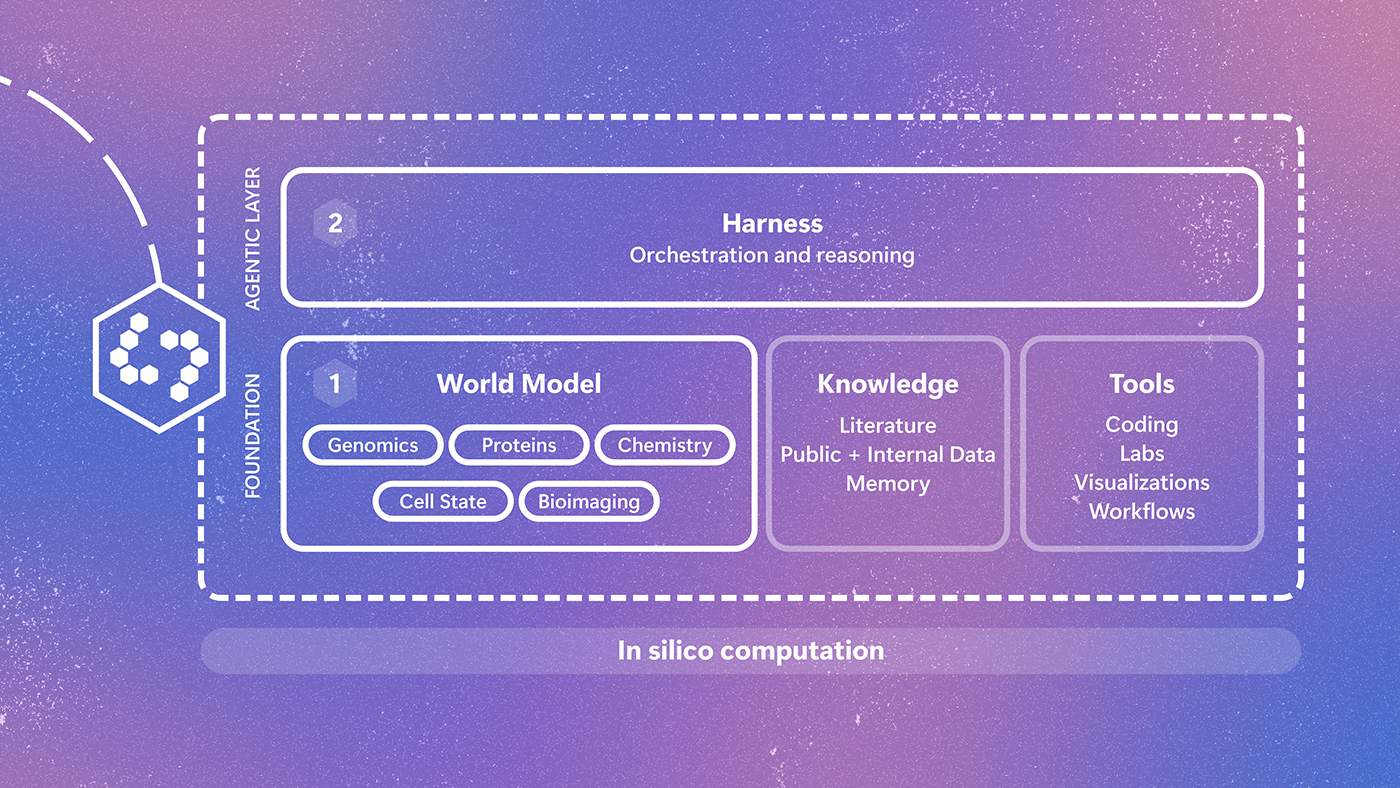
Biology doesn't operate in silos, and neither should the AI representation of it. Quine is an early-stage research effort to create a multimodal world model of biology. By connecting insights across biological scales and modalities, Quine helps scientists computationally search a space far larger than intuition allows and prioritize hypotheses before they reach the lab. Experimental results provide important feedback, helping researchers sharpen future research directions. The post Introducing Q…
Microsoft Research Blog· microsoft.comAug 31, 2026
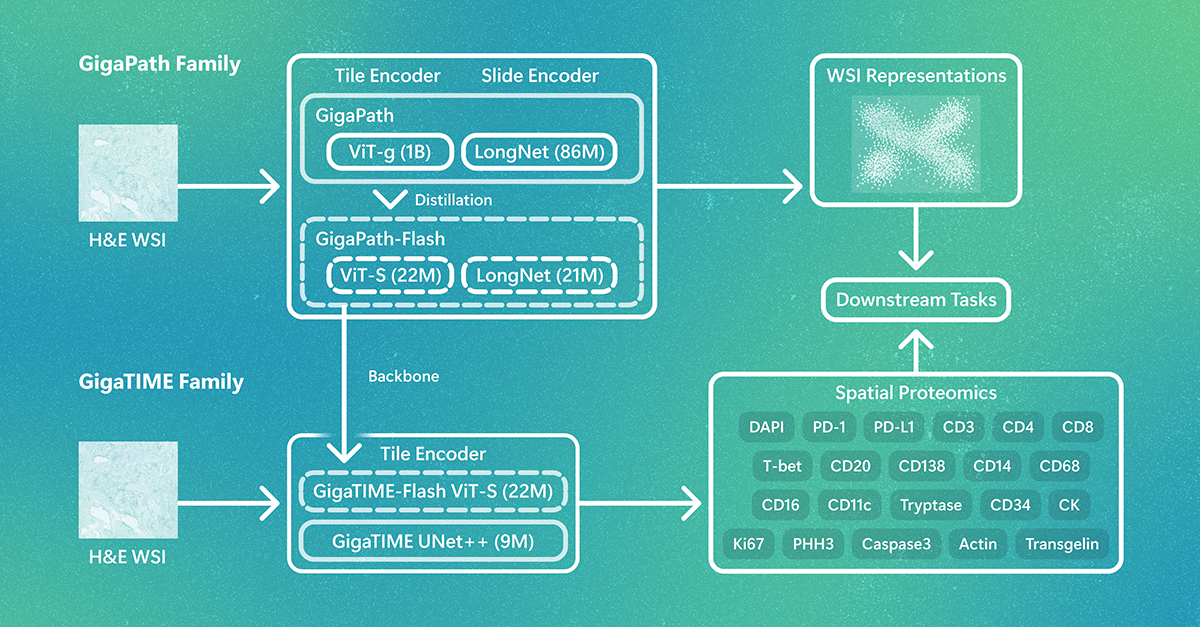
What if pathology foundation models could do more with less? GigaPath-Flash and GigaTIME-Flash cut computational demands while maintaining strong performance, opening the door to larger studies and broader exploration. The post GigaPath-Flash and GigaTIME-Flash: Toward population-scale discovery with efficient pathology foundation models appeared first on Microsoft Research.
Through research and entrepreneurship, Professor Devavrat Shah is helping to design methods that can handle constant decision-making using limited computational resources.
We use cookies to run the site and, with your consent, for analytics and to show ads.
See our Cookie Policy.