Aug 2026· Zenodo (CERN European Organization for Nuclear Research)
Abstract
The term “post-truth” has become a ubiquitous yet contentious descriptor of our contemporary socio-political landscape. This paper delves into the heart of the debate, examining whether post-truth represents a novel epistemic condition—a fundamental shift in how we know and what we believe—or if it is merely a rhetorical myth, a new label for age-old political dissembling. By synthesizing cutting-edge academic research, empirical data, and novel theoretical frameworks, this analysis offers a multi-perspective view that transcends the simplistic binary of the current discourse. We introduce three original theoretical models—Quantum Epistemology, the Epistemic Vice Cascade, and the Rhetorical Singularity—to provide a more nuanced understanding of the complex interplay between individual psychology, social dynamics, and technological affordances that characterize the post-truth era. Through the analysis of longitudinal data from the Pew Research Center and the validation of the Epistemic Vice Scale, we demonstrate that while the components of post-truth may not be new, their convergence and amplification have given rise to a qualitatively distinct epistemic environment. We conclude that post-truth is not a myth, but a measurable and emergent epistemic condition that demands a new critical paradigm.
This publication proposes a definition and a classification of agile software development approaches and analyses ten software development methods that can be characterized as being "agile" against the defined criterion.
P. Abrahamsson, O. Salo, Jussi Ronkainen et al.· arXiv.org· 727 citations· ⚡54
The study shows that agile practices improve both informal and formal communication, but indicates that, in larger development situations involving multiple external stakeholders, a mismatch of adequate communication mechanisms can sometimes even hinder the communication.
M. Pikkarainen, Jukka Haikara, O. Salo et al.· Empirical Software Engineeri...· 401 citations· ⚡48
The results indicate that software engineering work practices are chosen opportunistically, adapted and configured to provide value under the constrains imposed by the startup context.
Nicolò Paternoster, Carmine Giardino, M. Unterkalmsteiner et al.· Information and Software Tec...· 394 citations· ⚡54
It is proved that any global minimizer of the trajectory balance objective can define a policy that samples exactly from the target distribution, and empirically demonstrate the benefits of the trajectories balance objective for GFlowNet convergence, diversity of generated samples, and robustness to long action sequenc...
Esmeralda S. Whitammer, Moksh Jain, Emmanuel Bengio et al.· Neural Information Processin...· 302 citations· ⚡60
Related blog posts
Microsoft Research Blog· microsoft.comSep 29, 2026
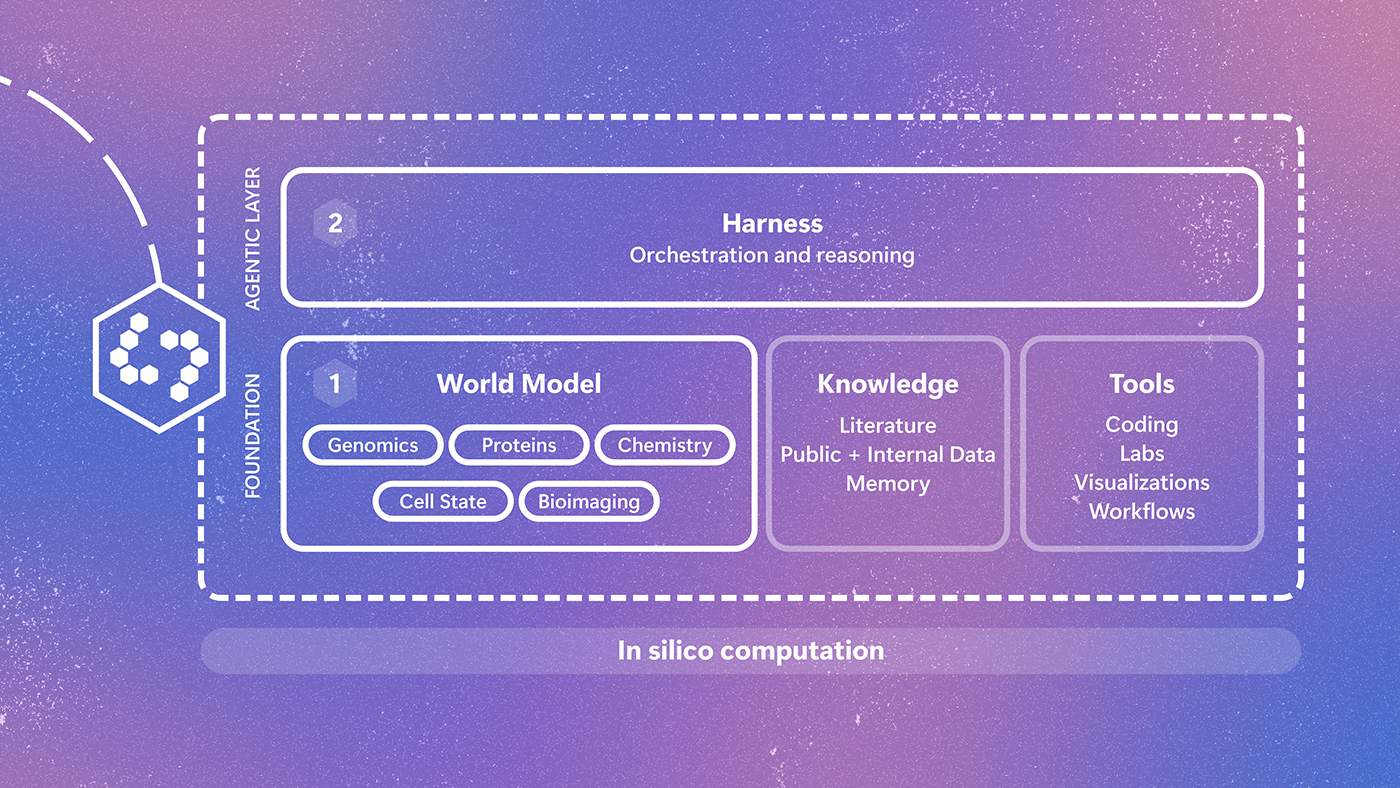
Biology doesn't operate in silos, and neither should the AI representation of it. Quine is an early-stage research effort to create a multimodal world model of biology. By connecting insights across biological scales and modalities, Quine helps scientists computationally search a space far larger than intuition allows and prioritize hypotheses before they reach the lab. Experimental results provide important feedback, helping researchers sharpen future research directions. The post Introducing Q…
Microsoft Research Blog· microsoft.comAug 31, 2026
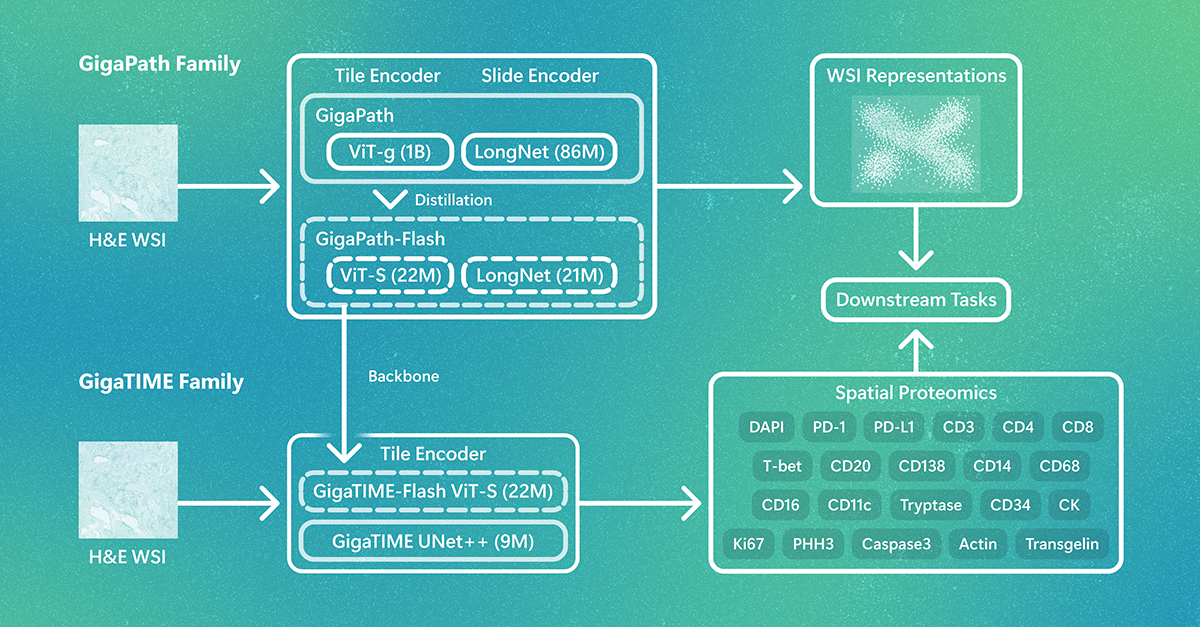
What if pathology foundation models could do more with less? GigaPath-Flash and GigaTIME-Flash cut computational demands while maintaining strong performance, opening the door to larger studies and broader exploration. The post GigaPath-Flash and GigaTIME-Flash: Toward population-scale discovery with efficient pathology foundation models appeared first on Microsoft Research.
Through research and entrepreneurship, Professor Devavrat Shah is helping to design methods that can handle constant decision-making using limited computational resources.
We use cookies to run the site and, with your consent, for analytics and to show ads.
See our Cookie Policy.