Human-computer interaction (HCI) is in the middle of a transition: large language models can now generate functional user interfaces (UIs) on demand from natural-language task descriptions. A user explains what they are trying to accomplish, and the system materializes a working interface to support it. This capability...
Nathan Conklin, M. Capra, Chris North· 0 citations
This work designed a tool called dBlocks with the following features: blocks to scope content, a context manager to edit context, and inline execution to verify code, and shows how human-centered design can guide the development of LLM-integrated tools.
Findings from an exploratory, multi-session study with creative professionals, examining their use of AI-CSTs across workflow stages are presented, reflecting on how AI influences collaborative creative practices, particularly in relation to accessibility, expertise, and creative agency.
Caterina Moruzzi, Charlotte Bird, L. Herman· Proceedings of the ACM on Hu...· 0 citations
A design case study of a JupyterLab addon that delivers Socratic hints instead of direct answers, and six design hypotheses for developers of constrained AI programming assistants, addressing hint escalation, selective dialogue, context granularity, vocabulary calibration, onboarding transparency, and difficulty-aware...
Alexandre De Masi, Chen Wang, Laurent Moccozet· Proceedings of the 14th Nord...· 0 citations
This paper maps key evaluation challenges and proposes three frameworks specific to these tasks and offers design teams a practical roadmap to incorporate continuous, evidence-based testing, promoting greater rigor and accountability in AI-assisted design practice.
Enforcing physics-based constraints prevents AI models from generating unreliable predictions for complex nonlinear systems in weather, climate, and turbulent flows.
MIT News · Artificial Intelligence· news.mit.eduNov 20, 2026
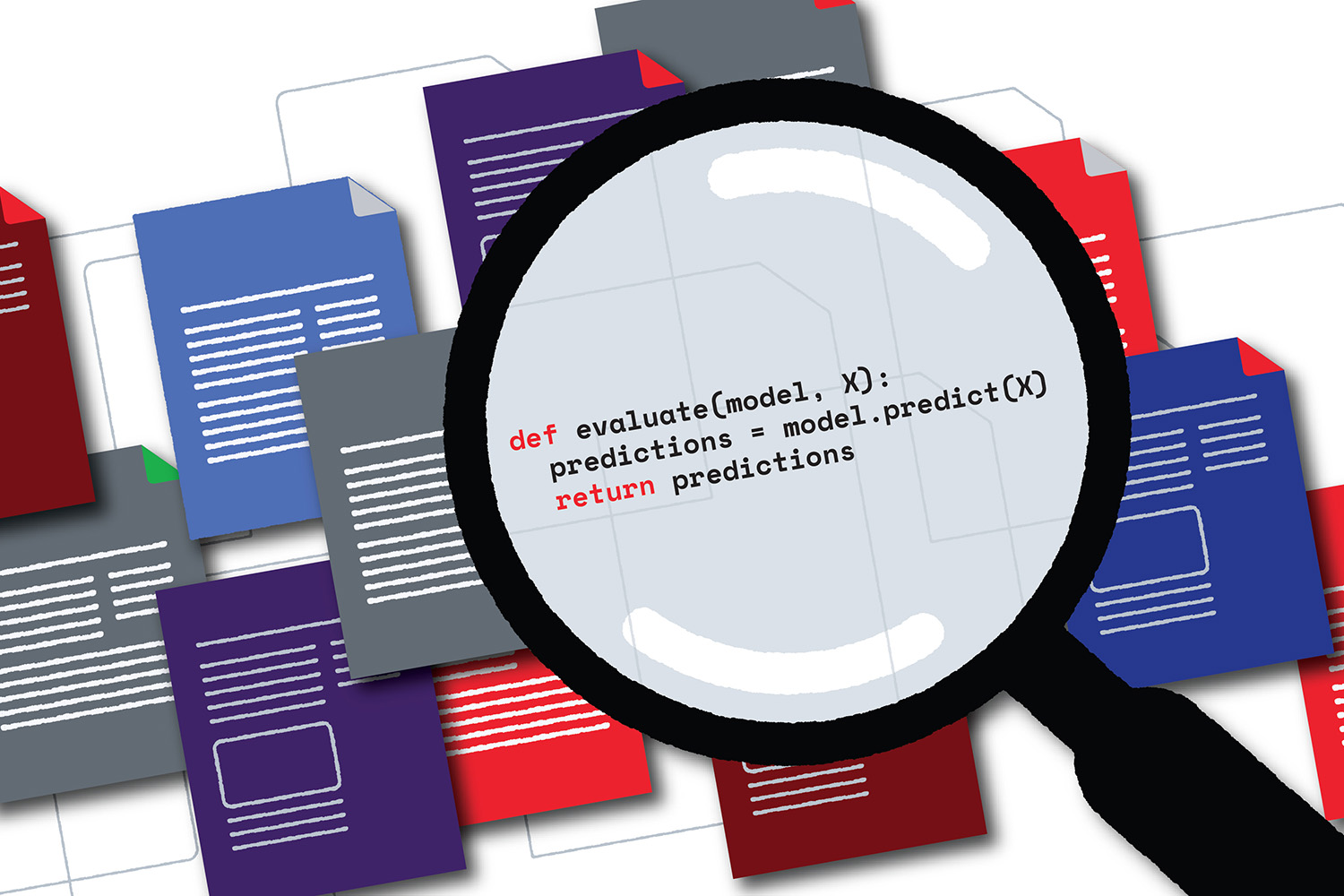
An MIT and Dana-Farber Institute-led team used large language models to examine nearly 4,000 studies and hundreds of code repositories, revealing gaps in the information needed to scrutinize and reuse published research.
We use cookies to run the site and, with your consent, for analytics and to show ads.
See our Cookie Policy.