Oct 2026· Proceedings of the 7th International Workshop on Drone-Assisted Wireless Communications for 5G and Beyond· 0 citations· 2 references
Abstract
The rapid expansion of Internet of things (IoT) devices generates increasing service demands that require reliable computation in regions with limited fixed infrastructure. Uncrewed aerial vehicle (UAV)-based mobile edge computing (MEC) systems provide a flexible solution by relocating computational resources close to IoT devices. The task execution at UAVs faces uncertainty due to energy and processing constraints, and resource allocations are further complicated by differing IoT task priorities. In this context, we propose a priority-aware and trust-driven framework for UAV-assisted resource optimization. The UAV trustworthiness is modeled through weighted metrics including computational capacity, residual energy, and task-success history. We assign a confidence parameter to each trust metric to reflect the reliability of reported values, which guides the selection of UAVs for task offloading. UAVs are positioned over the coverage area using K-means clustering to ensure that devices with diverse trust thresholds and task priorities are effectively served. The resulting optimization problem is solved using a penalty-guided optimization (PGO) algorithm and evaluated against a benchmark algorithm based on a branch-and-bound approach and a greedy algorithm. Simulation results across varying trust thresholds and task priorities show that the proposed PGO algorithm achieves performance close to the optimal benchmark while efficiently handling diverse scenarios. These findings highlight the importance of trust-aware and priority-driven UAV-MEC frameworks for supporting reliable IoT services in emerging 6G networks.

This publication proposes a definition and a classification of agile software development approaches and analyses ten software development methods that can be characterized as being "agile" against the defined criterion.
P. Abrahamsson, O. Salo, Jussi Ronkainen et al.· arXiv.org· 727 citations· ⚡54
The study shows that agile practices improve both informal and formal communication, but indicates that, in larger development situations involving multiple external stakeholders, a mismatch of adequate communication mechanisms can sometimes even hinder the communication.
M. Pikkarainen, Jukka Haikara, O. Salo et al.· Empirical Software Engineeri...· 401 citations· ⚡48
The results indicate that software engineering work practices are chosen opportunistically, adapted and configured to provide value under the constrains imposed by the startup context.
Nicolò Paternoster, Carmine Giardino, M. Unterkalmsteiner et al.· Information and Software Tec...· 394 citations· ⚡54
The perception of the impact of agile methods is predominantly positive, and several challenge areas were discovered, but based on this study, agile methods are here to stay.
M. Laanti, O. Salo, P. Abrahamsson· Information and Software Tec...· 260 citations· ⚡20
Related blog posts
MIT News · Artificial Intelligence· news.mit.eduOct 2, 2026
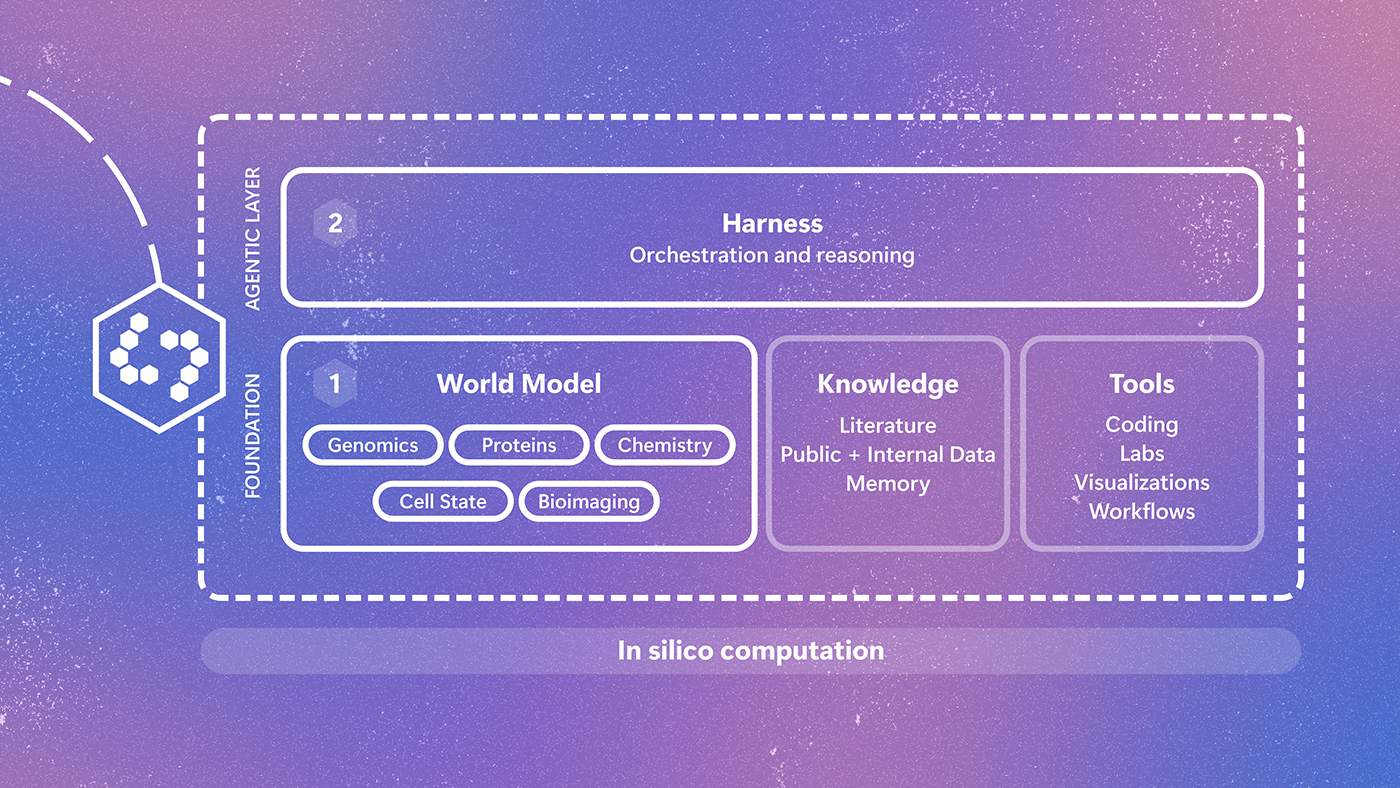
Biology doesn't operate in silos, and neither should the AI representation of it. Quine is an early-stage research effort to create a multimodal world model of biology. By connecting insights across biological scales and modalities, Quine helps scientists computationally search a space far larger than intuition allows and prioritize hypotheses before they reach the lab. Experimental results provide important feedback, helping researchers sharpen future research directions. The post Introducing Q…