Surface electromyography (sEMG) provides a wearable, camera-free signal for continuous hand-motion inference. Mapping muscle activity to joint kinematics remains challenging because the recorded waveforms are indirect measurements, their relationship with motion changes over time, and individual anatomy and sensor placement alter the signal distribution. This paper presents EFormer, a residual feature-correction network built on a frozen tracking backbone. EFormer combines a high-rate event branch, temporally aligned local cross-attention, two causal rotary position embedding (RoPE) temporal layers, and a bounded, dynamically gated residual. EFormer receives 16-channel sEMG sampled at 2 kHz and fuses a 64-channel tracking representation at 25 Hz with a 128-channel event representation at 200 Hz. Cross-attention uses a nominal delay of 100 ms, a 300 ms history parameter, and a 50 ms tolerance; its causal mask restricts each query to events occurring 50-400 ms earlier. The correction scale is 0.15. The evaluated continuation-training configuration contains 585,376 trainable parameters and 5,974,508 frozen parameters. On the test set, EFormer achieves an MAE of 0.1546634 rad, an RMSE of 0.24063 rad, and an R^2 of 0.74801, compared with 0.1745326 rad, 0.2715448 rad, and 0.6791103 for the official tracking baseline. EFormer reduces MAE by 11.38% relative to the baseline. The results show that temporally aligned event-feature correction can reduce continuous hand-pose tracking error.

It is found that Llama 3 delivers comparable quality to leading language models such as GPT-4 on a plethora of tasks, and performs competitively with the state-of-the-art on image, video, and speech recognition tasks.
This paper investigates developing real-world perception for active agents, proposes Gibson Environment for this purpose, and showcases a set of perceptual tasks learned therein.
F. Xia, Amir Zamir, Zhi-Yang He et al.· 2018 IEEE/CVF Conference on...· 1,069 citations· ⚡112
This publication proposes a definition and a classification of agile software development approaches and analyses ten software development methods that can be characterized as being "agile" against the defined criterion.
P. Abrahamsson, O. Salo, Jussi Ronkainen et al.· arXiv.org· 727 citations· ⚡54
The study shows that agile practices improve both informal and formal communication, but indicates that, in larger development situations involving multiple external stakeholders, a mismatch of adequate communication mechanisms can sometimes even hinder the communication.
M. Pikkarainen, Jukka Haikara, O. Salo et al.· Empirical Software Engineeri...· 401 citations· ⚡48
The results indicate that software engineering work practices are chosen opportunistically, adapted and configured to provide value under the constrains imposed by the startup context.
Nicolò Paternoster, Carmine Giardino, M. Unterkalmsteiner et al.· Information and Software Tec...· 394 citations· ⚡54
Related blog posts
MIT News · Artificial Intelligence· news.mit.eduNov 17, 2026
By studying the computational foundations of language learning, Associate Professor Jacob Andreas builds intelligent systems that can communicate effectively with humans.
Microsoft Research Blog· microsoft.comNov 16, 2026
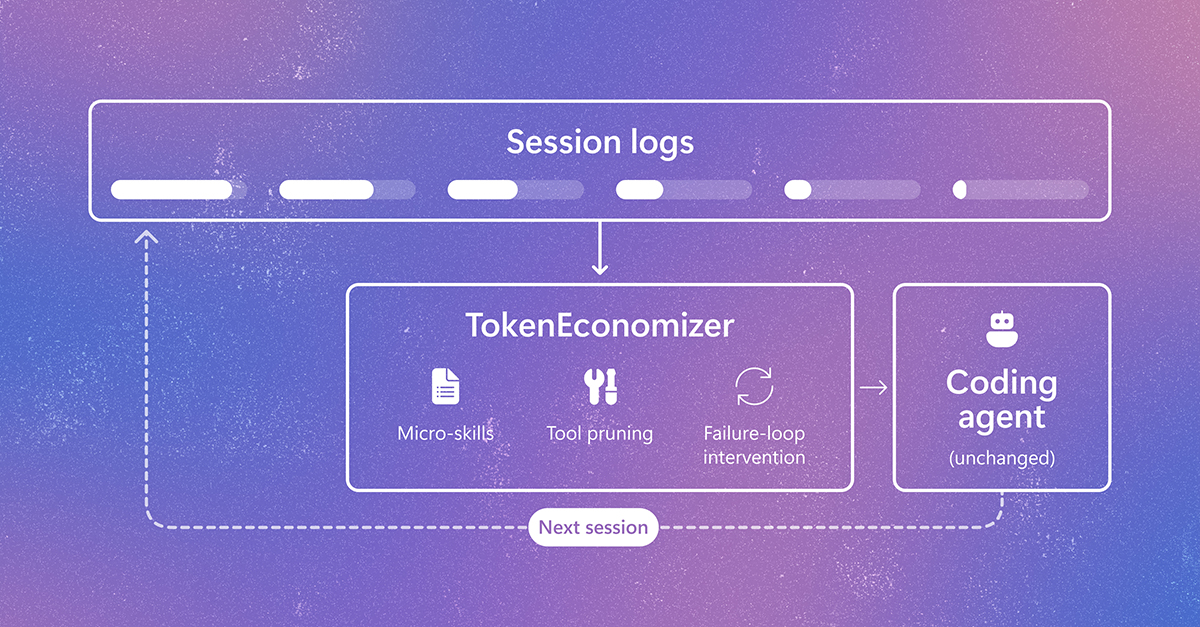
AI coding agents are increasingly help developers fix bugs and build features largely on their own, but every interaction with their models consumes tokens. In each session, an agent sends instructions, tool descriptions, and session history to its model. Most efforts to reduce this cost focus on individual tasks. Yet developers return to the same […] The post TokenEconomizer: Learning from Experience to Make AI Coding Agents More Efficient appeared first on Microsoft Research.
MIT News · Artificial Intelligence· news.mit.eduNov 13, 2026
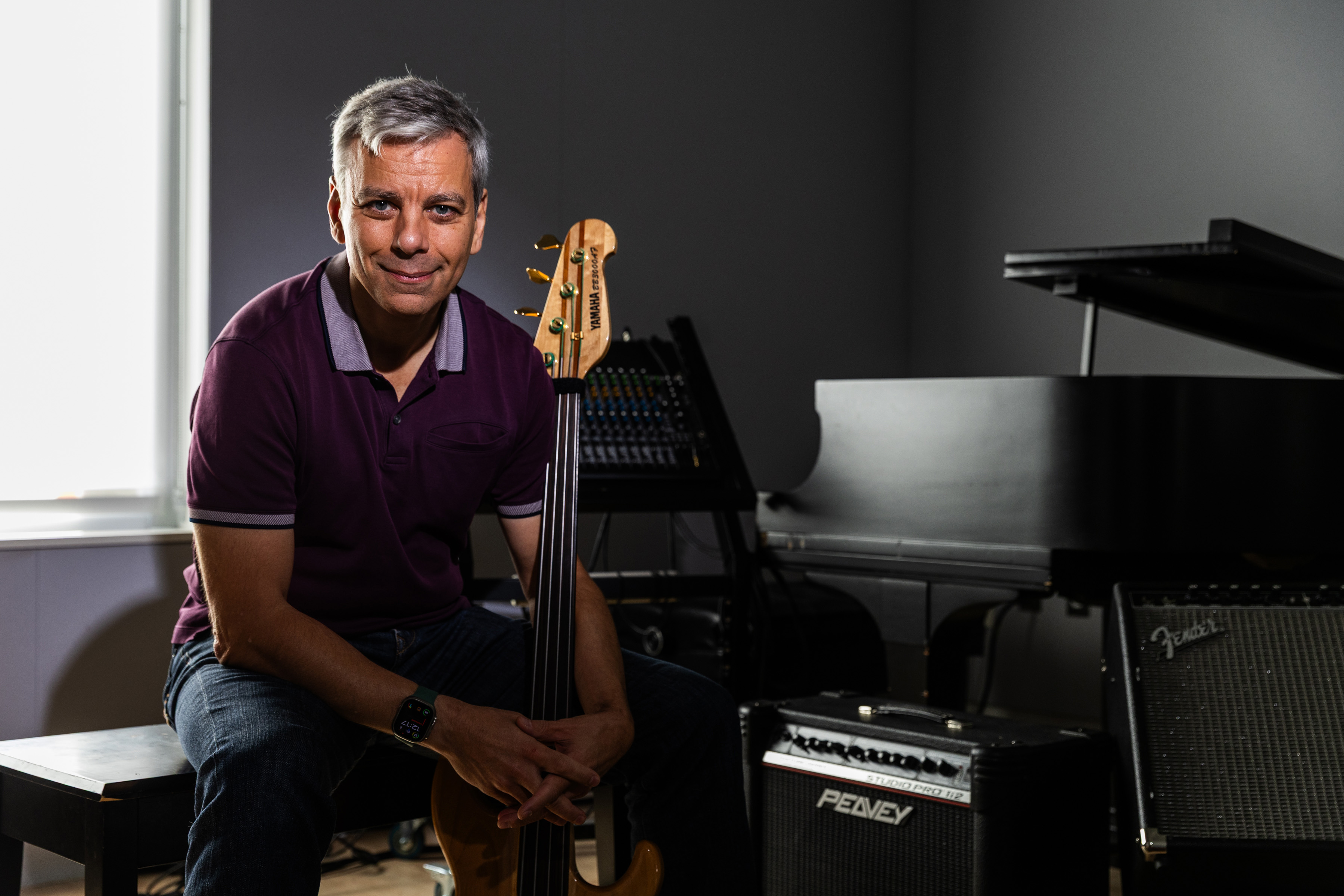
Professor Paris Smaragdis develops computers with superhuman hearing for applications like speech recognition, music understanding, and environmental monitoring.
We use cookies to run the site and, with your consent, for analytics and to show ads.
See our Cookie Policy.