Low-Rank Adaptive Residual Connections (LARC) give a frozen model a compact numerical state that can learn from feedback. The map $h+BAh$ adds a low-rank correction to a hidden representation. A slow state $\rho$ learns starting factors across tasks; a private fast state $\Phi$ copies them, changes with feedback, and resets to the trained initialization. This report specifies an input-side realization of the numerical policy carrier in Memory-Mediated Learning Architecture and examines its factor-space dynamics and learning lifetime. We study a rank-4 input residual with 12,288 trainable parameters on a frozen MiniCPM5-1B-SFT substrate. In a four-candidate program-selection task, two feedback-gradient steps reduce expected query execution error by 24.65 and 36.65 percentage points relative to resetting to the respective trained static and post-adaptation initializations. These development results cover 16 parameter groups and three paired training seeds. A direct support-loss selection rule is much more accurate, reaching 0.78125% error. In a repository-balanced chronological replay of public continuous-integration jobs, retaining online updates raises half-Brier loss from 0.1274 to 0.1808. A fixed follow-up intervention records same-batch non-descent and inconsistent future benefit from shrinking updates. Together, the algebra and measurements distinguish residual capacity, adaptation relative to a starting point, and usefulness on later decisions.
This publication proposes a definition and a classification of agile software development approaches and analyses ten software development methods that can be characterized as being "agile" against the defined criterion.
P. Abrahamsson, O. Salo, Jussi Ronkainen et al.· arXiv.org· 727 citations· ⚡54
The results indicate that software engineering work practices are chosen opportunistically, adapted and configured to provide value under the constrains imposed by the startup context.
Nicolò Paternoster, Carmine Giardino, M. Unterkalmsteiner et al.· Information and Software Tec...· 394 citations· ⚡54
The possibility of inferring high-dimensional data inference in a model that consists of a prior and an auxiliary differentiable constraint given some additional information is considered, thereby allowing a range of potential applications in adapting models to new domains and tasks.
Alexandros Graikos, Esmeralda S. Whitammer, N. Jojic et al.· Neural Information Processin...· 316 citations· ⚡15
It is proved that any global minimizer of the trajectory balance objective can define a policy that samples exactly from the target distribution, and empirically demonstrate the benefits of the trajectories balance objective for GFlowNet convergence, diversity of generated samples, and robustness to long action sequenc...
Esmeralda S. Whitammer, Moksh Jain, Emmanuel Bengio et al.· Neural Information Processin...· 302 citations· ⚡60
Consequences of happiness and unhappiness that are beneficial and detrimental for developers' mental well-being, the software development process, and the produced artifacts are found.
D. Graziotin, Fabian Fagerholm, Xiaofeng Wang et al.· Journal of Systems and Softw...· 236 citations· ⚡13
The Mobile-D approach is briefly outlined here and the experiences gained from four case studies are discussed, which helped develop an agile development approach for mobile application development.
P. Abrahamsson, Antti Hanhineva, H. Hulkko et al.· Conference on Object-Oriente...· 225 citations· ⚡18
Related blog posts
MIT News · Artificial Intelligence· news.mit.eduAug 27, 2026
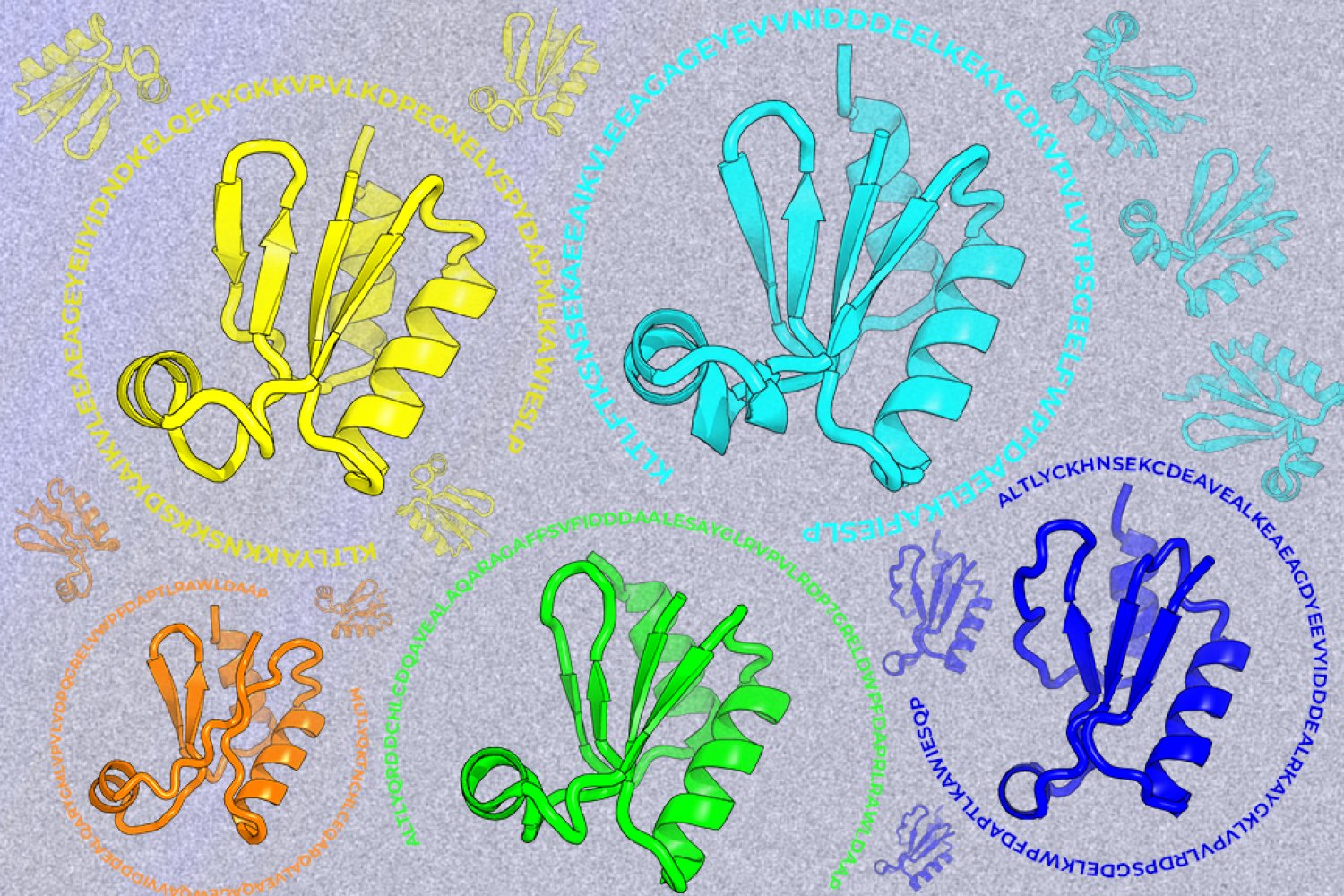
A new machine-learning framework aims to improve the success rate of computational protein design while moving away from results that reproduce sequences found in nature.