Bounded-Fidelity Sim-as-Demo-Stage: Mocap Handoff for Governance Benchmarks
Xue QinSimin LuanCong YangZhijun Li
Oct 2026
Artificial IntelligenceRobotics
Abstract
Sim-to-real research pursues physics fidelity as a primary objective: simulators are judged by how closely they reproduce real-world contact dynamics. For governance benchmarking of LLM-driven robots, where the simulator demonstrates that an admission/policy/contract/audit pipeline behaves correctly, contact fidelity at object handoffs (grasp, carry, place) becomes a liability: contact-force integration noise injects audit-chain divergence that is structurally unrelated to the governance property under test. We propose bounded-fidelity sim-as-demo-stage, a design pattern that suppresses contact physics within explicitly bracketed handoff envelopes while preserving full dynamics elsewhere. The construction uses MuJoCo's mocap-body primitive driven by a 220-line Python adapter that the governance bridge invokes via structured intents. We formalise audit-chain stability as byte-equality of the hashed event log across replays and identify two structural envelope properties that imply it. Across N=1000 replays per posture, the mocap variant produces one distinct audit-chain hash (1000/1000 byte-identical; Wilson 95% CI [0.997, 1.000]); the contact-force baseline produces 584 distinct hashes (993/1000 diverged; CI [0.987, 0.998]). A timestep sweep (1, 2, 5, 10 ms) shows the divergence is structural, not a tuning artefact: it stays at 0.985 at every timestep. Envelope-edge timing jitter (+/-10 simulation steps, 1,400 replays) produces 0 divergence, and audit chains remain byte-equal across K in {1, 2, 3} sequentially handed-off objects (1,500 replays) with sub-linear per-pick-and-place overhead. The pattern gives benchmark designers audit-chain reproducibility at near-zero engineering cost; we also map where it is harmful (sim-to-real validation, policy training, contact-rich tasks) so it is not mis-deployed.

This paper investigates developing real-world perception for active agents, proposes Gibson Environment for this purpose, and showcases a set of perceptual tasks learned therein.
F. Xia, Amir Zamir, Zhi-Yang He et al.· 2018 IEEE/CVF Conference on...· 1,069 citations· ⚡112
GAOKAO-Bench is introduced, an intuitive benchmark that employs questions from the Chinese GAOKAO examination as test samples, including both subjective and objective questions that contribute a robust evaluation benchmark for future large language models and offers valuable insights into the advantages and limitations...
Xiaotian Zhang, Chun-yan Li, Yi Zong et al.· arXiv.org· 216 citations· ⚡17
An algorithm is proposed which leverages disentangled semantic factors to generate adversarial perturbation by altering controlled semantic attributes to fool the learner towards various "adversarial" targets.
Haonan Qiu, Chaowei Xiao, Lei Yang et al.· arXiv.org· 208 citations· ⚡17
This work proposes a HALO that directly maximizes the utility of generations instead of maximizing the log-likelihood of preferences, and suggests that the best loss depends on the inductive biases most appropriate for a given setting, an oft-overlooked consideration.
This work investigates the possibilities of using LLMs in a resume screening setting via a document retrieval framework that simulates job candidate selection and finds that the MTEs are biased, significantly favoring White-associated names in 85% of cases and female-associated names in only 11.1% of cases.
This work shows that orders of magnitude enhancement in performance could be obtained by a combination of hardware improvements and tight quantum-HPC integration and introduces high-performance architectures for quantum-probabilistic computing with custom-designed accelerators to tackle today's industry-scale classical...
Masoud Mohseni, Artur Scherer, K. Johnson et al.· arXiv.org· 121 citations· ⚡9
Related blog posts
MIT News · Artificial Intelligence· news.mit.eduJul 30, 2026
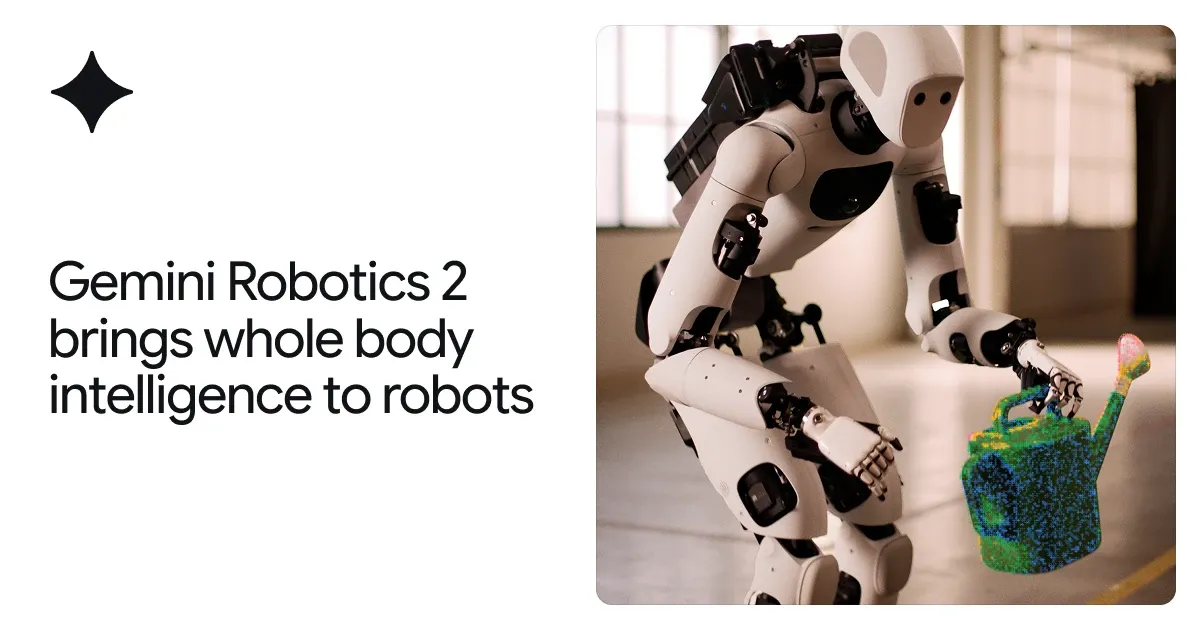
From feet to fingertips — we are teaching robots intelligent whole-body control, fine dexterity, and teamwork to complete a broad range of complex tasks.