This work derives a theoretical characterization of the expressivity of higher-order positional encodings, proving that node-level operators induced by higher-order lifts can mix graph Laplacian frequencies in ways that scalar graph spectral filters cannot.
Abstract
Many real-world systems exhibit higher-order interactions among groups of entities that cannot be captured by pairwise relationships alone. Graph Transformers and Graph Neural Networks increasingly rely on positional encodings to enrich graph representations, yet existing positional encodings are computed solely from the original graph and therefore cannot directly capture observed higher-order interactions. Topological Deep Learning addresses this limitation by lifting graphs to simplicial complexes, but typically requires performing message passing or attention on higher-order neural network representations. We introduce a representation learning paradigm that enriches graph representations with higher-order topology through positional encodings, enabling standard graph learning models to exploit lifted incidence structure without modifying the backbone. We derive a theoretical characterization of the expressivity of higher-order positional encodings, proving that node-level operators induced by higher-order lifts can mix graph Laplacian frequencies in ways that scalar graph spectral filters cannot. Guided by this theory, we instantiate higher-order positional encodings using Hodge Laplacians derived from clique complexes. Experiments with Graph Transformers on ZINC and controlled synthetic benchmarks demonstrate improvements in predictive performance, while a fixed-1-skeleton experiment shows that the pipeline can transmit higher-order information when cells are supplied independently of the graph. Together, our results establish higher-order positional encodings as a principled bridge between graph positional encodings and topological deep learning.
This work introduces PathLapPE, a novel spectral positional encoding (PE) derived from the path Laplacian on directed graphs that provides node- and edge-level features that encode directional higher-order structure and can be incorporated into standard graph learning architectures.
Lydia Mezrag, Semih Cantürk, Michael Perlmutter et al.· 0 citations
Solving reasoning tasks supported on graphs typically requires providing a Language Reasoning Model (LRM) with a serialized description of the graph. This approach results in the input length growing with the number of edges, which limits the size of the problems that can be solved. Furthermore, even when graphs fit in...
Javier Porras-Valenzuela, Arushi Arora, Alejandro Ribeiro· 0 citations
This thesis investigates the expressive power of neural networks for structured data, focusing on graph neural networks and symmetry-aware architectures. We present four main contributions. First, we characterize the generic expressive power of geometric message-passing neural networks on sparse graphs and introduce EG...
Hierarchical graph-level tasks that require reasoning over substructures that extend beyond local neighborhoods are posing challenges for standard Graph Neural Networks (GNNs). While graph pooling aims to address this by coarsening graphs into hierarchical representations, existing methods often fail to explicitly pres...
Luca Sbicego, Xiao-Wen Dong, D. Thanou· 0 citations
Cluster-TNN is introduced, a domain-agnostic framework that avoids this bottleneck by lifting locally instead, and enables the first training of multiple different higher-order Topological Neural Networks on large datasets such as Reddit and OGBN Products.
David Leko, Luka Beni'c, Guillermo Bernárdez et al.· 1 citation
Topological structures such as simplicial complexes, hypergraphs, and cell complexes extend standard graph models by modeling higher-order relationships. These structures appear in many modern datasets and require specialized methods for generating meaningful embeddings. In this paper, we introduce TopoEmbedX, a unifie...
Florian Frantzen, Ibrahem AlJabea, I. Henriques-Cadby et al.· arXiv.org· 0 citations
Related blog posts
MIT News · Artificial Intelligence· news.mit.eduNov 17, 2026
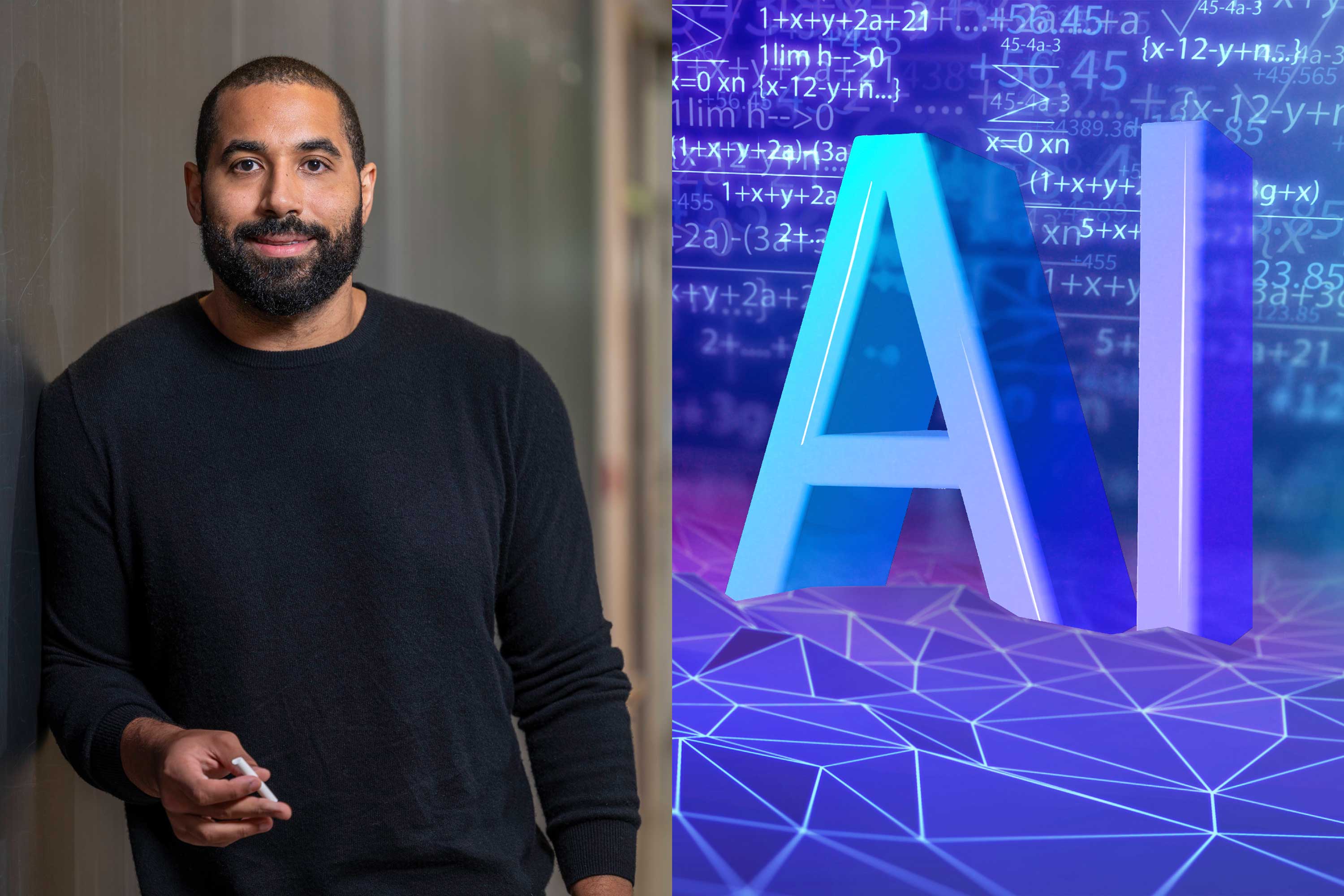
By studying the computational foundations of language learning, Associate Professor Jacob Andreas builds intelligent systems that can communicate effectively with humans.
Microsoft Research Blog· microsoft.comNov 16, 2026
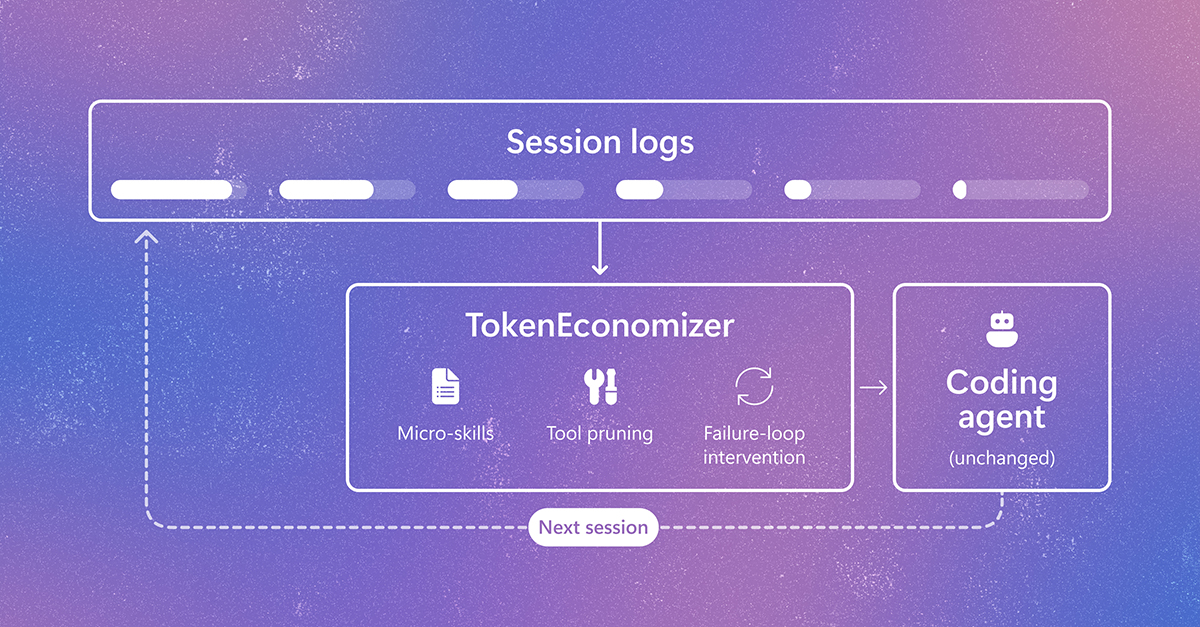
AI coding agents are increasingly help developers fix bugs and build features largely on their own, but every interaction with their models consumes tokens. In each session, an agent sends instructions, tool descriptions, and session history to its model. Most efforts to reduce this cost focus on individual tasks. Yet developers return to the same […] The post TokenEconomizer: Learning from Experience to Make AI Coding Agents More Efficient appeared first on Microsoft Research.
MIT News · Artificial Intelligence· news.mit.eduNov 13, 2026