Skip to content
#machine learning #computer vision Preprint Open access

GB-LSR: Local Spectral Decoding with a Learned Global Bandwidth for Arbitrary-Scale Super-Resolution

Max Shad Naeem Khoshnevis
Oct 2026
Machine Learning Computer Vision

Abstract

We present GB-LSR (Global-Bandwidth Local Spectral Representation), a fixed-grid local spectral representation for continuous image decoding. The image domain is partitioned into non-overlapping square patches. Each patch carries coefficients for a truncated Fourier basis, predicted by a single linear projection from shared convolutional-encoder features, and one trainable scalar bandwidth is shared across every patch and every image. As in earlier local spectral decoders, decoding at a continuous coordinate is a fixed-size basis contraction whose cost is set by the spectral cutoff; GB-LSR learns the bandwidth of that basis instead of fixing it. We evaluate an arbitrary-scale super-resolution extension, GB-LSR-Scalar-ASR, against the authors' released LIIF, LTE, and SRNO checkpoints on the same RDN encoder, with every method scored under one protocol and timed in one session per scale, each on one GPU. It runs 1.25x faster than LIIF-RDN at x4 and as fast as SRNO-RDN, whose released code uses 15 times as much peak memory on Urban100. It trails the three encoder-matched baselines by 0.07 to 0.79 dB PSNR-Y in distribution, SRNO-RDN by 0.35 dB on average. Removing the local ensemble raises the speedup to 2.41x over LIIF-RDN and 1.95x over SRNO-RDN at x4, and to 3.00x and 2.41x at x8, without changing PSNR-Y beyond seed variation, at the cost of value jumps at cell boundaries of 0.22 gray levels (of 255) on average at x4. Against the EDSR-baseline checkpoints of five recent methods at x4, GB-LSR-Scalar-ASR scores above or within 0.17 dB on PSNR-Y of LMF, SRNO-EDSR, and OPE-SR-EDSR (1.39 to 6.43 million parameters against 22.02) and 0.14 to 0.57 dB below GSASR and Thera (20.44 and 5.85 million), and has a higher mean LPIPS at x4 than every baseline.


View source

Similar papers

#artificial intelligence Conference Open access Jun 2018

Gibson Env: Real-World Perception for Embodied Agents

This paper investigates developing real-world perception for active agents, proposes Gibson Environment for this purpose, and showcases a set of perceptual tasks learned therein.

F. Xia, Amir Zamir, Zhi-Yang He et al. · 1,069 citations · ⚡112
#computer vision Review Sep 2017

Agile Software Development Methods: Review and Analysis

This publication proposes a definition and a classification of agile software development approaches and analyses ten software development methods that can be characterized as being "agile" against the defined criterion.

P. Abrahamsson, O. Salo, Jussi Ronkainen et al. · 727 citations · ⚡54
#computer vision Jun 2008

The impact of agile practices on communication in software development

The study shows that agile practices improve both informal and formal communication, but indicates that, in larger development situations involving multiple external stakeholders, a mismatch of adequate communication mechanisms can sometimes even hinder the communication.

M. Pikkarainen, Jukka Haikara, O. Salo et al. · 401 citations · ⚡48
#machine learning Review Open access Oct 2014

Software development in startup companies: A systematic mapping study

The results indicate that software engineering work practices are chosen opportunistically, adapted and configured to provide value under the constrains imposed by the startup context.

Nicolò Paternoster, Carmine Giardino, M. Unterkalmsteiner et al. · 394 citations · ⚡54

Diffusion models as plug-and-play priors

The possibility of inferring high-dimensional data inference in a model that consists of a prior and an auxiliary differentiable constraint given some additional information is considered, thereby allowing a range of potential applications in adapting models to new domains and tasks.

Alexandros Graikos, Esmeralda S. Whitammer, N. Jojic et al. · 316 citations · ⚡15

Related blog posts

MIT News · Artificial Intelligence Oct 28, 2026

Making machines that can listen

Professor Paris Smaragdis develops computers with superhuman hearing for applications like speech recognition, music understanding, and environmental monitoring.

Microsoft Research Blog Aug 11, 2026

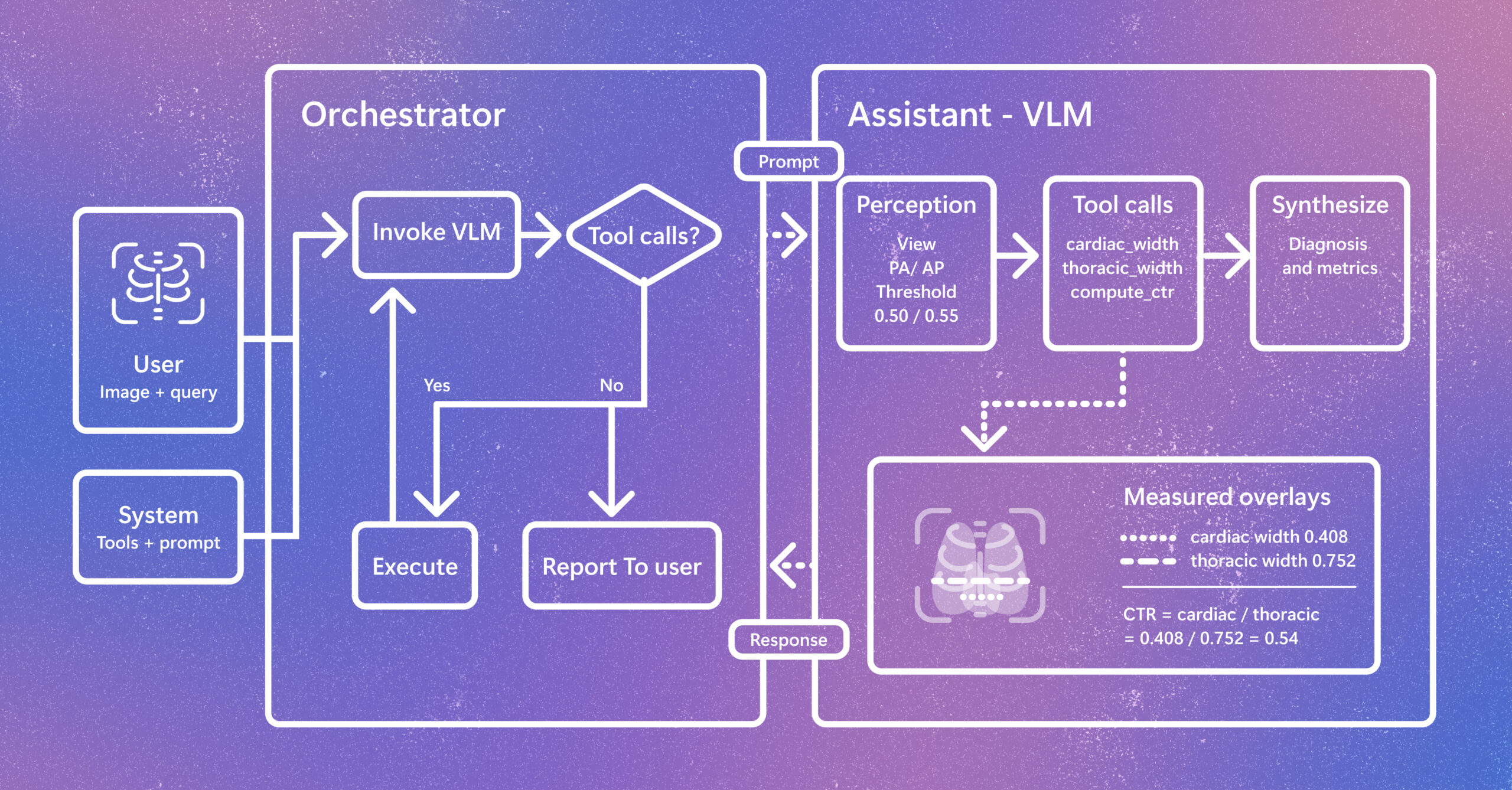
Introducing CARE-X: Towards Clinically Useful Radiology VLMs with Auxiliary Supervision, Reward-Aligned Learning, and Tool-Augmented Measurement

Radiology AI is evolving beyond report generation. CARE-X explores a unified approach that combines flexible reasoning, calibrated predictions, and measurement-based tools for chest X-ray interpretation. The post Introducing CARE-X: Towards Clinically Useful Radiology VLMs with Auxiliary Supervision, Reward-Aligned Learning, and Tool-Augmented Measurement appeared first on Microsoft Research.

We use cookies to run the site and, with your consent, for analytics and to show ads. See our Cookie Policy.