Urban navigation requires embodied agents to pursue long-horizon goals through local decisions based on egocentric observations. However, existing agentic navigation methods often struggle to translate distant goals into coherent local decisions in large-scale physical environments. Their reliance on linguistic reasoning over transient observations or limited history constrains anticipation of the consequences of actions and future conditions, despite the importance of such foresight for navigating long and complex urban routes. To bridge this gap, we propose PreAct-Nav, an agentic navigation framework that equips frozen policies with anticipatory reasoning for robust urban navigation. Our central idea is to anchor local decisions in persistent medium-horizon subgoals, assess the consequences of predicted actions before execution, and continually update the reasoning context using actual outcomes. At its core, a navigation memory module maintains the active subgoal and relevant experience across decisions, translating distant goals into actionable intermediate objectives. We further introduce a predictive world sandbox that uses an action-conditioned world model (AC-WM) to forecast world dynamics conditioned on candidate movements. A vision-language model (VLM) reasoner interprets these predictions under the current subgoal to retain or revise actions. After execution, real observations are used to assess outcomes, correct inconsistent assumptions, and update memory to continue or reformulate the subgoal. Extensive evaluations demonstrate that the proposed PreAct-Nav improves action selection through memory updates and visual prediction, with more pronounced gains on longer routes and routes with more turns.

GAOKAO-Bench is introduced, an intuitive benchmark that employs questions from the Chinese GAOKAO examination as test samples, including both subjective and objective questions that contribute a robust evaluation benchmark for future large language models and offers valuable insights into the advantages and limitations...
Xiaotian Zhang, Chun-yan Li, Yi Zong et al.· arXiv.org· 216 citations· ⚡17
An algorithm is proposed which leverages disentangled semantic factors to generate adversarial perturbation by altering controlled semantic attributes to fool the learner towards various "adversarial" targets.
Haonan Qiu, Chaowei Xiao, Lei Yang et al.· arXiv.org· 208 citations· ⚡17
This work proposes a HALO that directly maximizes the utility of generations instead of maximizing the log-likelihood of preferences, and suggests that the best loss depends on the inductive biases most appropriate for a given setting, an oft-overlooked consideration.
This work investigates the possibilities of using LLMs in a resume screening setting via a document retrieval framework that simulates job candidate selection and finds that the MTEs are biased, significantly favoring White-associated names in 85% of cases and female-associated names in only 11.1% of cases.
This work shows that orders of magnitude enhancement in performance could be obtained by a combination of hardware improvements and tight quantum-HPC integration and introduces high-performance architectures for quantum-probabilistic computing with custom-designed accelerators to tackle today's industry-scale classical...
Masoud Mohseni, Artur Scherer, K. Johnson et al.· arXiv.org· 121 citations· ⚡9
This paper presents a comprehensive overview of the Ultralytics YOLO family, emphasizing architectural evolution, benchmarking, deployment, and emerging directions from YOLOv5 through YOLO27, and examines detection, segmentation, depth, classification, pose, oriented detection, tracking, export, quantization, and deplo...
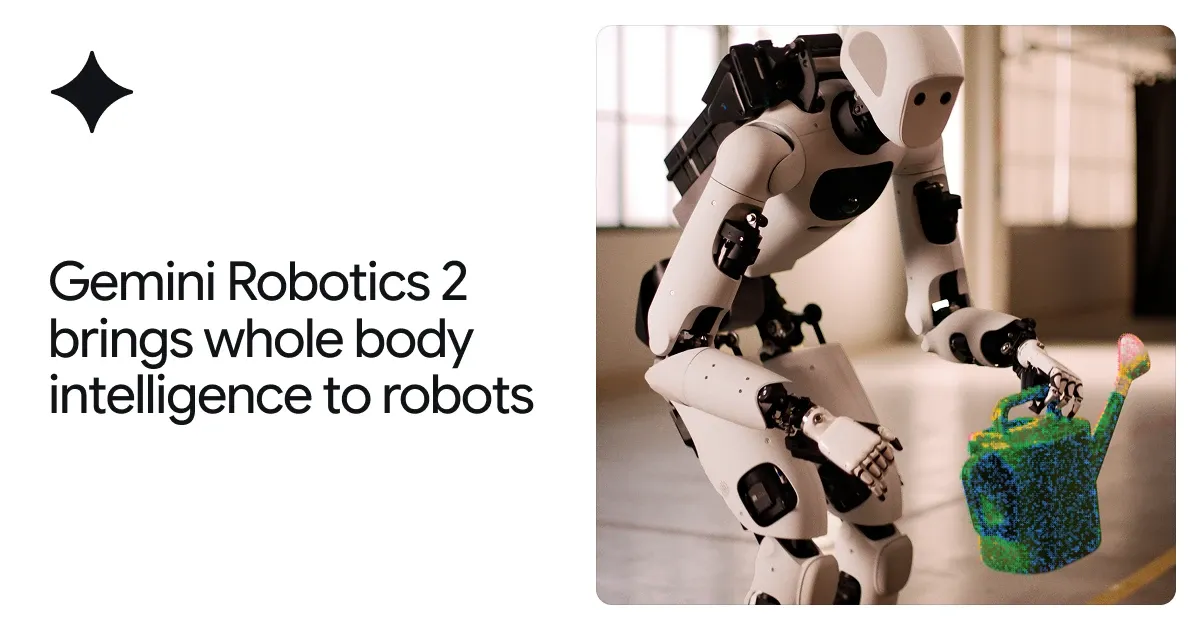
From feet to fingertips — we are teaching robots intelligent whole-body control, fine dexterity, and teamwork to complete a broad range of complex tasks.
MIT News · Artificial Intelligence· news.mit.eduOct 13, 2026
Machine-learning networks can learn without detailed instructions from a designer. Those that do may offer insight into how the brain reorganizes itself during learning.