Skip to content

EVFormer: An Egocentric Vision-EMG Bidirectional Attention Model for Bimanual Hand Pose Estimation

Oct 2026 · 0 citations · 40 references
Computer Science

Abstract

Egocentric bimanual hand pose estimation is important for virtual interaction, wearable control, and rehabilitation, but visual observations are often degraded by self-occlusion, hand-hand contact, and object manipulation. We propose EVFormer, a multimodal framework that combines the current RGB frame with the preceding 200 ms of bilateral wrist surface electromyography (sEMG) to estimate 44 finger and wrist joint angles. EVFormer separately encodes visual spatial features and sEMG temporal features, enables cross-modal information exchange through sequential bidirectional cross-attention, and integrates the two modalities using feature-wise gated fusion. We evaluate EVFormer in a single-participant feasibility study using one synchronized public EgoEMG recording with chronologically separated training, validation, and test splits. On 296 test samples, EVFormer achieves a mean absolute error of 11.482 degrees, compared with 13.228-13.610 degrees for vision-only, sEMG-only, late-fusion, and training-mean baselines. This corresponds to relative error reductions of 13.20% compared with the vision-only model and 14.23% compared with late fusion. EVFormer also achieves the lowest error in four of the five evaluated gesture classes. These results provide preliminary evidence that feature-level interaction between egocentric vision and sEMG can improve bimanual hand pose estimation. Further evaluation across participants, recording sessions, sensor placements, and real-world interaction conditions is required to establish the generalizability of the approach.

View source

Similar papers

#artificial intelligence Preprint Jul 2024

The Llama 3 Herd of Models

It is found that Llama 3 delivers comparable quality to leading language models such as GPT-4 on a plethora of tasks, and performs competitively with the state-of-the-art on image, video, and speech recognition tasks.

Aaron Grattafiori, Abhimanyu Dubey, Abhinav Jauhri et al. · 21,082 citations · ⚡3,832
#artificial intelligence Conference Open access Jun 2018

Gibson Env: Real-World Perception for Embodied Agents

This paper investigates developing real-world perception for active agents, proposes Gibson Environment for this purpose, and showcases a set of perceptual tasks learned therein.

F. Xia, Amir Zamir, Zhi-Yang He et al. · 1,069 citations · ⚡112
#computer vision Review Sep 2017

Agile Software Development Methods: Review and Analysis

This publication proposes a definition and a classification of agile software development approaches and analyses ten software development methods that can be characterized as being "agile" against the defined criterion.

P. Abrahamsson, O. Salo, Jussi Ronkainen et al. · 727 citations · ⚡54
#computer vision Jun 2008

The impact of agile practices on communication in software development

The study shows that agile practices improve both informal and formal communication, but indicates that, in larger development situations involving multiple external stakeholders, a mismatch of adequate communication mechanisms can sometimes even hinder the communication.

M. Pikkarainen, Jukka Haikara, O. Salo et al. · 401 citations · ⚡48
#machine learning Review Open access Oct 2014

Software development in startup companies: A systematic mapping study

The results indicate that software engineering work practices are chosen opportunistically, adapted and configured to provide value under the constrains imposed by the startup context.

Nicolò Paternoster, Carmine Giardino, M. Unterkalmsteiner et al. · 394 citations · ⚡54

Related blog posts

MIT News · Artificial Intelligence Nov 17, 2026

Learning the language of machine learning

By studying the computational foundations of language learning, Associate Professor Jacob Andreas builds intelligent systems that can communicate effectively with humans.

Microsoft Research Blog Nov 16, 2026

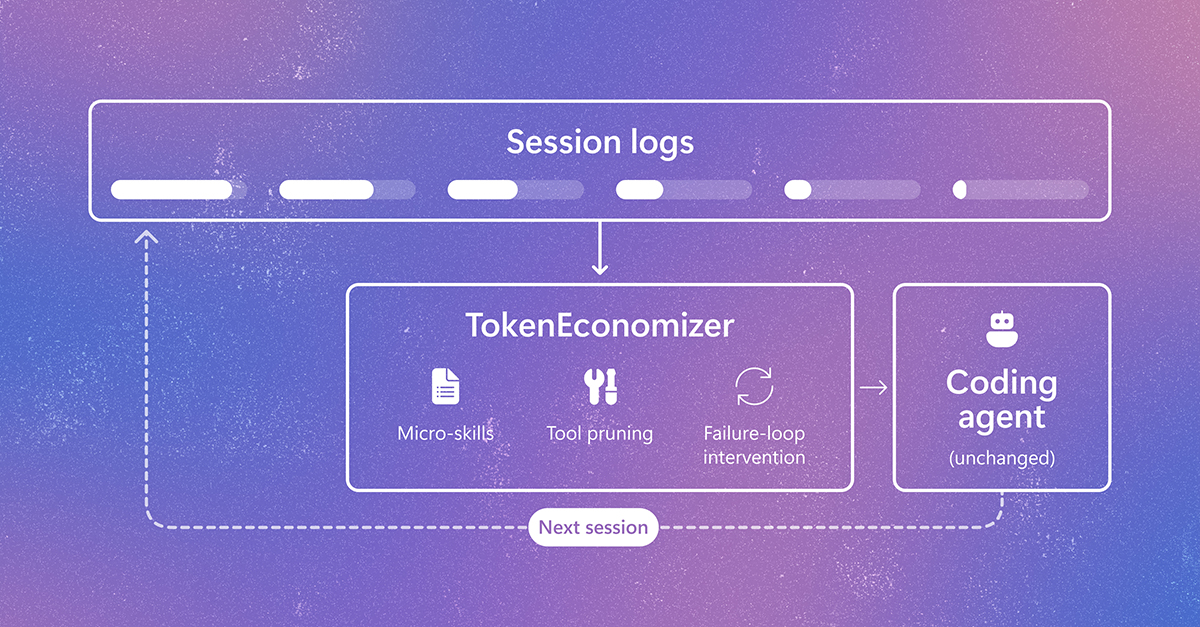
TokenEconomizer: Learning from Experience to Make AI Coding Agents More Efficient

AI coding agents are increasingly help developers fix bugs and build features largely on their own, but every interaction with their models consumes tokens. In each session, an agent sends instructions, tool descriptions, and session history to its model. Most efforts to reduce this cost focus on individual tasks. Yet developers return to the same […] The post TokenEconomizer: Learning from Experience to Make AI Coding Agents More Efficient appeared first on Microsoft Research.

MIT News · Artificial Intelligence Oct 28, 2026

Making machines that can listen

Professor Paris Smaragdis develops computers with superhuman hearing for applications like speech recognition, music understanding, and environmental monitoring.

We use cookies to run the site and, with your consent, for analytics and to show ads. See our Cookie Policy.