Facial movements convey subtle and important information that is critical for human social communication. Optical methods for face capture are difficult or impossible to use when the face is occluded by head-mounted devices (HMDs), such as VR headsets. Even with a clear line of sight, such methods raise privacy concerns and require head-mounted capture rigs that offset cameras and lighting from the face. We show that high-density surface electromyography (HD-sEMG) provides a viable non-optical alternative that addresses these challenges. We measured 64 EMG channels, using two textile EMG grids, with 32 from the forehead (typically occluded by an HMD) and 32 from the side of the face. EMG data were digitized at 2048 Hz and filtered. Facial movements were simultaneously recorded and used to estimate 478 3D facial landmarks using MediaPipe's Face Landmarker. A major challenge in such multimodal recordings is synchronizing EMG and video data, which have different sampling frequencies and independent clocks. We developed a novel synchronization method using analog audio bursts that is capable of sub-millisecond synchronization. We also developed a staged fitting method that fits a recent high-resolution parametric head model (GNM), with 253 identity blendshapes and 383 expression blendshapes, to the MediaPipe landmarks as participants performed different facial expressions. We trained a deep neural network comprising per-grid spatial encoders followed by a dilated temporal convolutional network (TCN) to predict blendshape parameters from HD-sEMG signals at 100 Hz. Once trained, the network can predict expression blendshapes solely from HD-sEMG recordings. The output can be rendered using standard real-time blendshape animation methods. We demonstrate the methods using recordings from 25 participants, and direct expression transfer to a variety of human faces and non-human characters.

This paper investigates developing real-world perception for active agents, proposes Gibson Environment for this purpose, and showcases a set of perceptual tasks learned therein.
F. Xia, Amir Zamir, Zhi-Yang He et al.· 2018 IEEE/CVF Conference on...· 1,069 citations· ⚡112
This publication proposes a definition and a classification of agile software development approaches and analyses ten software development methods that can be characterized as being "agile" against the defined criterion.
P. Abrahamsson, O. Salo, Jussi Ronkainen et al.· arXiv.org· 727 citations· ⚡54
The study shows that agile practices improve both informal and formal communication, but indicates that, in larger development situations involving multiple external stakeholders, a mismatch of adequate communication mechanisms can sometimes even hinder the communication.
M. Pikkarainen, Jukka Haikara, O. Salo et al.· Empirical Software Engineeri...· 401 citations· ⚡48
The results indicate that software engineering work practices are chosen opportunistically, adapted and configured to provide value under the constrains imposed by the startup context.
Nicolò Paternoster, Carmine Giardino, M. Unterkalmsteiner et al.· Information and Software Tec...· 394 citations· ⚡54
The possibility of inferring high-dimensional data inference in a model that consists of a prior and an auxiliary differentiable constraint given some additional information is considered, thereby allowing a range of potential applications in adapting models to new domains and tasks.
Alexandros Graikos, Esmeralda S. Whitammer, N. Jojic et al.· Neural Information Processin...· 316 citations· ⚡15
Related blog posts
MIT News · Artificial Intelligence· news.mit.eduOct 28, 2026
Professor Paris Smaragdis develops computers with superhuman hearing for applications like speech recognition, music understanding, and environmental monitoring.
Exploring how generative AI could make machine vision more accessible to businesses. The post GenEye in a Box: Making Machine Vision Something You Can Just Ask For appeared first on GPT-Lab.
Microsoft Research Blog· microsoft.comAug 11, 2026
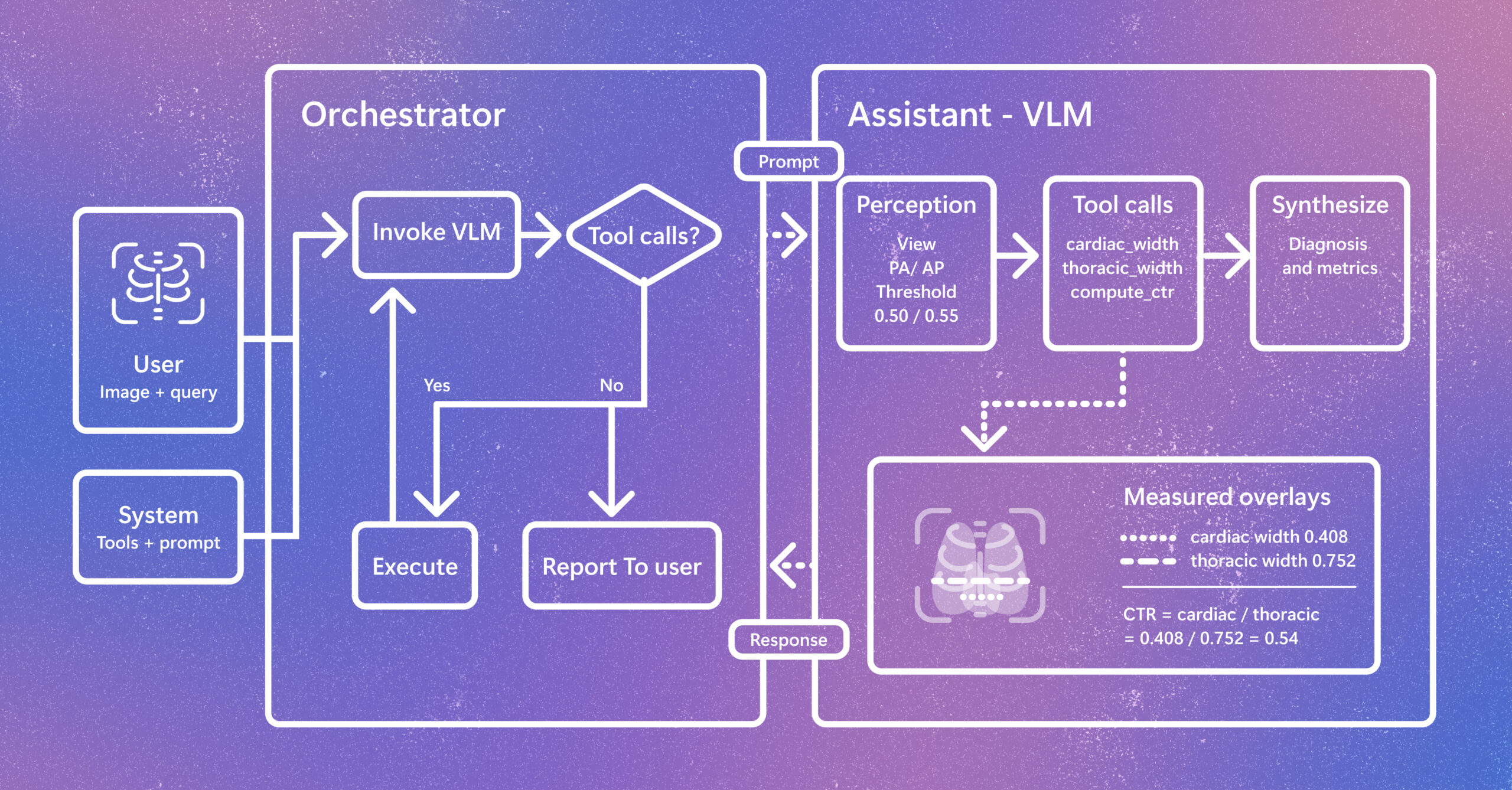
Radiology AI is evolving beyond report generation. CARE-X explores a unified approach that combines flexible reasoning, calibrated predictions, and measurement-based tools for chest X-ray interpretation. The post Introducing CARE-X: Towards Clinically Useful Radiology VLMs with Auxiliary Supervision, Reward-Aligned Learning, and Tool-Augmented Measurement appeared first on Microsoft Research.