Skip to content

What to Distinguish and How? Opportunities and Challenges of Augmenting Multiple, Cluttered Objects in Complex Scenes for People with Low Vision

Jul 2026 · arXiv.org · Vol abs/2607.10902 · 0 citations · 129 references
Computer Science

Abstract

People with low vision (PLV) struggle to perceive complex scenes like busy kitchens and crowded streets, which contain many objects, visual clutter, and dynamic elements. Prior AR systems for low vision either enhance low-level visual features or augment task-relevant objects for single tasks in simple settings, leaving multi-object augmentation in complex scenes underexplored. Informed by a formative study characterizing important objects and their perceived importance for PLV, we built SceneGlance, a wearable AR system that recognizes important objects and visually distinguishes them by importance level. Through a controlled lab study with 12 PLV in a mock-up kitchen scene and a free-form think-aloud study with 13 PLV navigating an outdoor route, we found that AR distinction on object importance shifted PLV's attention toward objects of higher importance, and supported perception strategies such as building mental snapshots from the augmentation distribution and hierarchical scanning by importance. However, this attention shift came with a tradeoff of reduced overall scene recall. The studies also surfaced challenges posed by AR augmentations in complex scenes, such as adjacent augmentations blending or interfering with each other, yielding design implications for more practical AR vision enhancement systems in the complex real world.

View source

Similar papers

#artificial intelligence Preprint Sep 2026

Touvigation: Embodied Adaptive Object Acquisition for Blind and Low-Vision Users in Unfamiliar Indoor Environments

Touvigation is presented, a hands-free object acquisition system that combines vision-language understanding with persistent local spatial modeling to provide low-latency, body-relative guidance and demonstrates how persistent spatial grounding and adaptive embodied guidance can improve object acquisition for blind and...

George Xi Wang, Xiang-Yu Li, Shaoyue Wen et al. · 0 citations
#human-computer interacti... Open access Oct 2026

Exploring Object Recall in an Object-Rich AR Office Scene

Augmented reality (AR) changes how users perceive and attend to their surroundings. Prior work suggests AR can reduce attention to the physical world, but it remains unclear whether this holds in environments dense with both virtual and physical objects, and which factors most affect object recall. This study examines...

Sangita Kunapuli, Shane Dirksen, Radha Kumaran et al. · 0 citations
Preprint Nov 2026

STARE: Scene Text-Aware multimodal Retrieval for Everyday objects

In this study, we focus on service robots that retrieve and transport everyday objects based on free-form instructions that may refer to visual features and scene text. This is challenging because it requires a multimodal understanding of the visual features and spatial relationships of objects, as well as scene text e...

Kento Tokura, Ryosuke Korekata, Daichi Yashima et al. · 0 citations
#artificial intelligence Preprint Sep 2026

SceneBench: A Hierarchical Benchmark for Vision-Language Understanding of 3D Scenes

SceneBench is introduced, a benchmark of 966 photorealistic 3D scenes reconstructed with Gaussian Splatting and densely annotated with hierarchical semantics spanning scenes, rooms, functional areas, object groups, and individual objects that provides a realistic testbed for developing and evaluating models capable of...

Anubhav Khanal, Prabigya Acharya, Roshni Poudel et al. · 0 citations
Preprint Oct 2026

MuSTMM: Learning Sound-Triggered Mobile Manipulation across Multiple Scenes

Sound-Triggered Mobile Manipulation (STMM) requires robots to respond to sound events by navigating to the associated objects and performing appropriate physical interactions. Existing STMM evaluations primarily vary object layouts within limited architectural structures, leaving challenges to unseen scenes insufficien...

Hao Ju, Feng Yan, Zhi-Hao Zhong et al. · 0 citations
#artificial intelligence Preprint Oct 2026

Zooming without Zooming v2: From Seeing Details to Connecting Evidence for Generalizable Multimodal Perception

Multimodal perception forms the foundation of multimodal intelligence. In particular, spatial perception and multimodal long-context understanding are two pivotal tasks that underpin embodied AI and multimodal agents. However, synthesizing targeted, high-quality training data for these tasks remains difficult and costl...

Lai Wei, Ya-Tai Li, Liang He et al. · 0 citations

Related blog posts

Microsoft Research Blog Nov 5, 2026

Formally verifying agent-written full-stack web apps with PDD Kit

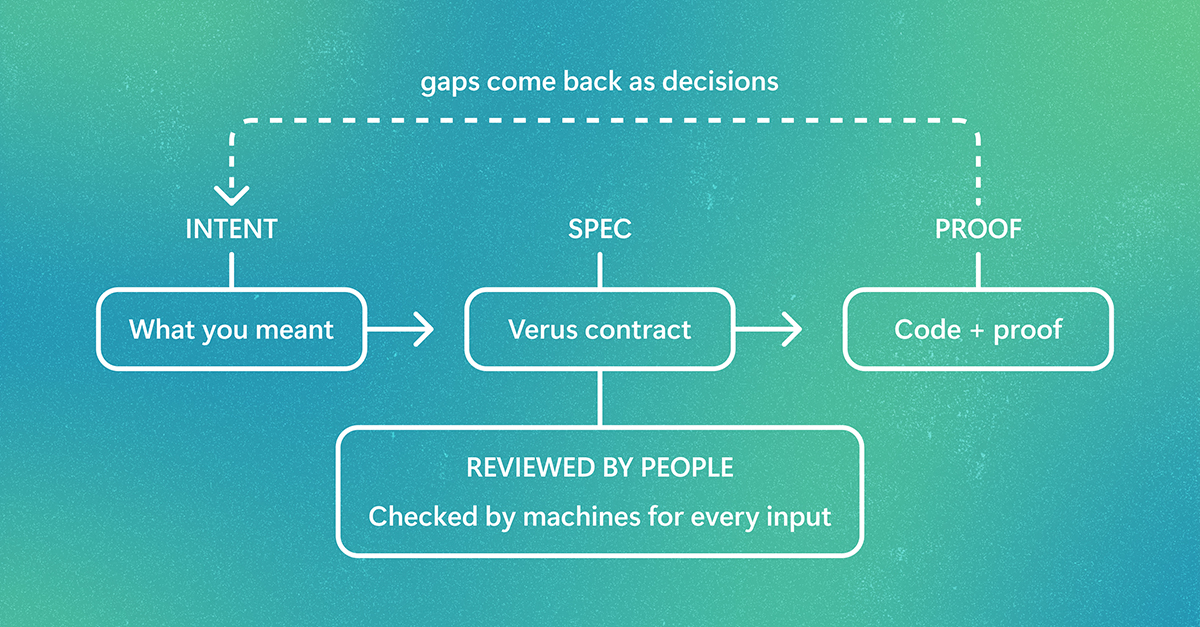
AI agents can generate code at a scale that’s hard for humans to review line-by-line. PDD Kit helps ensure the code is doing what the developer intended by creating formal specifications and testing against them. It converts developer intent into a Verus specification, proves AI-generated code meets it for every input, and uses tests where proofs aren't practical. Developers review intent, not every line. The post Formally verifying agent-written full-stack web apps with PDD Kit appeared first o…

MIT News · Artificial Intelligence Oct 28, 2026

Making machines that can listen

Professor Paris Smaragdis develops computers with superhuman hearing for applications like speech recognition, music understanding, and environmental monitoring.

MIT News · Artificial Intelligence Oct 23, 2026

Reinforcing the value of human understanding at MIT

During the School of Humanities, Arts, and Social Sciences’ 75th Anniversary Symposium, President Sally Kornbluth said “MIT has never needed your particular insight and guidance more than we do now.”

We use cookies to run the site and, with your consent, for analytics and to show ads. See our Cookie Policy.