Skip to content
#machine learning #computer vision Preprint Open access

Revisiting Identity and Spectra Dispersion in Media-Bridged Time Series Forecasting: Linking Multivariate Signals and Narrative Flows

Jierui Lei Wenjian Zhang Qingyi Yang Yuyang Hong Fangzheng Chen Zhengbo Zhang Haina Tang Shiming Xiang
Oct 2026
Machine Learning Computer Vision

Abstract

Media-bridged time series forecasting is expanding to encompass traditional "multivariate" and emerging "multimodal" (e.g., through textual assistance). Existing Time Series Forecasting (TSF) models still rely on paradigm-specific relation, fusion, and temporal modules, hindering a common forecasting backbone across numerical and pre-aligned narrative-flow settings. To explore this, we propose the Multimedia Identity-Aware Prism Network (MIDAPN), a unified spatiotemporal forecasting backbone based on media-general graph adaptation and automatic temporal learning: (1) Following media pre-alignment, our Multimedia Identity-Aware Graph (MIDAG) revisits identity through static essence, dynamic behavior, and latent commonality, inducing affinities that extend variable-specific dependencies across media. Contextual Identity Modulation (CIM) further refines discriminative aggregation. (2) We develop Spectral Prism Convolution (SPConv) to automatically perform hierarchical temporal analysis, balancing coarse trends and fine-grained details. Meanwhile, its Adaptive Search Guidance configures a scale-efficient architecture for temporal-dimension reconstruction. These decoupled yet synergistic components jointly address media identity disentanglement and temporal-scale mismatch. Comprehensive evaluations involving 16 SOTA TSF models across 13 "multivariate" and 12 "multimodal" datasets, alongside targeted long-context comparisons against 14 time series foundation models and fused pretrained language models, demonstrate MIDAPN's consistent superiority and broad shared backbone compatibility. The code is available at \href{https://github.com/leijieruilq/MIDAPN/tree/main}{https://github.com/MIDAPN}.

View source

Similar papers

#artificial intelligence Conference Open access Jun 2018

Gibson Env: Real-World Perception for Embodied Agents

This paper investigates developing real-world perception for active agents, proposes Gibson Environment for this purpose, and showcases a set of perceptual tasks learned therein.

F. Xia, Amir Zamir, Zhi-Yang He et al. · 1,069 citations · ⚡112
#computer vision Review Sep 2017

Agile Software Development Methods: Review and Analysis

This publication proposes a definition and a classification of agile software development approaches and analyses ten software development methods that can be characterized as being "agile" against the defined criterion.

P. Abrahamsson, O. Salo, Jussi Ronkainen et al. · 727 citations · ⚡54
#computer vision Jun 2008

The impact of agile practices on communication in software development

The study shows that agile practices improve both informal and formal communication, but indicates that, in larger development situations involving multiple external stakeholders, a mismatch of adequate communication mechanisms can sometimes even hinder the communication.

M. Pikkarainen, Jukka Haikara, O. Salo et al. · 401 citations · ⚡48
#machine learning Review Open access Oct 2014

Software development in startup companies: A systematic mapping study

The results indicate that software engineering work practices are chosen opportunistically, adapted and configured to provide value under the constrains imposed by the startup context.

Nicolò Paternoster, Carmine Giardino, M. Unterkalmsteiner et al. · 394 citations · ⚡54

Diffusion models as plug-and-play priors

The possibility of inferring high-dimensional data inference in a model that consists of a prior and an auxiliary differentiable constraint given some additional information is considered, thereby allowing a range of potential applications in adapting models to new domains and tasks.

Alexandros Graikos, Esmeralda S. Whitammer, N. Jojic et al. · 316 citations · ⚡15

Related blog posts

MIT News · Artificial Intelligence Oct 28, 2026

Making machines that can listen

Professor Paris Smaragdis develops computers with superhuman hearing for applications like speech recognition, music understanding, and environmental monitoring.

Microsoft Research Blog Aug 11, 2026

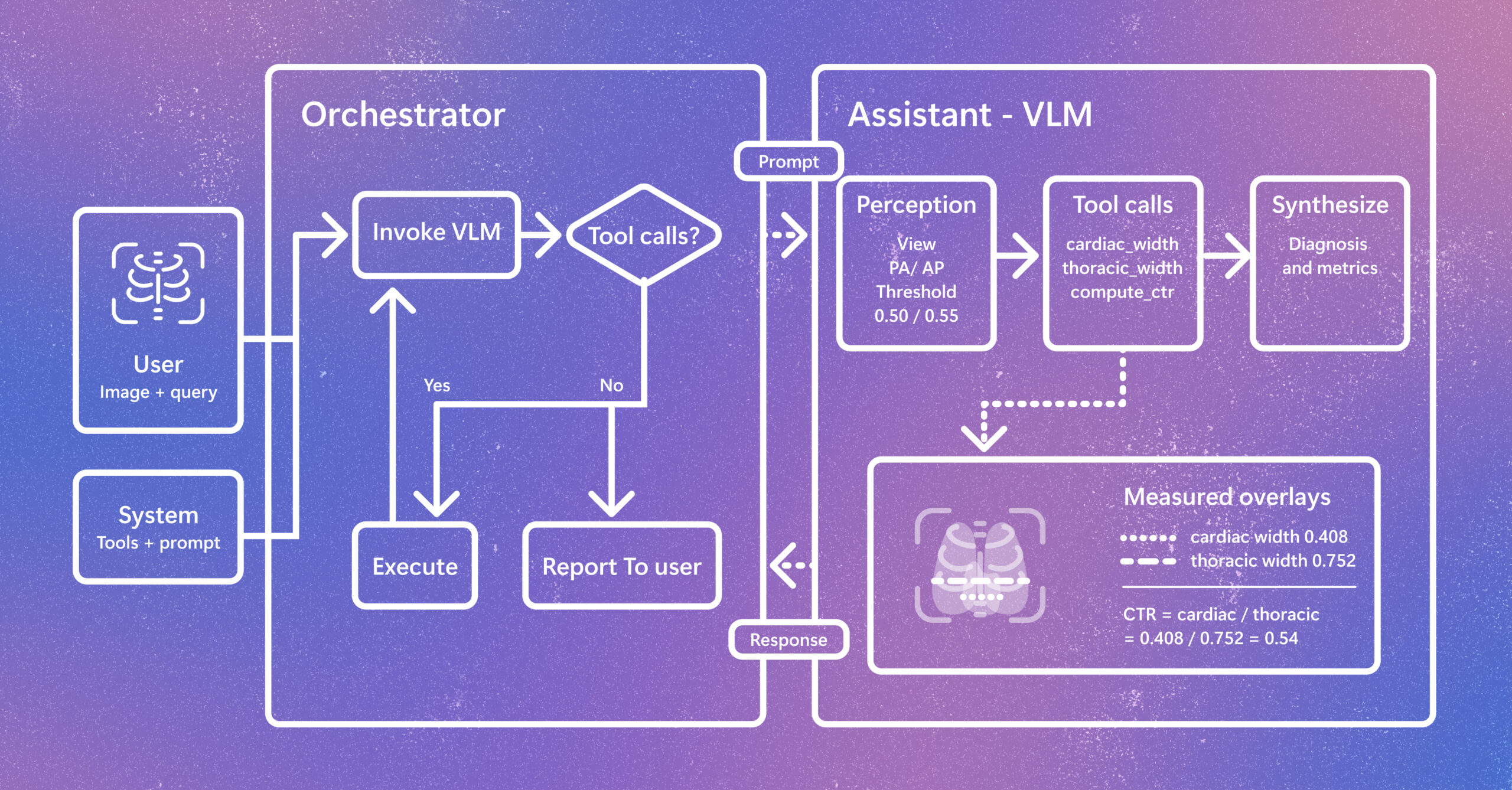
Introducing CARE-X: Towards Clinically Useful Radiology VLMs with Auxiliary Supervision, Reward-Aligned Learning, and Tool-Augmented Measurement

Radiology AI is evolving beyond report generation. CARE-X explores a unified approach that combines flexible reasoning, calibrated predictions, and measurement-based tools for chest X-ray interpretation. The post Introducing CARE-X: Towards Clinically Useful Radiology VLMs with Auxiliary Supervision, Reward-Aligned Learning, and Tool-Augmented Measurement appeared first on Microsoft Research.

We use cookies to run the site and, with your consent, for analytics and to show ads. See our Cookie Policy.