Mar 2019· Agile Software Development· Vol abs/1903.10913, pp. 31-59· 62 citations· ⚡ 5 influential· 117 references
Computer Science
TL;DR
The results show that agile software development methods cover, without offering any rationale, different phases of the software development life-cycle and that most of these methods fail to provide adequate project management support.
Abstract
Although agile software development methods have caught the attention of software engineers and researchers worldwide, scientific research still remains quite scarce. The aim of this study is to order and make sense of the different agile approaches that have been proposed. This comparative review is performed from the standpoint of using the following features as the analytical perspectives: project management support, life-cycle coverage, type of practical guidance, adaptability in actual use, type of research objectives and existence of empirical evidence. The results show that agile software development methods cover, without offering any rationale, different phases of the software development life-cycle and that most of these methods fail to provide adequate project management support. Moreover, quite a few methods continue to offer little concrete guidance on how to use their solutions or how to adapt them in different development situations. Empirical evidence after ten years of application remains quite limited. Based on the results, new directions on agile methods are outlined.
A literature review of Agile methodologies from 2001 to 2025 is presented, systematically examining their evolution, cross-sectoral diffusion, and key adaptations, and identifies critical gaps in the literature and outlines future research directions.
Majid Al-Nabae, Norshahrizan Nordin, Abdulwadod S. A. Hassan et al.· Global Social Science and Hu...· 0 citations
It was identified that the industry tends to follow a hybrid Agile-DevOps practice with more emphasis on automation, continuous integration and collaboration to achieve quick and competitive software environments.
Raman Kumar· Journal of Global Research i...· 0 citations
It is possible that the waterfall method may be chaotic due to prescribed rather than effective structures, and structure and planning are essential to agile processes and take different forms from the waterfall model.
There are a set of useful methods and models in work and organizational psychology that are applicable to the agile software development context of teams, but also, more generally to a larger perspective of software engineering that involves human factors.
Lucas Gren, R. L. Gren, R. Torkar et al.· 0 citations
This study highlights how these methodologies complement each other in practice, improve software quality, reduce time-to-market, and enhance collaboration among stakeholders in modern software engineering environments.
Nkiwa Monkila Jonathan, Monkila Nkiwa Barthelemy, Padinganyi Tshiombela Faustin et al.· International journal of re...· 0 citations
This study identifies Inadequate Architecture, Lack of Standardized Framework, Communication and Coordination, Poor Requirement Verification, and Minimum Documentation as the most significant challenges in Agile development.
Kamran Khan Tatari, Shahid Latif, Salim ur Rehman et al.· Information· 0 citations
Jennifer Neville did not want to go into computer science—but that’s exactly where she landed. Neville discusses the starts and stops that led to her professional sweet spot and her work identifying “surprising failures” making it hard for AI to handle complexity. The post What AI gets wrong and what failure teaches us appeared first on Microsoft Research.
Microsoft Research Blog· microsoft.comJul 30, 2026
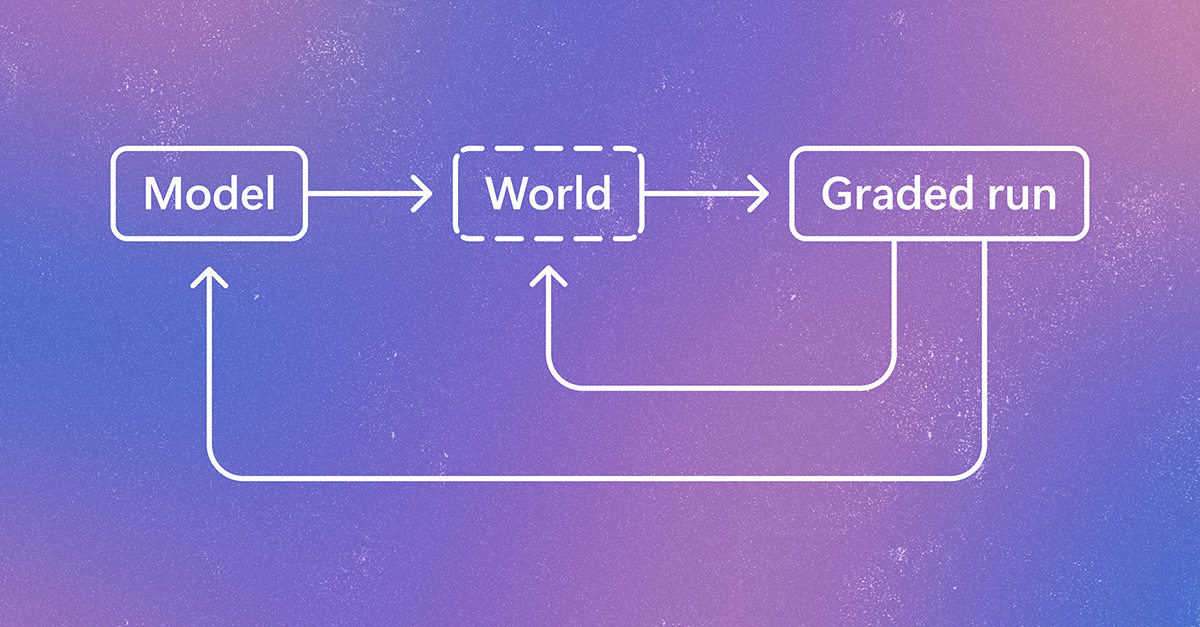
Computer-use AI agents struggle with multi-step workflows like email and customer support. Echoverse trains agents in realistic environments rather than simply providing more training tasks, helping them improve as the tasks, tests, and environments evolve. The post Echoverse: Deep, evolving environments for computer-use agents appeared first on Microsoft Research.