Skip to content

Innovation initiatives in large software companies: a systematic mapping study

Dec 2017 · Information and Software Technology · Vol 95, pp. 1-14 · 20 citations · ⚡ 2 influential · 102 references
Engineering Computer Science Business

Abstract

This extended abstract summarises an article, which has been published in the Information and Software Technology (IST) Journal and was selected for the Journal-First presentations at the International Conference on Software and System Process (ICSSP 2018). Full Article Reference. Henry Edison, Xiaofeng Wang, Ronald Jabangwe, and Pekka Abrahamsson. 2018. Innovation Initiatives in Large Software Companies: A Systematic Mapping Study. Information and Software Technology, 95:1--14, (March 2018) DOI:10.1016/j.infsof.2017.12.007.

Read PDF

Similar papers

Conference Open access 2026

Critical Success Factors in Global Software Development: A Systematic Literature Review

Seven major CSFs that drive success in globally distributed projects are revealed, highlighting a major paradigm shift within the software industry: socio-technical skills and reliable technology now carry significantly more weight than strict, traditional processes.

Chellal Mostafa, Mohammed Saber, M. Belkasmi · 0 citations
Review Aug 2026

Enablers and Barriers in Knowledge Management Process in the Public Sector: A Systematic Review

Knowledge management (KM) is recognised as a strategic practise that enhances creativity, efficiency, and value creation. However, research into its implementation in public management remains limited, characterised by fragmented conceptual approaches and a scarcity of empirical evidence demonstrating its impact. Thi...

Geancarlos Ayma Pireta, Sussy Bayona Oré · 0 citations
Open access Jul 2026

Mapping the human side of projects: Global scientometric insights into communication, leadership, and stakeholder engagement (2005–2025)

The success of project management is contingent upon the development of essential competencies, including communication, management, leadership, team coordination, and stakeholder management. However, the possession of these skills alone does not guarantee the achievement of project objectives. In this context, this st...

Fabian-Andres Delgado, Edilson Ibarra-Beltran · 0 citations
Open access Jul 2026

What Does the Brazilian Industry Expect from Product Owners? An Analysis of Soft Skills in Job Postings

The Product Owner (PO) plays a central role in agile software development by connecting stakeholders and development teams. This study identifies and analyzes the soft skills required of POs in the Brazilian software industry by analyzing 202 job postings published between July and October 2025 on LinkedIn, Gupy, and G...

I. Lima, C. Bezerra · 0 citations
Review

On the Understanding of the Benefits and Challenges of DT Adoption in Software Development: a Cross-data Analysis

This extended article analyzed 213 Brazilian professionals’ perceptions of the benefits and challenges of using DT in software development and compares those collected from other professionals’, serving as a guide for practitioners on the use of DT in software development.

Gabriel Kryvoruchca, R. Parizi, Lauriane Correa et al. · 0 citations

Related blog posts

Microsoft Research Blog Oct 6, 2026

What AI gets wrong and what failure teaches us

Jennifer Neville did not want to go into computer science—but that’s exactly where she landed. Neville discusses the starts and stops that led to her professional sweet spot and her work identifying “surprising failures” making it hard for AI to handle complexity.  The post What AI gets wrong and what failure teaches us appeared first on Microsoft Research.

Microsoft Research Blog Oct 15, 2026

Proof-based general-purpose computing with Magnetar

Zero-knowledge proofs can verify computing results without rerunning workloads or exposing sensitive data. Magnetar helps bring them into the mainstream with support for standard programming languages, major speed gains, and quantum-resistant security. The post Proof-based general-purpose computing with Magnetar appeared first on Microsoft Research.

Microsoft Research Blog Jul 30, 2026

Echoverse: Deep, evolving environments for computer-use agents

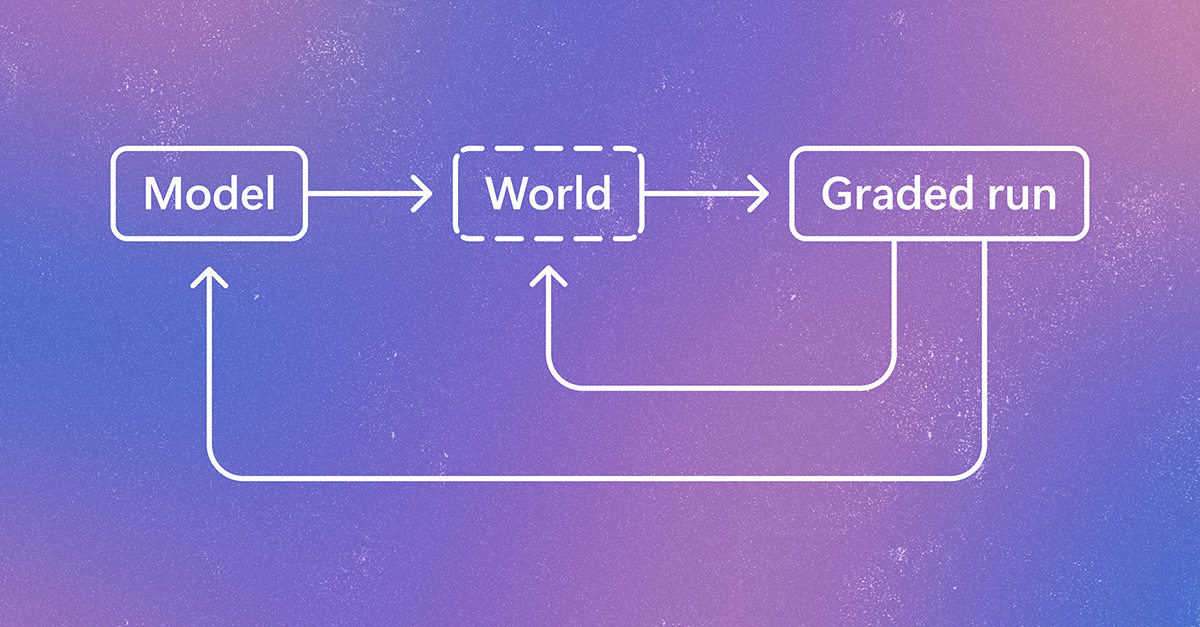
Computer-use AI agents struggle with multi-step workflows like email and customer support. Echoverse trains agents in realistic environments rather than simply providing more training tasks, helping them improve as the tasks, tests, and environments evolve. The post Echoverse: Deep, evolving environments for computer-use agents appeared first on Microsoft Research.

We use cookies to run the site and, with your consent, for analytics and to show ads. See our Cookie Policy.