Skip to content

100+ metrics for software startups - A multi-vocal literature review

Jan 2019 · Workshop on Software-intensive Business · Vol abs/1901.04819 · 9 citations · 43 references
Computer Science Economics

TL;DR

A multi-vocal literature review focusing on practitioner literature is conducted in order to compile a list of metrics used by software startups, intended to serve as a basis for further research in the area.

Abstract

Metrics can be used by businesses to make more objective decisions based on data. Software startups in particular are characterized by the uncertain or even chaotic nature of the contexts in which they operate. Using data in the form of metrics can help software startups to make the right decisions amidst uncertainty and limited resources. However, whereas conventional business metrics and software metrics have been studied in the past, metrics in the spe-cific context of software startup are not widely covered within academic literature. To promote research in this area and to create a starting point for it, we have conducted a multi-vocal literature review focusing on practitioner literature in order to compile a list of metrics used by software startups. Said list is intended to serve as a basis for further research in the area, as the metrics in it are based on suggestions made by practitioners and not empirically verified.

View source

Similar papers

Conference Open access 2026

Critical Success Factors in Global Software Development: A Systematic Literature Review

Seven major CSFs that drive success in globally distributed projects are revealed, highlighting a major paradigm shift within the software industry: socio-technical skills and reliable technology now carry significantly more weight than strict, traditional processes.

Chellal Mostafa, Mohammed Saber, M. Belkasmi · 0 citations
Review

Bachelor Computer Science & Economics

To identify reported practices for software systems with GenAI components in academic literature compiled in a catalog to serve as a guide for software engineers to develop safe, accurate, and reliable software systems, a systematic literature review was conducted.

Unknown authors · 0 citations
Preprint Aug 2026

Empirical Software Engineering in Practice: Insights from Google

While it is fairly well known how empirical software engineering (ESE) is used in the academic world, we have limited knowledge of how ESE is practiced in industry. As part of our regular column on empirical software engineering (ACM SIGSOFT SEN-ESE), we want to dedicate a series of articles to interviewing ESE practit...

Roberto Verdecchia, Justus Bogner · 0 citations
Open access Jul 2026

Qualitative Analysis of Industry Personnel’s Perspective on Future Ready Software Engineering Undergraduate Employability

The objective of this research is to obtain feedback from industry experts to understand the challenges related to the employability of future-ready software engineering undergraduate students and employs a qualitative study to gather the views of the experts.

Nor Azliana Akmal Jamaludin, Najjah Salwa Abd Razak, U. F. Abdul Rauf et al. · 0 citations
Review Open access Sep 2026

Digital nudging in software development: a review and research agenda

A harmonized perspective on digital nudging is introduced, in which multiple strategies are systematically integrated to provide consistent and context-aware decision support, in which multiple strategies are systematically integrated to provide consistent and context-aware decision support.

I. Pribik, Alexander Felfernig · 0 citations

Related blog posts

Microsoft Research Blog Oct 6, 2026

What AI gets wrong and what failure teaches us

Jennifer Neville did not want to go into computer science—but that’s exactly where she landed. Neville discusses the starts and stops that led to her professional sweet spot and her work identifying “surprising failures” making it hard for AI to handle complexity.  The post What AI gets wrong and what failure teaches us appeared first on Microsoft Research.

Microsoft Research Blog Jul 30, 2026

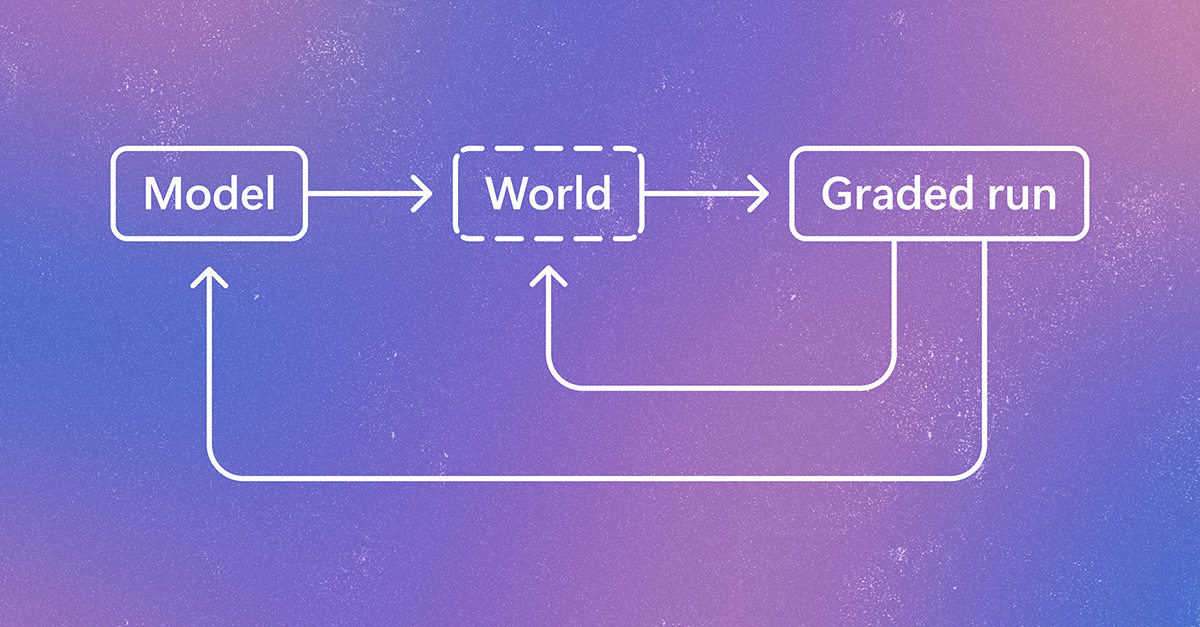
Echoverse: Deep, evolving environments for computer-use agents

Computer-use AI agents struggle with multi-step workflows like email and customer support. Echoverse trains agents in realistic environments rather than simply providing more training tasks, helping them improve as the tasks, tests, and environments evolve. The post Echoverse: Deep, evolving environments for computer-use agents appeared first on Microsoft Research.

We use cookies to run the site and, with your consent, for analytics and to show ads. See our Cookie Policy.
