Skip to content

Software Process Improvement - EuroSPI 2007 Conference

Sep 2007 · European Conference on Software Process Improvement · pp. 1-6 · 0 citations · 1 references
Engineering Computer Science

TL;DR

This book constitutes the refereed research proceeding of the 14th European Software Process Improvement Conference, EuroSPI 2007, held in Potsdam, Germany in September 2007 and contains 18 revised full papers presented.

View source

Similar papers

Review Open access Aug 2026

Software Development Methodologies Evolutionary Trends from Waterfall to DevOps

It was identified that the industry tends to follow a hybrid Agile-DevOps practice with more emphasis on automation, continuous integration and collaboration to achieve quick and competitive software environments.

Raman Kumar · 0 citations
Review

principles for an enterprise systems chartering method

This paper derives design principles for a chartering method based on a systematic review of ES implementation literature and semi-structured expert interviews and identifies differences in the importance of certain success factors depending on the system type.

Martin Berner, Jan Gansen, A. Maedche · 0 citations
Aug 2026

Scrumban: A Fad or Necessity in Today’s IT Projects

The article analyzes an alternative hybrid methodology, Scrumban, in the context of modern IT project management and reflects on the evolution of agile approaches to the formation of Scrumban as a hybrid methodology.

M. Bakhirkin · 0 citations
Open access 2026

Programming Methodologies: Agile, Scrum, and Devops in Practice

This study highlights how these methodologies complement each other in practice, improve software quality, reduce time-to-market, and enhance collaboration among stakeholders in modern software engineering environments.

Nkiwa Monkila Jonathan, Monkila Nkiwa Barthelemy, Padinganyi Tshiombela Faustin et al. · 0 citations
Open access Jul 2026

SWEBOK AND ISO/IEC 12207 AS AN INTEGRATED FOUNDATION OF SOFTWARE ENGINEERING

The paper analyzes the core of SWEBOK knowledge, which is recognized as a basic scientific and technical document summarizing the consolidated opinion of leading Russian and international ex-perts in the field of software engineering. The analysis of ten SWEBOK knowledge areas has been carried out, and their conditiona...

E. Golovkova, Zakhar Bronnikov · 0 citations

Related blog posts

Microsoft Research Blog Oct 6, 2026

What AI gets wrong and what failure teaches us

Jennifer Neville did not want to go into computer science—but that’s exactly where she landed. Neville discusses the starts and stops that led to her professional sweet spot and her work identifying “surprising failures” making it hard for AI to handle complexity.  The post What AI gets wrong and what failure teaches us appeared first on Microsoft Research.

Microsoft Research Blog Jul 30, 2026

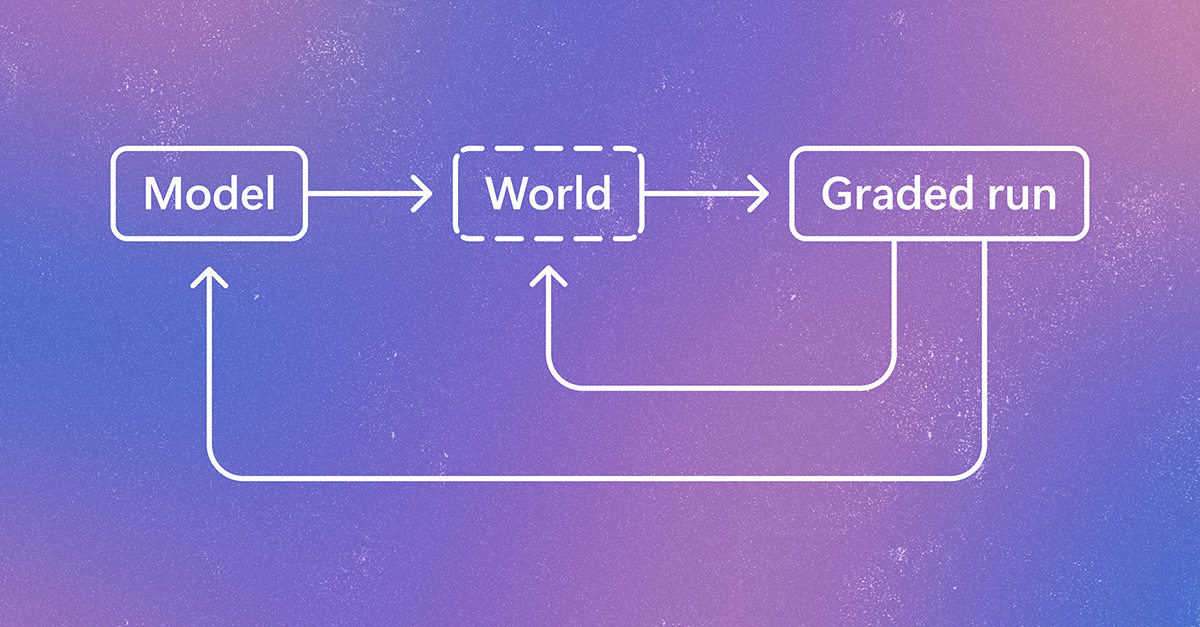
Echoverse: Deep, evolving environments for computer-use agents

Computer-use AI agents struggle with multi-step workflows like email and customer support. Echoverse trains agents in realistic environments rather than simply providing more training tasks, helping them improve as the tasks, tests, and environments evolve. The post Echoverse: Deep, evolving environments for computer-use agents appeared first on Microsoft Research.

Microsoft Research Blog Oct 15, 2026

Proof-based general-purpose computing with Magnetar

Zero-knowledge proofs can verify computing results without rerunning workloads or exposing sensitive data. Magnetar helps bring them into the mainstream with support for standard programming languages, major speed gains, and quantum-resistant security. The post Proof-based general-purpose computing with Magnetar appeared first on Microsoft Research.

We use cookies to run the site and, with your consent, for analytics and to show ads. See our Cookie Policy.