Skip to content

DCC: Data-Centric Compilation of Machine Learning Kernels for Processing-In-Memory Architectures

Nov 2025 · International Symposium on Computer Architecture · pp. 2582-2599 · 1 citation · 151 references
Computer Science

TL;DR

DCC is the first data-centric ML compiler for PIM systems that jointly co-optimizes data rearrangements and compute code in a unified tuning process to enable high performance execution.

Abstract

High-performance Host processors (e.g., GPUs) can integrate Processing-In-Memory (PIM) devices, which can accelerate memory-intensive kernels of Machine Learning (ML) models, including Large Language Models (LLMs), by leveraging the large memory bandwidth available at PIM cores. However, Host processor and PIM cores require different data layouts: Host processor needs consecutive elements distributed across DRAM banks, while PIM cores need consecutive elements within their local banks. This necessitates data rearrangements in ML kernel execution that pose significant performance and programmability challenges, further exacerbated by the need to support diverse PIM devices (e.g., Samsung HBM-PIM, SK Hynix GDDR6AiM). Current compilation approaches lack systematic optimization for diverse ML kernels and multiple PIM devices, and may largely ignore data rearrangement costs during the compute code optimization step. We demonstrate that data rearrangements and compute code optimization are interdependent, and need to be jointly optimized during the tuning process. To address this, we design DCC, the first data-centric ML compiler for PIM systems that jointly co-optimizes data rearrangements and compute code in a unified tuning process to enable high performance execution. DCC integrates a multi-layer PIM abstraction that enables various data distribution strategies on different PIM backends. DCC enables effective co-optimization of data partitioning strategies with compute loop partitioning schemes. DCC applies PIM-specific code optimizations, and leverages a fast and accurate performance prediction model to select the bestperforming code schedule for a given kernel on a target PIM architecture. Our evaluations in various individual ML kernels show that DCC achieves up to $7.68 \times$ speedup $(2.21 \times$ average) on HBM-PIM, and up to 13.17× speedup (3.92× average) on AttAcc PIM, over GPU-only execution. In end-to-end LLM inference, DCC on AttAcc accelerates GPT-3 and LLaMA-2 by 4.52 × average (up to 7.71× in LLaMA-2) over GPU. DCC is open-sourced at https://github.com/SPIN-Research-Group/DCC.
View source

Similar papers

Preprint Sep 2026

Torch-PIM: Automated Profile-Guided PIM Offloading for PyTorch

Modern deep learning (DL) workloads are limited by data movement, and processing-in-memory (PIM) targets this bottleneck by placing compute units near the memory. However, PyTorch and other DL frameworks lack compiler support for making this decision on the code they lower: existing offloading frameworks target hand-wr...

Heeeon Lee, H. Nam, Junyong Heo et al. · 0 citations
Preprint Aug 2026

On Design Principles for Efficient Heterogeneous DRAM-PIM-GPU Systems

Three fundamental design principles are revealed that provide design-space guidance for architects designing the next generation of memory-accelerated LLM systems.

Corey Lammie, Hadjer Benmeziane, W. Simon et al. · 0 citations
Preprint Aug 2026

Rethinking Unified Memory for NPU-PIM Systems: Dual-View Memory for Dynamic Inference of LLM

PFM (PIM-as-Flexible-Memory), a dual-view memory system that decouples physical data layout from accessor-visible logical views, is presented, demonstrating its effectiveness and broad applicability as a unified memory management solution for NPU-PIM systems.

Shixin Zhao, Lian Liu, Tian Han et al. · 0 citations
Oct 2026

SynergyScale: Optimizing Offloading and Task Partitioning for Efficient Model Training

Deep neural networks (DNNs) with billions of parameters power many important applications, but their training is fundamentally constrained by the limited on-chip memory of GPUs. This memory wall forces training to rely on distributed execution or memory offloading, both of which introduce substantial inefficiencies. Ex...

Xiaoyang Sun, Jie Xu, Zheng Wang · 0 citations
Open access Sep 2026

HDA-MoE: Hybrid Parallelism and Dynamic, Adaptive Scheduling for Mixture-of-Experts with 3D Near-Memory Processing

HDA-MoE is presented, a framework that optimizes MoE execution on NMP architectures through hybrid parallel deployment and runtime scheduling and integrates an offline hybrid parallel mapping algorithm with an online dynamic and adaptive scheduling mechanism to reduce communication overhead while improving computation...

Hao-Chen Huang, Shu-Zhang Zhong, Sheng-Xuan Qiu et al. · 0 citations

Related blog posts

Microsoft Research Blog Sep 30, 2026

Forecasting space weather risks on power grids

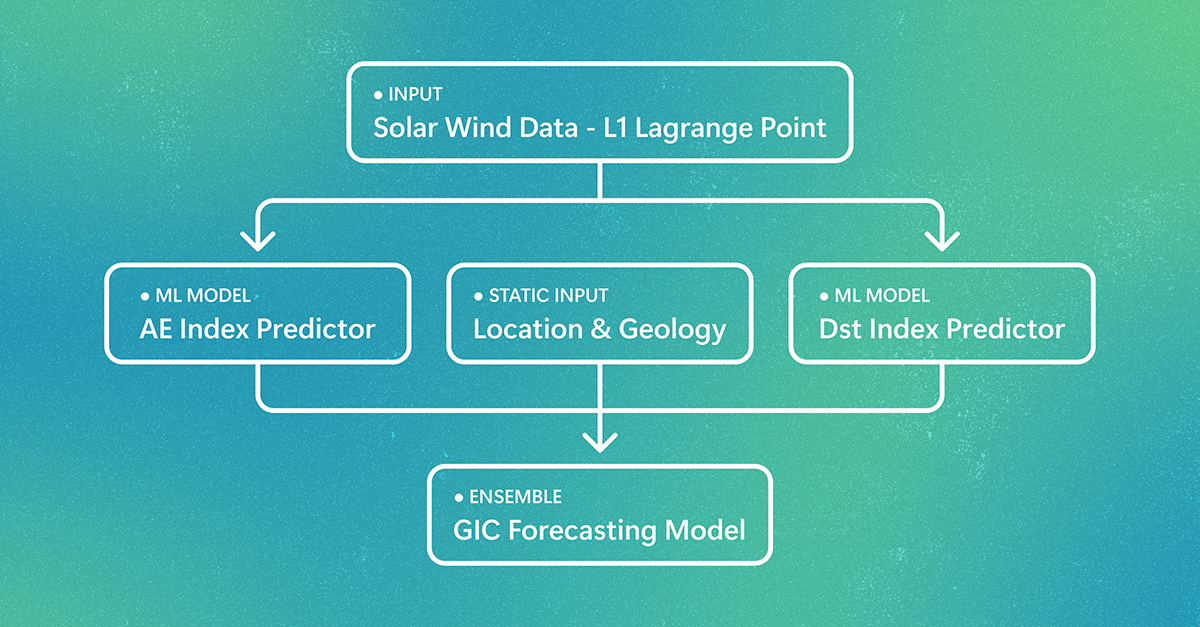
Extreme space-weather events can damage power systems on Earth and degrade GPS accuracy and satellite operations. A new machine learning system can predict where damage is likely to occur 30-60 minutes before a storm arrives. The post Forecasting space weather risks on power grids appeared first on Microsoft Research.

We use cookies to run the site and, with your consent, for analytics and to show ads. See our Cookie Policy.