SatDL is presented, a data-redistribution framework designed to minimize total end-to-end learning time and onboard energy consumption in satellite-based distributed learning, and develops a Distributor-Critic framework that jointly models and optimizes data-transfer delay and training time.
Abstract
Satellite-based distributed learning promises to train machine-learning models directly in orbit using massive, globally dispersed sensor data, thereby avoiding large-scale data downloads to ground servers. However, training convergence is significantly slowed by severe non-IID data, specifically label imbalance, as each satellite observes different geographic regions with distinct labels. This imbalance extends training duration and increases energy consumption for solar-powered satellites. Existing approaches either fully redistribute data to enforce IID conditions - accelerating convergence but incurring substantial communication delays - or avoid redistribution entirely by modifying local learning algorithms to mitigate the impact of label imbalance, which, however, still prolong training and increase energy use. Both extremes result in excessive total end-to-end learning time (data-transfer delay plus training time) and thus elevated onboard energy consumption. We present SatDL, a data-redistribution framework designed to minimize total end-to-end learning time. At its core, SatDL develops a Distributor-Critic framework that jointly models and optimizes data-transfer delay and training time. Evaluations through trace-driven simulations of a 1,584-satellite Starlink constellation and hardware emulations using NVIDIA Jetson and A100 GPUs across five datasets show SatDL reduces total end-to-end learning time by up to 18.6% and onboard energy consumption by 12.23-88.00%, while maintaining inference accuracy within a few percentage points of state-of-the-art baselines.
sys is presented, a content-aware hierarchical scheduler that screens constellation-wide options to retain a bounded candidate set, then refines each candidate into a complete token compression and layer offloading trajectory using quality prediction and joint planning and balances per-task latency, energy, and quality...
Yan Chen, Yun-Xiang Zhang, Guan-Jun Jiang et al.· 1 citation
This work proposes a continual computing based federated learning framework, referred to as CoCoFL, in which scheduled devices participate in the global model aggregation, while unscheduled devices continue updating their local models taking into account model staleness.
Low-Earth-orbit (LEO) satellites are increasingly expected to perform onboard learning for applications such as disaster response and environmental monitoring. However, conventional federated learning (FL) is ill-suited to onboard satellite learning, as it assumes computational, memory, and communication resources beyo...
M. Shaaban, Mohamed Elmahallawy, Marius Bernahrndt et al.· arXiv.org· 0 citations
NE-LoRA is proposed, a parameter-efficient adaptation framework for bandwidth-constrained onboard hyperspectral model updates that consistently outperforms LoRA-based baselines and remains competitive with, and in several cases superior to, full fine-tuning.
Qi-Yang Zhang, Xin-Hao Li, Lei Shi et al.· arXiv.org· 3 citations
This letter investigates a satellite-terrestrial collaborative inference system for remote sensing information processing, where a ground station (GS) serves multiple low Earth orbit (LEO) satellites running heterogeneous deep neural network (DNN) inference tasks, and proposes a two-layer optimization algorithm.
Wen-Yu Liang, Ze-Song Fei, Peng Liu et al.· 0 citations
The Satellite Internet of Things (SIoT) leverages low Earth orbit (LEO) satellite constellations to support wide-area, real-time, and intelligent services such as disaster monitoring, ship tracking, and environmental sensing. These tasks demand collaborative model training across multiple satellites to improve predicti...
Ya-Lan Jiang, Bin Song, J. Qi et al.· IEEE Transactions on Mobile...· 0 citations
Related blog posts
MIT News · Artificial Intelligence· news.mit.eduNov 17, 2026
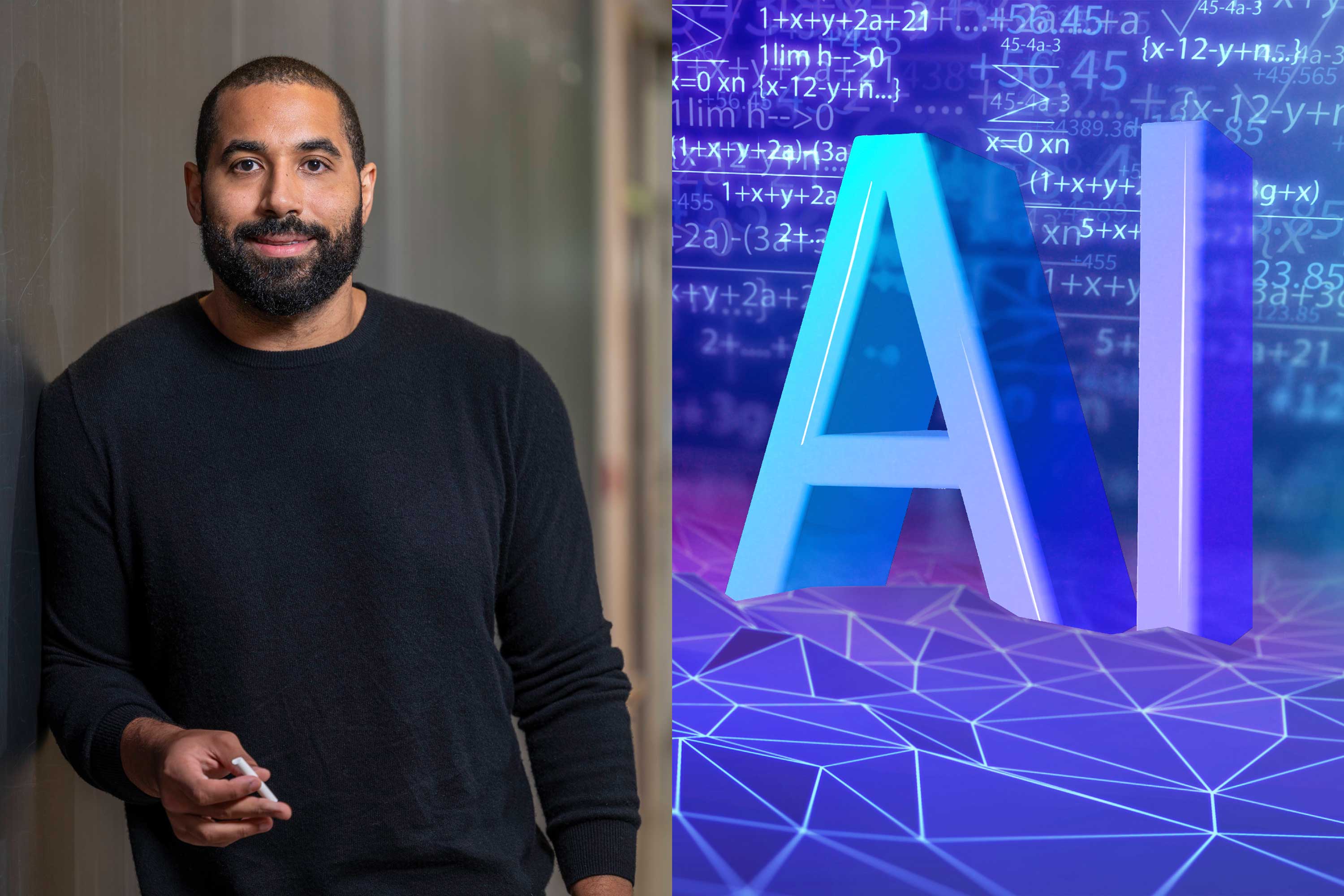
By studying the computational foundations of language learning, Associate Professor Jacob Andreas builds intelligent systems that can communicate effectively with humans.
Microsoft Research Blog· microsoft.comNov 16, 2026
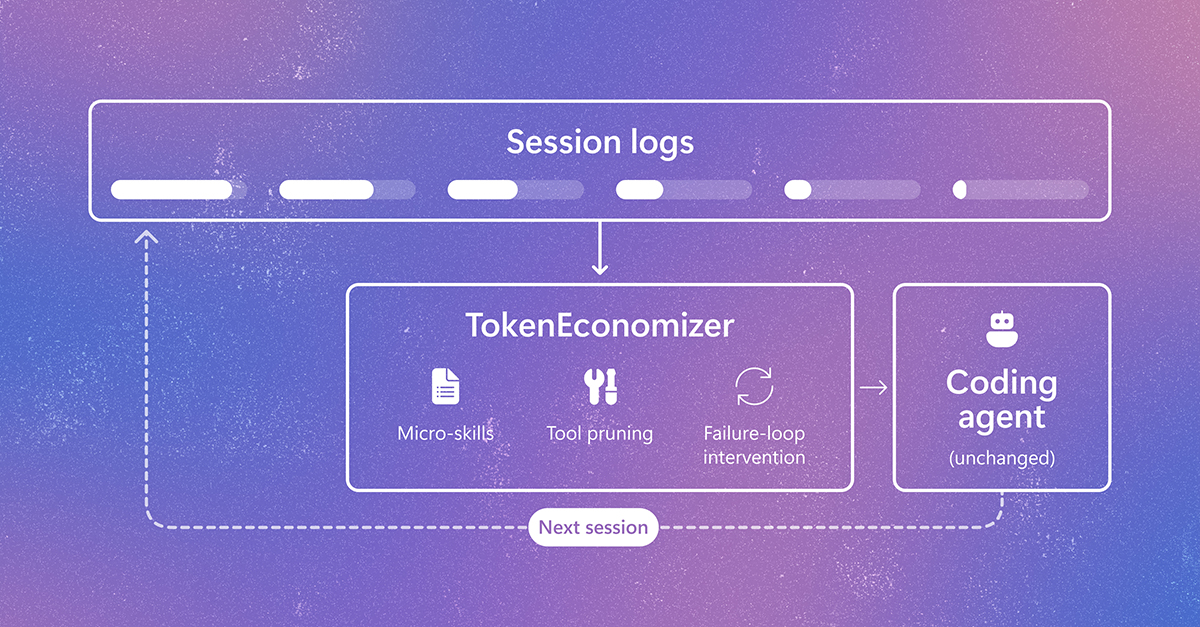
AI coding agents are increasingly help developers fix bugs and build features largely on their own, but every interaction with their models consumes tokens. In each session, an agent sends instructions, tool descriptions, and session history to its model. Most efforts to reduce this cost focus on individual tasks. Yet developers return to the same […] The post TokenEconomizer: Learning from Experience to Make AI Coding Agents More Efficient appeared first on Microsoft Research.
MIT News · Artificial Intelligence· news.mit.eduNov 13, 2026