Skip to content
#machine learning #computer vision Preprint Open access

Metric-Driven Reinforcement Learning for Object Hallucination Reduction in LVLM-Based Image Captioning

Thanh Nguyen Hee Suk Yoon Tung Minh Luu Eunseop Yoon Chang D. Yoo
Oct 2026
Machine Learning Computer Vision

Abstract

Large Vision-Language Models (LVLMs) have excelled in joint visual and language understanding, particularly in image captioning. However, LVLMs remain prone to object hallucination, describing non-existent entities in the given image. Previous remedies, including dataset-enhanced supervised training and reinforcement learning from human feedback, show promise but rely heavily on costly human involvement, limiting scalability. To address this, we propose a reinforcement learning framework to mitigate object hallucination in LVLM-based image captioning, driven entirely by natural language processing (NLP) metrics. While optimizing reinforcement learning solely on NLP metrics offers scalability, it also introduces pitfalls: reward hacking, sparse feedback, and costly training. Our framework sidesteps these by introducing an Object Consistency Score (OCS) capturing both correctness and coverage of objects, incorporating KL-regularization for denser token-level guidance, and designing a lightweight PPO variant that fine-tunes adapters atop a frozen LVLM backbone, achieving efficiency and stability. Extensive experiments on the InstructBLIP baseline demonstrate the effectiveness and generalizability of our framework, achieving a substantial hallucination reduction of up to 41\% on the COCO dataset and 29\% on the Visual Genome. Furthermore, the framework can enhance caption quality by incorporating complementary evaluation metrics such as BERTScore and METEOR. These results reveal a broader insight in multimodal learning: LVLMs can effectively self-correct hallucinations using metric feedback, motivating deeper exploration into scalable reinforcement frameworks that significantly reduce human effort.

View source

Similar papers

#artificial intelligence Conference Open access Jun 2018

Gibson Env: Real-World Perception for Embodied Agents

This paper investigates developing real-world perception for active agents, proposes Gibson Environment for this purpose, and showcases a set of perceptual tasks learned therein.

F. Xia, Amir Zamir, Zhi-Yang He et al. · 1,069 citations · ⚡112
#computer vision Review Sep 2017

Agile Software Development Methods: Review and Analysis

This publication proposes a definition and a classification of agile software development approaches and analyses ten software development methods that can be characterized as being "agile" against the defined criterion.

P. Abrahamsson, O. Salo, Jussi Ronkainen et al. · 727 citations · ⚡54
#computer vision Jun 2008

The impact of agile practices on communication in software development

The study shows that agile practices improve both informal and formal communication, but indicates that, in larger development situations involving multiple external stakeholders, a mismatch of adequate communication mechanisms can sometimes even hinder the communication.

M. Pikkarainen, Jukka Haikara, O. Salo et al. · 401 citations · ⚡48
#machine learning Review Open access Oct 2014

Software development in startup companies: A systematic mapping study

The results indicate that software engineering work practices are chosen opportunistically, adapted and configured to provide value under the constrains imposed by the startup context.

Nicolò Paternoster, Carmine Giardino, M. Unterkalmsteiner et al. · 394 citations · ⚡54

Diffusion models as plug-and-play priors

The possibility of inferring high-dimensional data inference in a model that consists of a prior and an auxiliary differentiable constraint given some additional information is considered, thereby allowing a range of potential applications in adapting models to new domains and tasks.

Alexandros Graikos, Esmeralda S. Whitammer, N. Jojic et al. · 316 citations · ⚡15

Related blog posts

Microsoft Research Blog Aug 11, 2026

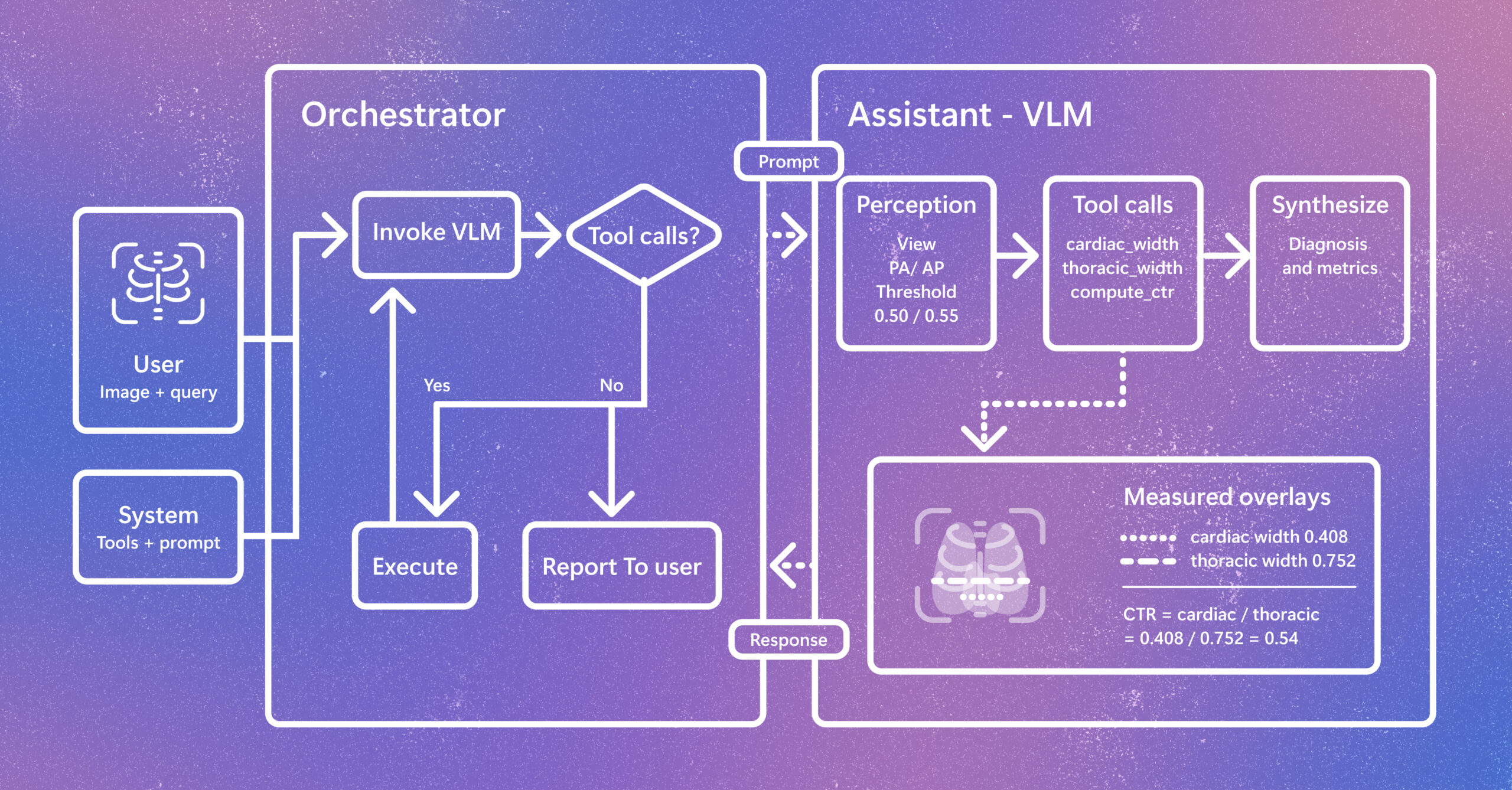
Introducing CARE-X: Towards Clinically Useful Radiology VLMs with Auxiliary Supervision, Reward-Aligned Learning, and Tool-Augmented Measurement

Radiology AI is evolving beyond report generation. CARE-X explores a unified approach that combines flexible reasoning, calibrated predictions, and measurement-based tools for chest X-ray interpretation. The post Introducing CARE-X: Towards Clinically Useful Radiology VLMs with Auxiliary Supervision, Reward-Aligned Learning, and Tool-Augmented Measurement appeared first on Microsoft Research.

MIT News · Artificial Intelligence Oct 23, 2026

Q&A: How AI came to model the “messy” human mind

Assistant Professor Benjamin Lindquist studies how engineers deliberately injected randomness into early AI, giving rise to deep-learning models that sometimes hallucinate.

We use cookies to run the site and, with your consent, for analytics and to show ads. See our Cookie Policy.