Harnessing SPAD Noise: Test-Time Gated Attention for Indoor Depth Estimation
Yiquan Gao
Oct 2026
Machine LearningComputer VisionRobotics
Abstract
Monocular depth estimation (MDE) has emerged as a cost-effective alternative to hardware-dependent 3D sensing modalities, yet predicting precise metric depth remains a persistent challenge due to intrinsic scale ambiguity, edge bleeding, and limited zero-shot generalization in unseen environments. Recent multi-modal approaches incorporate 1D/3D Single-Photon Avalanche Diode (SPAD) data to resolve these ambiguities, but they mainly treat SPAD noise as a harmful artifact required for denoising or leave the noise ignored. In this paper, we present an essentially different insight: native SPAD noise is an informative prior that implicitly encodes deterministic environmental characteristics. Driven by this paradigm shift, we introduce a novel, lightweight Test-Time Gated Attention framework by Harnessing SPAD Noise, therefore dubbed HSN. Tailored for indoor scenarios, HSN leverages the synergistic combination of 1D SPAD histograms and Gate Adapters (GAs). Through three complementary optimization phases, it generates channel-wise gated attention vectors to dynamically adjust encoder feature maps at inference time, effectively resolving ambiguous scale and boundary challenges without the heavy computational overhead or dense 3D modalities that other TTA methods suffer from. Extensive experiments on challenging real-world indoor benchmarks show that HSN achieves state-of-the-art metric depth accuracy in in-domain settings, while exhibiting even greater potential under zero-shot generalization to unfamiliar environments. Furthermore, interpretability analysis reveals that the proposed gated attention mechanism adaptively shifts attention toward deeper semantic layers under intensifying SPAD noise. Code will be made publicly available.

This paper investigates developing real-world perception for active agents, proposes Gibson Environment for this purpose, and showcases a set of perceptual tasks learned therein.
F. Xia, Amir Zamir, Zhi-Yang He et al.· 2018 IEEE/CVF Conference on...· 1,069 citations· ⚡112
This publication proposes a definition and a classification of agile software development approaches and analyses ten software development methods that can be characterized as being "agile" against the defined criterion.
P. Abrahamsson, O. Salo, Jussi Ronkainen et al.· arXiv.org· 727 citations· ⚡54
The study shows that agile practices improve both informal and formal communication, but indicates that, in larger development situations involving multiple external stakeholders, a mismatch of adequate communication mechanisms can sometimes even hinder the communication.
M. Pikkarainen, Jukka Haikara, O. Salo et al.· Empirical Software Engineeri...· 401 citations· ⚡48
The results indicate that software engineering work practices are chosen opportunistically, adapted and configured to provide value under the constrains imposed by the startup context.
Nicolò Paternoster, Carmine Giardino, M. Unterkalmsteiner et al.· Information and Software Tec...· 394 citations· ⚡54
The possibility of inferring high-dimensional data inference in a model that consists of a prior and an auxiliary differentiable constraint given some additional information is considered, thereby allowing a range of potential applications in adapting models to new domains and tasks.
Alexandros Graikos, Esmeralda S. Whitammer, N. Jojic et al.· Neural Information Processin...· 316 citations· ⚡15
Exploring how generative AI could make machine vision more accessible to businesses. The post GenEye in a Box: Making Machine Vision Something You Can Just Ask For appeared first on GPT-Lab.
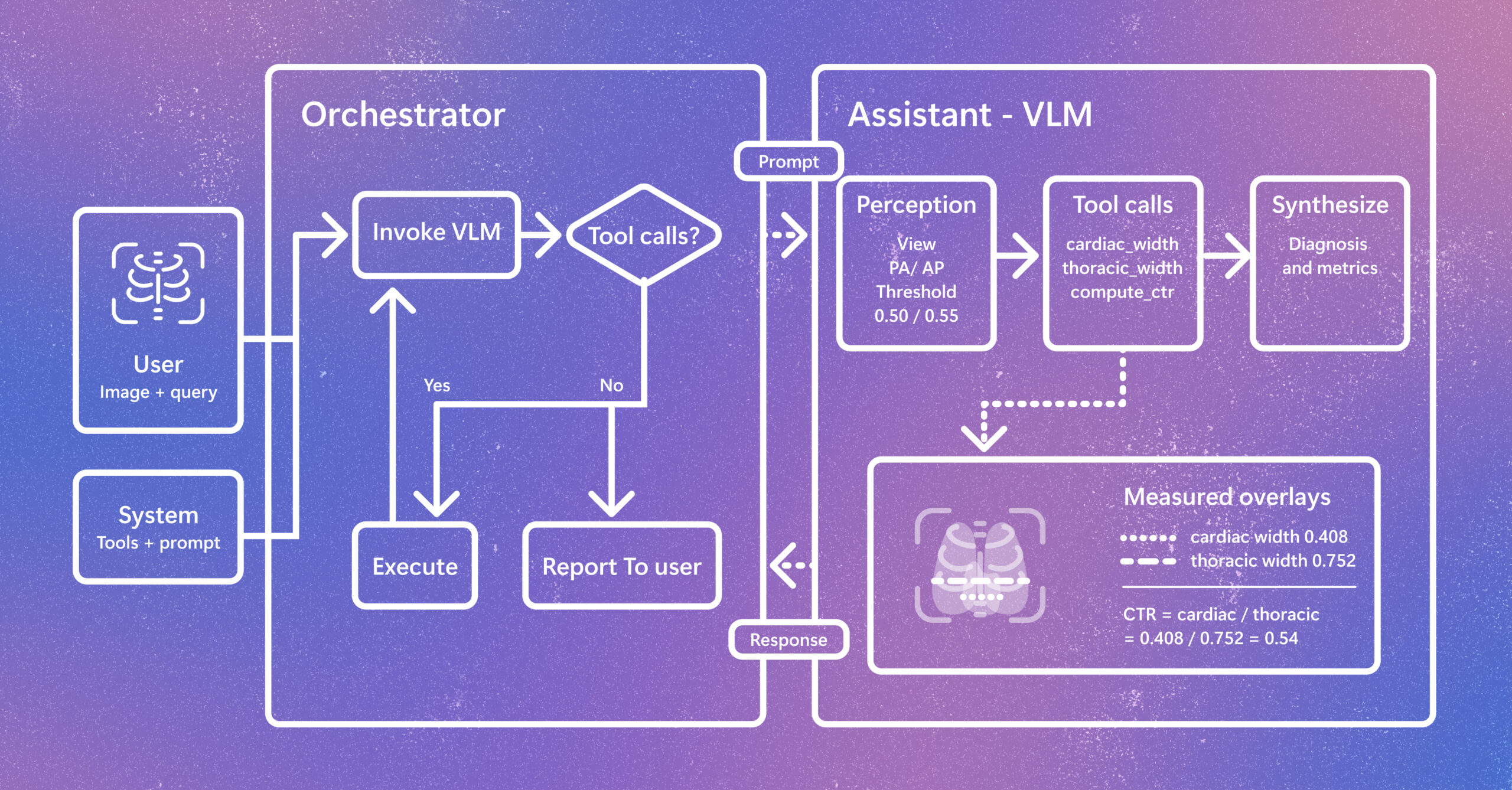
Radiology AI is evolving beyond report generation. CARE-X explores a unified approach that combines flexible reasoning, calibrated predictions, and measurement-based tools for chest X-ray interpretation. The post Introducing CARE-X: Towards Clinically Useful Radiology VLMs with Auxiliary Supervision, Reward-Aligned Learning, and Tool-Augmented Measurement appeared first on Microsoft Research.