Beyond the Encoder: Object-Centric Representations Emerging from Segmentation Foundation Models
Michalis PistosBart{\l}omiej W. Papie\.z
Oct 2026
Machine LearningComputer Vision
Abstract
Foundation models are increasingly used as feature extractors for downstream tasks with limited data, typically through representations obtained from their encoders. However, foundation models trained for structured tasks such as segmentation also form object-specific representations during task execution, whose transferability remains largely unexplored. We investigate Segment Anything Model 2 (SAM2) object pointers, compact object-level representations produced through the segmentation pathway, as transferable representations for downstream tumour prediction. Through experiments on two PET/CT tumour prediction tasks, we find that object pointers learned using segmentation supervision alone already encode tumour-discriminative information, despite never being optimised for the downstream labels. We further introduce task-guided object pointers, where an auxiliary objective jointly shapes the object pointer space for the downstream prediction together with segmentation. Task-guided pointers improve cancer-type classification, outperforming conventional encoder-based transfer and radiomics, while segmentation-only pointers perform best on the more challenging recurrence prediction task. Representation analyses reveal associations between object pointers and interpretable radiomics features, class-dependent organisation of the learned representation space, and explicit spatial grounding around the segmented tumour. Together, these findings suggest that useful transferable representations can emerge through the execution of a foundation model's primary task, providing an alternative to conventional encoder-based transfer.

This publication proposes a definition and a classification of agile software development approaches and analyses ten software development methods that can be characterized as being "agile" against the defined criterion.
P. Abrahamsson, O. Salo, Jussi Ronkainen et al.· arXiv.org· 727 citations· ⚡54
The study shows that agile practices improve both informal and formal communication, but indicates that, in larger development situations involving multiple external stakeholders, a mismatch of adequate communication mechanisms can sometimes even hinder the communication.
M. Pikkarainen, Jukka Haikara, O. Salo et al.· Empirical Software Engineeri...· 401 citations· ⚡48
The results indicate that software engineering work practices are chosen opportunistically, adapted and configured to provide value under the constrains imposed by the startup context.
Nicolò Paternoster, Carmine Giardino, M. Unterkalmsteiner et al.· Information and Software Tec...· 394 citations· ⚡54
The possibility of inferring high-dimensional data inference in a model that consists of a prior and an auxiliary differentiable constraint given some additional information is considered, thereby allowing a range of potential applications in adapting models to new domains and tasks.
Alexandros Graikos, Esmeralda S. Whitammer, N. Jojic et al.· Neural Information Processin...· 316 citations· ⚡15
It is proved that any global minimizer of the trajectory balance objective can define a policy that samples exactly from the target distribution, and empirically demonstrate the benefits of the trajectories balance objective for GFlowNet convergence, diversity of generated samples, and robustness to long action sequenc...
Esmeralda S. Whitammer, Moksh Jain, Emmanuel Bengio et al.· Neural Information Processin...· 302 citations· ⚡60
Exploring how generative AI could make machine vision more accessible to businesses. The post GenEye in a Box: Making Machine Vision Something You Can Just Ask For appeared first on GPT-Lab.
Microsoft Research Blog· microsoft.comAug 11, 2026
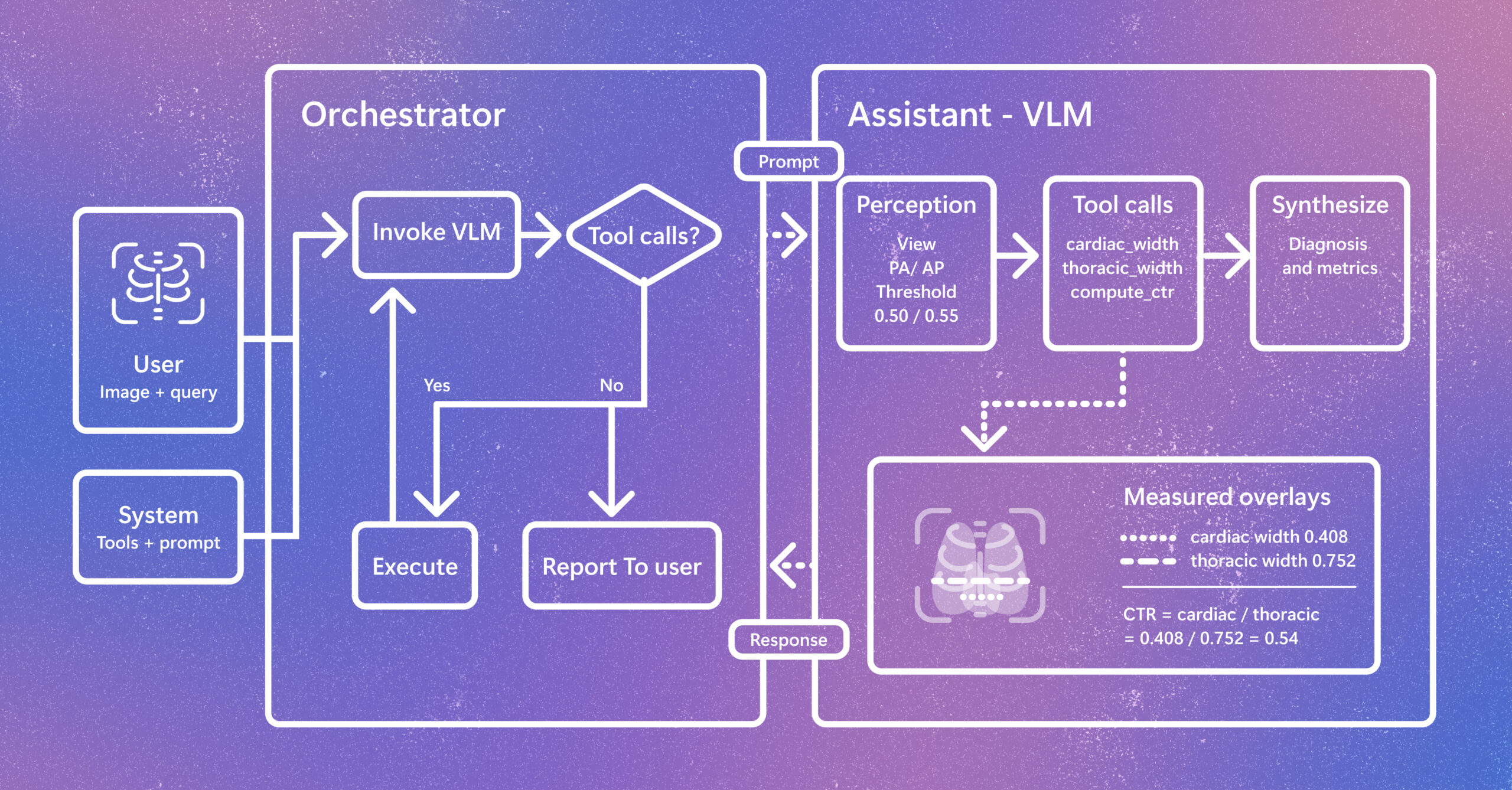
Radiology AI is evolving beyond report generation. CARE-X explores a unified approach that combines flexible reasoning, calibrated predictions, and measurement-based tools for chest X-ray interpretation. The post Introducing CARE-X: Towards Clinically Useful Radiology VLMs with Auxiliary Supervision, Reward-Aligned Learning, and Tool-Augmented Measurement appeared first on Microsoft Research.
Assistant Professor Benjamin Lindquist studies how engineers deliberately injected randomness into early AI, giving rise to deep-learning models that sometimes hallucinate.
We use cookies to run the site and, with your consent, for analytics and to show ads.
See our Cookie Policy.