Skip to content
#machine learning #computer vision Preprint Open access

How Much Physics Can Vision Learn from Audio? Probing and Distilling Damping Structure

Zainab Afolabi Vadim Selyutin Zhao Gao Babs Khalidson Mohamed Ghoneim
Oct 2026
Machine Learning Computer Vision

Abstract

Physical understanding is crucial for decision making, yet vision models struggle to infer properties such as damping that govern how materials behave. Audio encodes such properties directly, because an object's acoustic response to impact reveals its damping through measurable decay. We probe frozen encoders for the quality factor $Q$, a dimensionless measure of how many oscillations an object completes before its ring dies away, and report how well each embedding orders impacts by $Q$ using the Spearman rank correlation $\rho$, for which $\rho=1$ is a perfect ordering and $\rho=0$ an unrelated one. Audio embeddings reach $\rho=0.73$ and retain most of that advantage on materials withheld from training, while a single video frame taken at the moment of impact, encoded by CLIP, supports only $\rho=0.28$. Having established where the signal lives, we ask how much of that gap vision can recover. We distill a frozen audio teacher into a frozen CLIP backbone through a trained projection head and find that this recovers a useful fraction of the audio advantage. Because pooled correlations on this task are dominated in practice by category identity, we also evaluate under a leave-one-material-out protocol in which the held-out material is withheld from the projection head as well as the probe. Distillation with a four-frame input improves the correlation there from 0.234 to 0.338 (+0.053 over the matched four-frame baseline, 14 of 17 materials), a gain that no category-level strategy can produce. Widening the visual input to four frames spanning the impact supplies half of that improvement at no acoustic cost, which indicates that part of what a single frame misses is visible dynamics.

View source

Similar papers

#computer vision Review Sep 2017

Agile Software Development Methods: Review and Analysis

This publication proposes a definition and a classification of agile software development approaches and analyses ten software development methods that can be characterized as being "agile" against the defined criterion.

P. Abrahamsson, O. Salo, Jussi Ronkainen et al. · 727 citations · ⚡54
#computer vision Jun 2008

The impact of agile practices on communication in software development

The study shows that agile practices improve both informal and formal communication, but indicates that, in larger development situations involving multiple external stakeholders, a mismatch of adequate communication mechanisms can sometimes even hinder the communication.

M. Pikkarainen, Jukka Haikara, O. Salo et al. · 401 citations · ⚡48
#machine learning Review Open access Oct 2014

Software development in startup companies: A systematic mapping study

The results indicate that software engineering work practices are chosen opportunistically, adapted and configured to provide value under the constrains imposed by the startup context.

Nicolò Paternoster, Carmine Giardino, M. Unterkalmsteiner et al. · 394 citations · ⚡54

Diffusion models as plug-and-play priors

The possibility of inferring high-dimensional data inference in a model that consists of a prior and an auxiliary differentiable constraint given some additional information is considered, thereby allowing a range of potential applications in adapting models to new domains and tasks.

Alexandros Graikos, Esmeralda S. Whitammer, N. Jojic et al. · 316 citations · ⚡15

Related blog posts

Microsoft Research Blog Aug 11, 2026

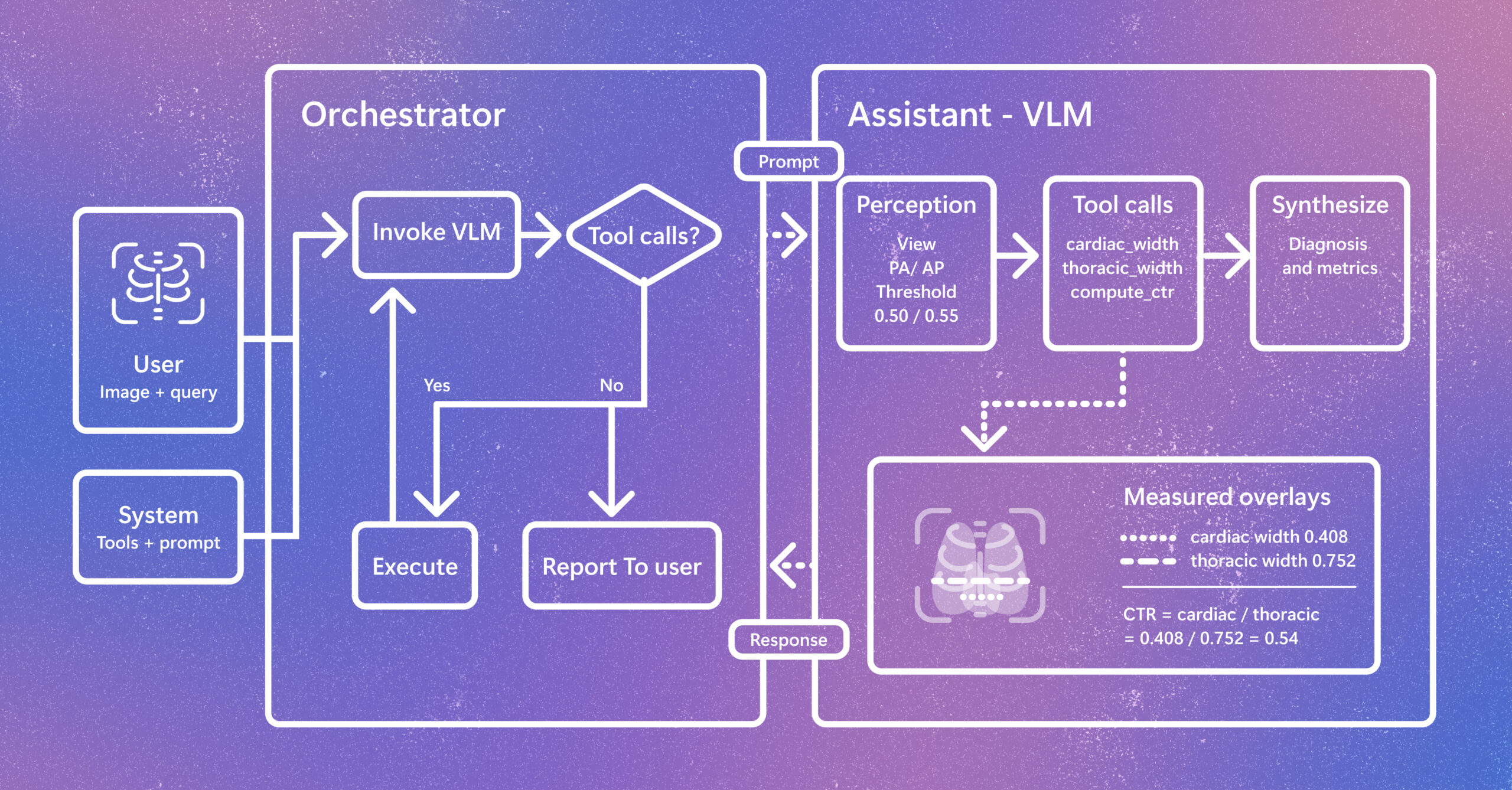
Introducing CARE-X: Towards Clinically Useful Radiology VLMs with Auxiliary Supervision, Reward-Aligned Learning, and Tool-Augmented Measurement

Radiology AI is evolving beyond report generation. CARE-X explores a unified approach that combines flexible reasoning, calibrated predictions, and measurement-based tools for chest X-ray interpretation. The post Introducing CARE-X: Towards Clinically Useful Radiology VLMs with Auxiliary Supervision, Reward-Aligned Learning, and Tool-Augmented Measurement appeared first on Microsoft Research.

MIT News · Artificial Intelligence Oct 23, 2026

Q&A: How AI came to model the “messy” human mind

Assistant Professor Benjamin Lindquist studies how engineers deliberately injected randomness into early AI, giving rise to deep-learning models that sometimes hallucinate.

We use cookies to run the site and, with your consent, for analytics and to show ads. See our Cookie Policy.