Skip to content

Agentic AIGC: A Survey of Visual Generation Agents

Oct 2026 · Preprints.org
Generative Adversarial Networks and Image Synthesis

Abstract

Visual generation is becoming a general component of AI infrastructure, supporting content creation across design, entertainment, education, science, and industry. Generative and multimodal models have substantially improved single-pass synthesis. At the same time, multi-step visual creation requires spatial precision, identity persistence, temporal coherence, editable structure, factual fidelity, and physical plausibility throughout the creation process. Errors in intermediate artifacts can propagate across subsequent steps, making creation control a central requirement. Model scaling, prompt refinement, additional conditioning, and repeated sampling improve individual outputs; coordinating these capabilities across a task requires runtime evidence to influence subsequent creation decisions. Within AI-generated content (AIGC), we use Agentic AIGC to describe goal-driven content creation organized through a multi-step control loop. This survey focuses on visual generation agents: systems that use runtime evidence from evolving visual artifacts, task environments, and interaction histories to change later creation-relevant action selection or parameterization, including generation, editing, verification, recovery, replanning, and stopping. The defining behavioral property is therefore an observation--action dependency: runtime observations change later action selection. Whether those decisions improve task or constraint outcomes is evaluated separately with matched tools and resource budgets. We organize this emerging field around the control mechanisms and behavioral evidence that connect generative capabilities to autonomous visual creation. Specifically, we formalize this boundary and characterize autonomy through five cumulative levels (L1--L5). A six-component analytical framework (goal understanding, specification, and planning; memory; tool; perception; action; and cross-task self-improvement) structures a cross-domain comparison spanning image, video, 3D/CAD, scientific visualization, structured documents, UI/Web, and related visual-creation domains. Building on this comparison, we analyze training from trajectory supervision and policy initialization through reinforcement learning from multimodal and executable feedback to experience reuse with skill abstraction and transfer. We organize evaluation into four complementary levels: artifact quality, goal and constraint satisfaction, trajectory and decision quality, and system and human-centered evaluation. This synthesis distinguishes behavioral evidence from evidence that feedback improves a creation outcome. Finally, we identify research directions in the scope of visual agency, reliable long-horizon control, cross-task improvement, and evaluation.


View source

Similar papers

#machine learning Review Open access Oct 2014

Software development in startup companies: A systematic mapping study

The results indicate that software engineering work practices are chosen opportunistically, adapted and configured to provide value under the constrains imposed by the startup context.

Nicolò Paternoster, Carmine Giardino, M. Unterkalmsteiner et al. · 394 citations · ⚡54
#machine learning Review Open access Jun 2014

Why Early-Stage Software Startups Fail: A Behavioral Framework

This state-of-practice investigation was performed using a literature review followed by a multiple-case study approach and presents how inconsistency between managerial strategies and execution can lead to failure by means of a behavioral framework.

Carmine Giardino, Xiaofeng Wang, P. Abrahamsson · 175 citations · ⚡19
#machine learning Review Open access Oct 2016

“Failures” to be celebrated: an analysis of major pivots of software startups

This study conducts a case survey study based on the secondary data of the major pivots happened in 49 software startups, and demonstrates that customer need pivot is the most common among all pivot types.

Sohaib Shahid Bajwa, Xiaofeng Wang, Anh Nguyen-Duc et al. · 127 citations · ⚡15
#artificial intelligence Conference Open access Apr 2020

ECCOLA - a Method for Implementing Ethically Aligned AI Systems

The method, ECCOLA, is presented, which aims at making the high-level AI ethics principles more practical, making it possible for developers to more easily implement them in practice.

Ville Vakkuri, Kai-Kristian Kemell, P. Abrahamsson · 64 citations · ⚡6
#computer vision Review Apr 2024

AI-powered Code Review with LLMs: Early Results

The goal is to not only refine the accuracy of the LLM-based tool but also to underscore its potential in streamlining the software development lifecycle through proactive code improvement and education.

Z. Rasheed, Malik Abdul Sami, Muhammad Waseem et al. · 62 citations · ⚡3

Related blog posts

MIT News · Artificial Intelligence Oct 23, 2026

Q&A: How AI came to model the “messy” human mind

Assistant Professor Benjamin Lindquist studies how engineers deliberately injected randomness into early AI, giving rise to deep-learning models that sometimes hallucinate.

Microsoft Research Blog Oct 12, 2026

Simulating student learning for better AI tutoring

StudentSim is a research system for evaluating and improving AI tutoring tools before they are tested with learners. It models how individuals may engage with tutors, giving feedback to improve tutor performance across subjects like chess, writing, and mathematics. The post Simulating student learning for better AI tutoring appeared first on Microsoft Research.

Microsoft Research Blog Oct 7, 2026

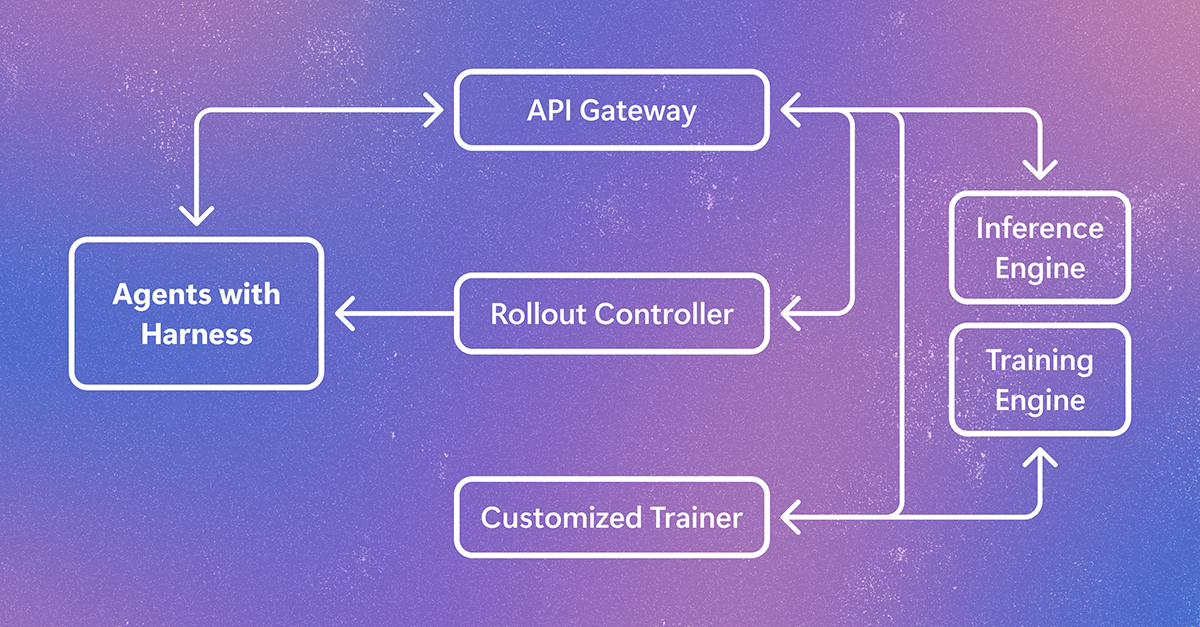
Agent Lightning v1.0: A 3,500-Line Lightweight Agentic RL Framework for Training Agents with Real Harnesses

Training AI agents with reinforcement learning can be challenging because their tools, context, and decision-making are managed by complex frameworks. Agent Lightning connects existing agents to RL training, making it easier to improve them without rebuilding them. The post Agent Lightning v1.0: A 3,500-Line Lightweight Agentic RL Framework for Training Agents with Real Harnesses appeared first on Microsoft Research.

We use cookies to run the site and, with your consent, for analytics and to show ads. See our Cookie Policy.