Skip to content
#federated learning Review Open access

Digital Twins for Sustainable Groundwater Resources Management: From Monitoring and Prediction to Governance and Resilience—A Review

Aug 2026 · Hydrology · 0 citations

Abstract

This article presents a scoping review of the literature on digital twins (DTs) for sustainable groundwater resources management, which constitutes a very recent and rapidly expanding research field, with literature moving quickly from conceptual frameworks to application-oriented systems. The literature, selected through the PRISMA 2020 methodology, is organized into seven sub-topics: AI and ML foundations, digital twin architectures and frameworks, aquifer-scale DT applications, agricultural and water–energy–food (WEF) nexus DTs, basin and urban water DTs, sensing, monitoring and IoT infrastructures, and governance, resilience and socio-hydrology. This structure shows how the field is shifting from monitoring and prediction toward integrated decision support, where process-based models, machine learning surrogates, real-time sensing and optimization are combined to support drought mitigation, saltwater intrusion control, irrigation management, climate adaptation and basin-scale planning. Across the reviewed studies, the most recurrent contributions are the construction of hybrid model architectures, the use of DTs to close the loop between observation and control, and the growing recognition that groundwater management must incorporate governance, stakeholder decision-making and socio-hydrological feedbacks. At the same time, the literature still faces key limitations, especially uncertainty quantification, interoperability between models and data streams, transferability to data-scarce settings and limited validation under real operational conditions. Future research should therefore focus on physics-informed and explainable AI, federated and scalable DT architectures, stronger coupling with socio-hydrological and governance frameworks, and more field-tested implementations that can demonstrate robust performance across diverse hydrogeological and institutional contexts.
Read PDF

Similar papers

#machine learning Review Open access Oct 2014

Software development in startup companies: A systematic mapping study

The results indicate that software engineering work practices are chosen opportunistically, adapted and configured to provide value under the constrains imposed by the startup context.

Nicolò Paternoster, Carmine Giardino, M. Unterkalmsteiner et al. · 394 citations · ⚡54
#machine learning Review Open access Jun 2014

Why Early-Stage Software Startups Fail: A Behavioral Framework

This state-of-practice investigation was performed using a literature review followed by a multiple-case study approach and presents how inconsistency between managerial strategies and execution can lead to failure by means of a behavioral framework.

Carmine Giardino, Xiaofeng Wang, P. Abrahamsson · 175 citations · ⚡19
#machine learning Review Open access Oct 2016

“Failures” to be celebrated: an analysis of major pivots of software startups

This study conducts a case survey study based on the secondary data of the major pivots happened in 49 software startups, and demonstrates that customer need pivot is the most common among all pivot types.

Sohaib Shahid Bajwa, Xiaofeng Wang, Anh Nguyen-Duc et al. · 127 citations · ⚡15
#machine learning Review Open access May 2016

Key Challenges in Software Startups Across Life Cycle Stages

It is found that what perceived as biggest challenges by software startups do vary across different life cycle stages, even though its significance decreases when the learning focuses of the startups move from problem to solution and their products mature.

Xiaofeng Wang, Henry Edison, Sohaib Shahid Bajwa et al. · 62 citations · ⚡6

Related blog posts

Microsoft Research Blog Sep 30, 2026

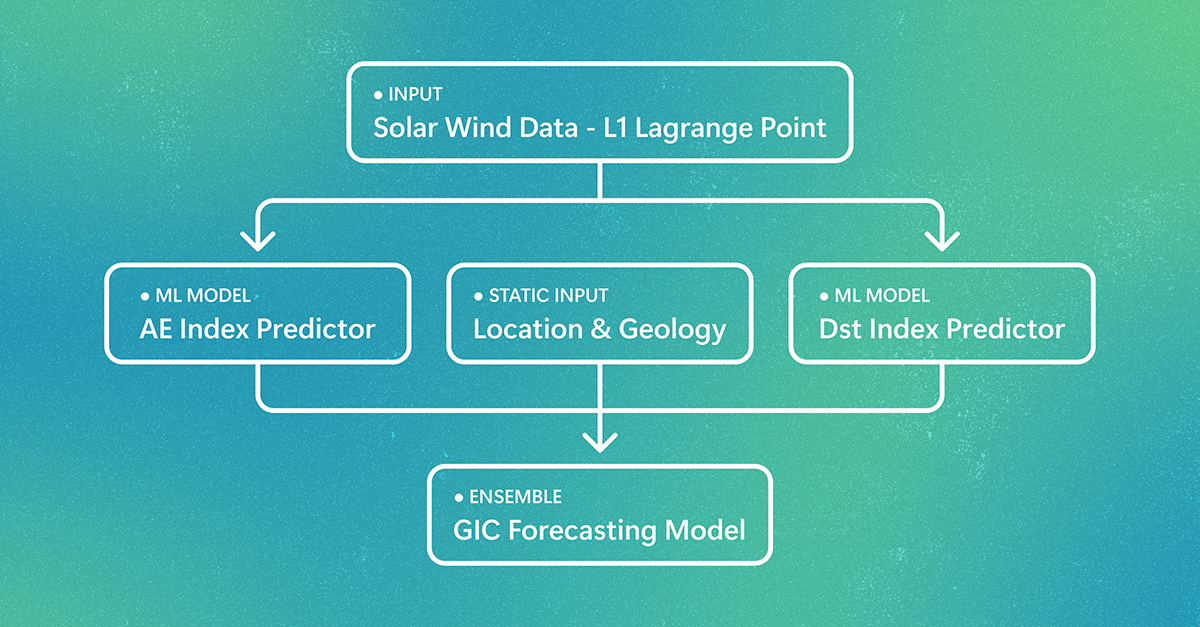
Forecasting space weather risks on power grids

Extreme space-weather events can damage power systems on Earth and degrade GPS accuracy and satellite operations. A new machine learning system can predict where damage is likely to occur 30-60 minutes before a storm arrives. The post Forecasting space weather risks on power grids appeared first on Microsoft Research.

We use cookies to run the site and, with your consent, for analytics and to show ads. See our Cookie Policy.