Nov 2025· Communications Chemistry· Vol 8· 1 citation· 71 references
Medicine
TL;DR
A deep learning framework that integrates knowledge graph embedding and pre-training strategies to overcome the intractable cold start issue, achieving superior performance and interpretability in drug repurposing is introduced.
Abstract
Drug repositioning holds promise for discovering new therapeutic applications for existing drugs, accelerating drug development and reducing associated costs. However, current methodologies encounter difficulties in managing diverse network representations, tackling cold start issues, and handling intrinsic attribute representations. Here we introduce a Unified Knowledge-Enhanced deep learning framework for Drug Repositioning (UKEDR), which integrates knowledge graph embedding, pre-training strategies, and recommendation systems to address these challenges. To overcome the cold start issue, UKEDR utilizes a semantic similarity-driven embedding approach. Our evaluations show that UKEDR performs better than various baselines, including classical machine learning, network-based, and deep learning approaches. In cold start scenarios, it demonstrates an improved capability in handling unseen nodes and generalizing to new compounds. The model also demonstrates strong robustness on imbalanced datasets and shows excellent generalization capabilities in specific drug-centric and disease-centric cold-start scenarios, validating its potential for real-world applications. Drug repositioning offers a promising avenue for accelerating drug development, yet existing methods struggle with network diversity, cold start issues, and intrinsic attribute representation. Here, the authors introduce UKEDR, a deep learning framework that integrates knowledge graph embedding and pre-training strategies to overcome the intractable cold start issue, achieving superior performance and interpretability in drug repurposing.

ATSFCL-DR provides an effective approach for drug-disease association prediction and candidate drug screening by adaptively integrating topological and semantic information within a contrastive learning framework.
Hao Zhang, Jin-Can Li, Xian-Fang Tang et al.· Journal of Chemical Informat...· 0 citations
Drug repositioning has emerged as an attractive drug development strategy with deep learning-based computational methods showing great potential in predicting Drug-Disease Associations (DDAs). However, dominant computational paradigms typically rely on Random Negative Sampling (RNS) and static embedding fusion, leading...
Ke-Rui Xu, Ke-Yuan Xu, Shu-Hui Yin et al.· Proceedings of the Thirty-Fi...· 0 citations
A novel model named Graph-based Multi-View Learning for Drug Recommendation, which combines semantic information of drugs learned from electronic health records (EHRs) and drug molecular structures are extracted and achieves safe and effective drug recommendations.
Yanjie Zhao, Xiaomei Yu, Jianlong Zhao et al.· 0 citations
It is indicated that although many methods report strong performance on standard benchmarks, their effectiveness is often influenced by dataset bias and limited evaluation settings, and most methods exhibit reduced performance in cold-start scenarios, highlighting challenges in generalization.
This structured narrative review examines how computational drug repurposing modalities are encoded, aligned, and fused, and distinguishes computational prioritization, docking, preclinical, retrospective clinical, and prospective evidence, and examines data sparsity, uncertain negatives, missing or noisy modalities, i...
Yu-Lin Zhang, Ming-Yang Qian, Chen-Yang Wang et al.· Applied Informatics· 0 citations
Two deep learning-based computational protocols designed to address drug mechanisms of action and predicting drug-target interactions are presented, offering scalable, cost-effective tools for accelerating therapeutic development by bridging chemical structure, molecular interactions, and systems-level biological respo...
Y. Sun, Cheng-You Liu, Zi-Hao Jing et al.· Methods in molecular biology· 0 citations
Related blog posts
MIT News · Artificial Intelligence· news.mit.eduAug 18, 2026
A new method for surgically removing training examples from a model reveals that as datasets grow, the link between what a model learns and what it produces dissolves.
Learn how Google DeepMind and GovTech Singapore uses lightweight on-device Gemma models to intercept conversational scams in private chats with zero cloud data egress.
What does it take to trust AI-driven HVAC optimization? Our AI Model Factory combines agents, machine learning, reinforcement learning and deterministic checks in a governed workflow designed for messy, real-world building data. The post We built an AI factory for HVAC control appeared first on GPT-Lab.
Microsoft Research Blog· microsoft.comJul 30, 2026
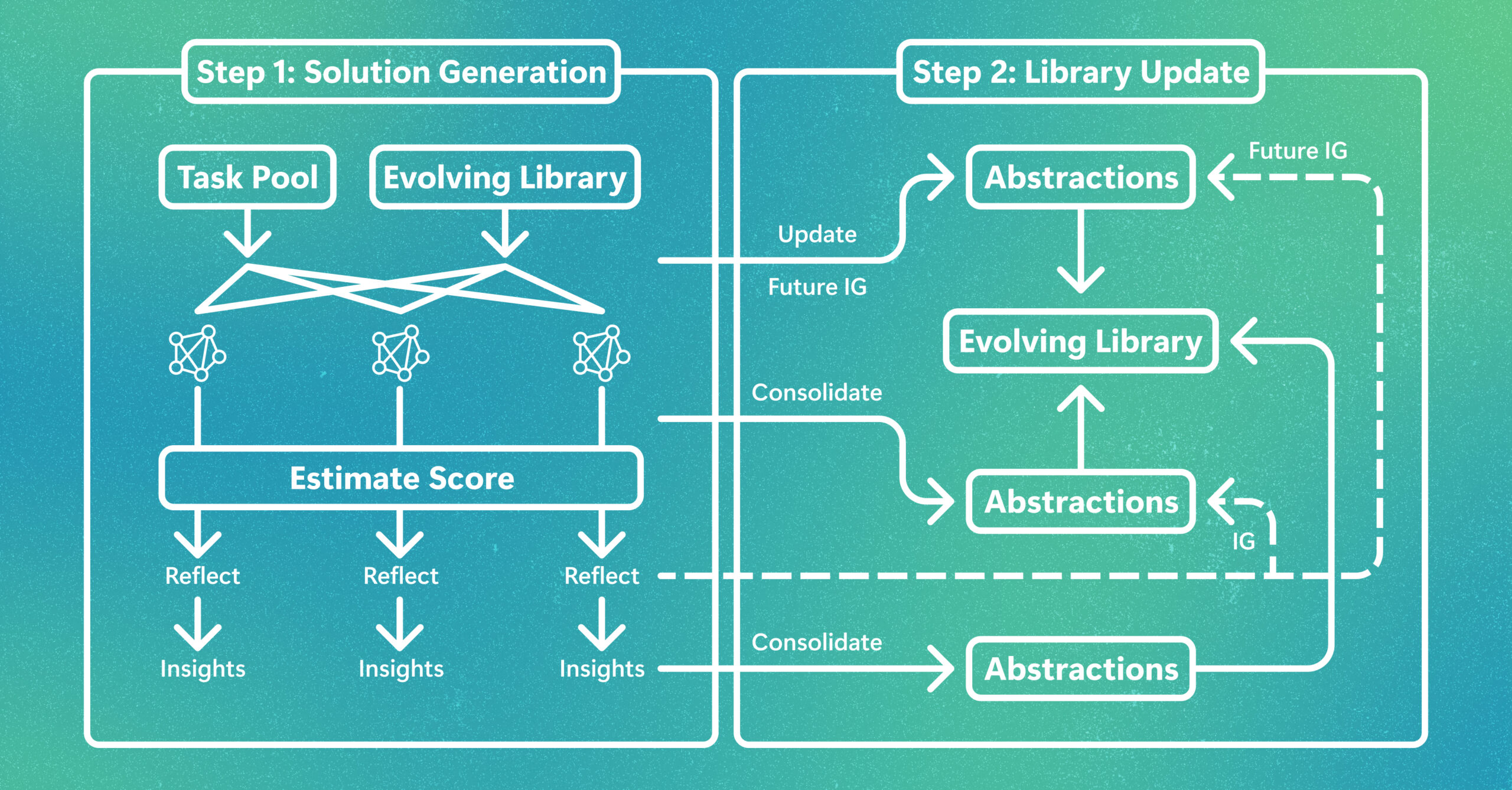
LLMs do not get smarter just by remembering more. EvoLib turns experience into evolving knowledge, taking reusable skills and insights that help models learn and adapt across tasks long after deployment. The post EvoLib: Turning experience into evolving knowledge appeared first on Microsoft Research.
We use cookies to run the site and, with your consent, for analytics and to show ads.
See our Cookie Policy.