CGTime, the 4B-parameter computation-grounded time-series-language model, decoupling perception from description, outperforms far larger general-purpose models on multivariate understanding tasks and attains the best multivariate fact score on a held-out benchmark.
Abstract
Training multimodal models to align time series with language runs into a self-supervision trap. The usual recipe asks an LLM to read a series and write a description, so label quality is capped by the perceptual skill the model is supposed to learn. The data can never teach more than the labeler already knows. A second gap makes this worse: most datasets use a single variable, but the patterns that matter (cross-channel correlation, lead-lag structure, co-occurring anomalies) appear only with several variables, right where the labeling LLM's limits are most exposed. These two problems create a trilemma: existing methods are reliable, realistic, or scalable, but none achieves all three. We resolve this by decoupling perception from description. Deterministic code computes a set of statistics from real, open-source multivariate series; the LLM verbalizes those precomputed facts. Perception, which LLMs do poorly, is handled by computation, while the LLM handles expression. This produces CGTime, our 4B-parameter computation-grounded time-series-language model. CGTime outperforms far larger general-purpose models on multivariate understanding tasks: it attains the best multivariate fact score on our held-out benchmark (0.283 vs. 0.173 for GPT-4o-mini and 0.203 for GPT-5.4-nano), a gap that survives Holm-corrected paired significance tests against every baseline. It also states verifiable numerical facts in generated captions more accurately and covers a broader range of statistical properties.
This survey traces attention from Bahdanau-Luong alignment through the Transformer and into vision architectures, and reviews fixed and learned sparse attention, linear attention, IO-aware exact algorithms including FlashAttention, and state-space alternatives including Mamba.
End-to-end activation-state transfer between LLMs, as currently implemented, is architecture-dependent rather than universal, and it is concluded that end-to-end activation-state transfer between LLMs is architecture-dependent rather than universal.
Text-compatible JEPA objectives must preserve multiple plausible completions rather than compress them into a single latent point, showing that text-compatible JEPA objectives must preserve multiple plausible completions rather than compress them into a single latent point.
An architecture-agnostic sufficient condition is established linking behavioral similarity to inference-prompt coverage, small excess population log-loss, and similar effective target distributions---a possible training-side account rather than an empirical explanation of the observed trends.
OmniLens is presented, which applies a single lens family to any model-width activation, whether residual stream, attention, or MLP, and combines two independent scaling techniques, which reproduces key published results at substantially lower cost.
Jordan Pettyjohn, Mansi Sakarvadia, Nathaniel Hudson et al.· 0 citations
Language models hold latent quantities in a form they can report on, and more of a quantity is present in that form when the task requires reusing it flexibly when the task requires reusing it flexibly.
Parsa Mazaheri· 0 citations
Related blog posts
MIT News · Artificial Intelligence· news.mit.eduOct 2, 2026
Martin Trust Center Managing Director Bill Aulet introduces Dear Dreamer, a free platform for middle and high school students who want to learn about entrepreneurship.
Microsoft Research Blog· microsoft.comSep 30, 2026
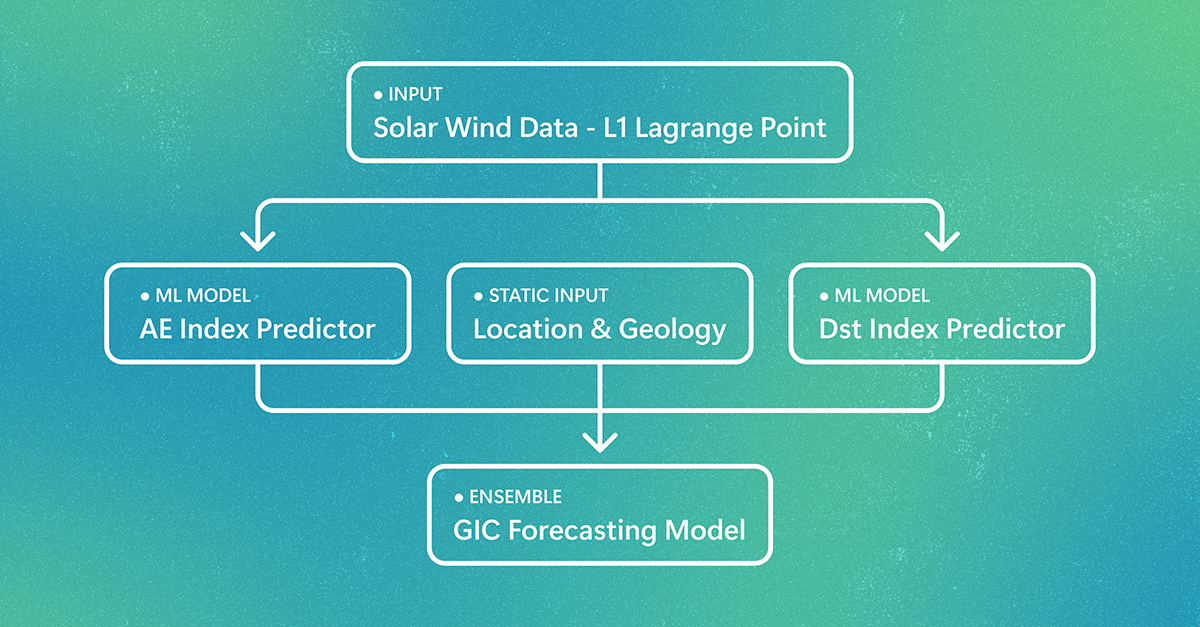
Extreme space-weather events can damage power systems on Earth and degrade GPS accuracy and satellite operations. A new machine learning system can predict where damage is likely to occur 30-60 minutes before a storm arrives. The post Forecasting space weather risks on power grids appeared first on Microsoft Research.
We use cookies to run the site and, with your consent, for analytics and to show ads.
See our Cookie Policy.