Skip to content

The Rise of Artificial Intelligence in Oncology: Opportunities, Challenges, and Future Directions

Sep 2026 · The Rise of Artificial Intelligence in Oncology: Opportunities, Challenges, and Future Directions · 0 citations

TL;DR

Overall, AI is becoming an integral component of modern oncology, particularly radiation oncology, and its successful integration into routine clinical practice will require robust validation, transparent governance, equitable implementation, and continued clinician oversight to ensure safe, effective, and patient-centred cancer care.

Abstract

Artificial intelligence (AI) is rapidly transforming oncology by supporting clinical decision-making across the entire cancer care continuum, with radiation oncology emerging as one of the leading specialities in its clinical adoption due to its inherently digital workflow. This narrative review summarises the current evidence on AI applications in oncology, with particular emphasis on radiation oncology, highlighting recent advances in machine learning, deep learning, large language models (LLM), and multimodal AI, while also discussing the challenges and future directions for clinical implementation. AI has demonstrated significant potential in cancer screening, imaging, pathology, genomics, treatment selection, and outcome prediction. Within radiation oncology, it enhances auto- segmentation, treatment planning, image guidance, adaptive radiotherapy, radiomics, and quality assurance (QA), improving workflow efficiency, consistency, and treatment precision. Emerging technologies such as multimodal AI, LLM, federated learning, and digital twins are expected to further accelerate the development of precision oncology. However, widespread clinical implementation continues to face challenges, including limited external validation, algorithmic bias, poor model interpretability, and ethical and regulatory concerns. Overall, AI is becoming an integral component of modern oncology, particularly radiation oncology, and its successful integration into routine clinical practice will require robust validation, transparent governance, equitable implementation, and continued clinician oversight to ensure safe, effective, and patient-centred cancer care.

View source

Similar papers

Review Open access Sep 2026

Generative artificial intelligence in lung cancer care: current applications, challenges, and future directions

Generative artificial intelligence (GAI), particularly large language models (LLMs) and multimodal foundation models, represents a new generation of artificial intelligence technologies with emerging applications in healthcare. In lung cancer care, where clinical decisions increasingly require integration of imaging, p...

Wen-Zheng Zhang, Zhao-Rui Feng, Yi-Tong Liu et al. · 0 citations
Review Open access 2026

Artificial Intelligence in Radiation Oncology: Current applications, clinical impact, and future perspectives. A Narrative Review

Radiation oncology is a highly digital and data-intensive discipline in which artificial intelligence (AI) is increasingly being incorporated into the clinical workflow. From image analysis and automatic segmentation to treatment planning, adaptive radiotherapy, radiomics, and outcome prediction, AI has the potential t...

S. Ichou, K. Nouni, A. Lachgar et al. · 0 citations
#federated learning Review Open access Sep 2026

Applications and challenges of artificial intelligence in cancer management

Artificial intelligence (AI) is increasingly transforming cancer management by enabling the analysis of complex multimodal data generated across the cancer care continuum. This structured narrative review synthesizes current applications of AI, machine learning, and deep learning in cancer detection, imaging diagnosis,...

Eva Rahman Kabir, N. Mustafa, Zara Sheikh et al. · 0 citations
Review Open access Aug 2026

Multimodal artificial intelligence and machine learning in oncology: from data integration to precision cancer care

The role of multimodal artificial intelligence and machine learning in bridging the gap in interpreting heterogeneous modalities to improve risk prediction, prognostic assessment, and treatment decision-making in precision oncology is focused on.

Shruthi Suresh, A. Parvathy, Megha Raj et al. · 0 citations
#explainable ai Review Open access Sep 2026

Artificial Intelligence Across the Cancer Theranostics Workflow: Critical Appraisal of Current Evidence and Future Clinical Translation.

This review critically evaluates the role of AI throughout the cancer theranostic workflow, with a focus on its potential to address the key clinical and technical challenges that continue to limit the routine implementation of personalized radiopharmaceutical therapy.

Z. Mansouri, Y. Salimi, A. Akhavanallaf et al. · 0 citations
Review Open access Jul 2026

Trustworthy artificial intelligence in radiation oncology: cross-industry lessons for development, validation, and deployment

Artificial intelligence (AI) is rapidly expanding across the radiation oncology workflow, with applications spanning imaging, contouring, treatment planning, quality assurance, outcome prediction, workflow automation, and clinical decision support. Although technical progress has accelerated substantially, successful c...

Malinda Zhu, Lang Gou, Chi Zhang et al. · 0 citations

Related blog posts

GPT-Lab Aug 28, 2026

We built an AI factory for HVAC control

What does it take to trust AI-driven HVAC optimization? Our AI Model Factory combines agents, machine learning, reinforcement learning and deterministic checks in a governed workflow designed for messy, real-world building data. The post We built an AI factory for HVAC control appeared first on GPT-Lab.

Microsoft Research Blog Jul 30, 2026

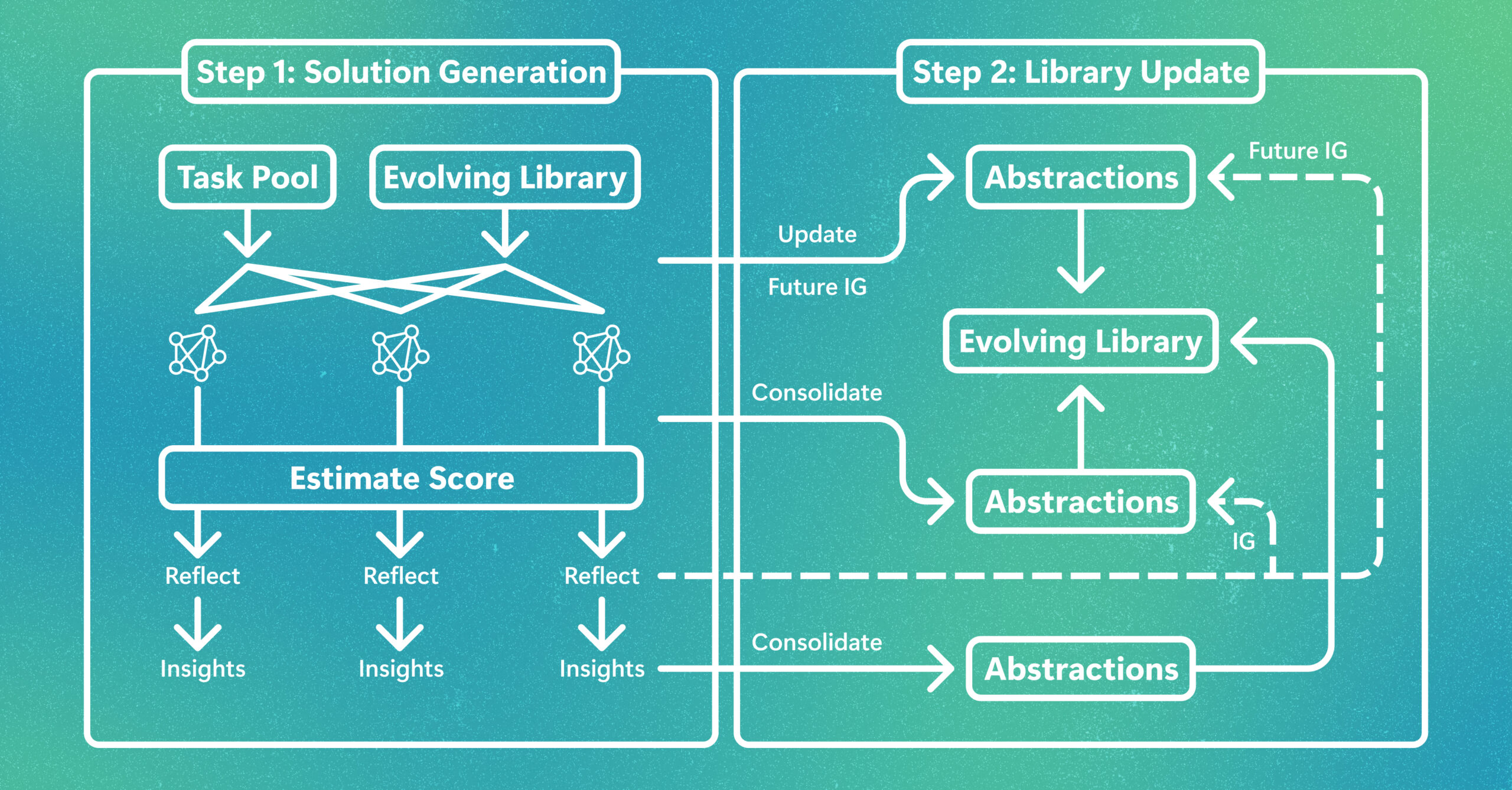
EvoLib: Turning experience into evolving knowledge

LLMs do not get smarter just by remembering more. EvoLib turns experience into evolving knowledge, taking reusable skills and insights that help models learn and adapt across tasks long after deployment. The post EvoLib: Turning experience into evolving knowledge appeared first on Microsoft Research.

We use cookies to run the site and, with your consent, for analytics and to show ads. See our Cookie Policy.