Oct 2026· AI & Future Society· Vol 2, pp. 19-42· 0 citations· 18 references
Ethics and Social Impacts of AI
TL;DR
This paper examines enterprise institutional preparedness for increasingly general and autonomous AI systems through three interrelated dimensions: organizational resilience, employee protection, and social responsibility.
Abstract
Artificial general intelligence (AGI) is increasingly discussed not merely as a technical frontier but as a social and institutional challenge. Drawing on current generative and agentic AI as diagnostic evidence, this paper examines enterprise institutional preparedness for increasingly general and autonomous AI systems through three interrelated dimensions: organizational resilience, employee protection, and social responsibility. Using conceptual and normative analysis, the paper synthesizes AI governance, organizational resilience, labor studies, corporate social responsibility, and policy frameworks to develop a forward-looking governance architecture. The framework links three levels of institutional exposure: continuity of organizational functions, preservation of worker agency, and external social legitimacy. It identifies seven preparedness components: strategic foresight, governance architecture, risk and impact assessment, human oversight, employee protection, social responsibility, and continuous learning. The analysis further distinguishes scalable risks already visible in current AI from potentially discontinuous risks associated with greater autonomy and cross-domain integration. The study shifts the unit of analysis from tool-level AI risk management to enterprise-level institutional capacity to preserve organizational continuity, worker agency, and external social legitimacy.
Artificial intelligence is reshaping talent development through skills analytics, personalized learning, AI-supported coaching, competency assessment, career development, internal mobility, and workforce planning. These applications can expand access to development and strengthen workforce capability, but they also cre...
Yu-Ling Chang, Sheng-Yu Wu· International Journal of AI...· 0 citations
Artificial intelligence (AI) is moving from experimentation into routine university work, while institutional controls are developing more slowly. This article examines the governance conditions Vietnamese public universities need as AI becomes embedded in academic and administrative processes under recent rules on hig...
Do Tan Dat· Pancasila International Jour...· 0 citations
This article contends that Shadow AI is more than just a Cybersecurity or compliance issue; it is also an ethical governance problem because hidden use obscures accountability, reduces transparency, shifts responsibility onto individual workers, and gives rise to concerns regarding privacy, fairness, and the need for h...
Alfredo Gavito Romero, V. López-Moralès, A. Franco-Árcega et al.· AI and Ethics· 0 citations
The rapid proliferation of generative artificial intelligence (AI) requires organizations to decide how AI systems are accessed, deployed, and governed. Existing research examines privacy, security, performance, compliance, and vendor dependence separately, without an integrated account of organizational control, depen...
An integrative theoretical model explaining how and when AI-supported cybersecurity governance may contribute to organizational resilience is developed, and what AI changes in the positive pathway while explicitly recognizing heterogeneity across model classes and deployment arrangements is explained.
Enforcing physics-based constraints prevents AI models from generating unreliable predictions for complex nonlinear systems in weather, climate, and turbulent flows.
MIT News · Artificial Intelligence· news.mit.eduNov 20, 2026
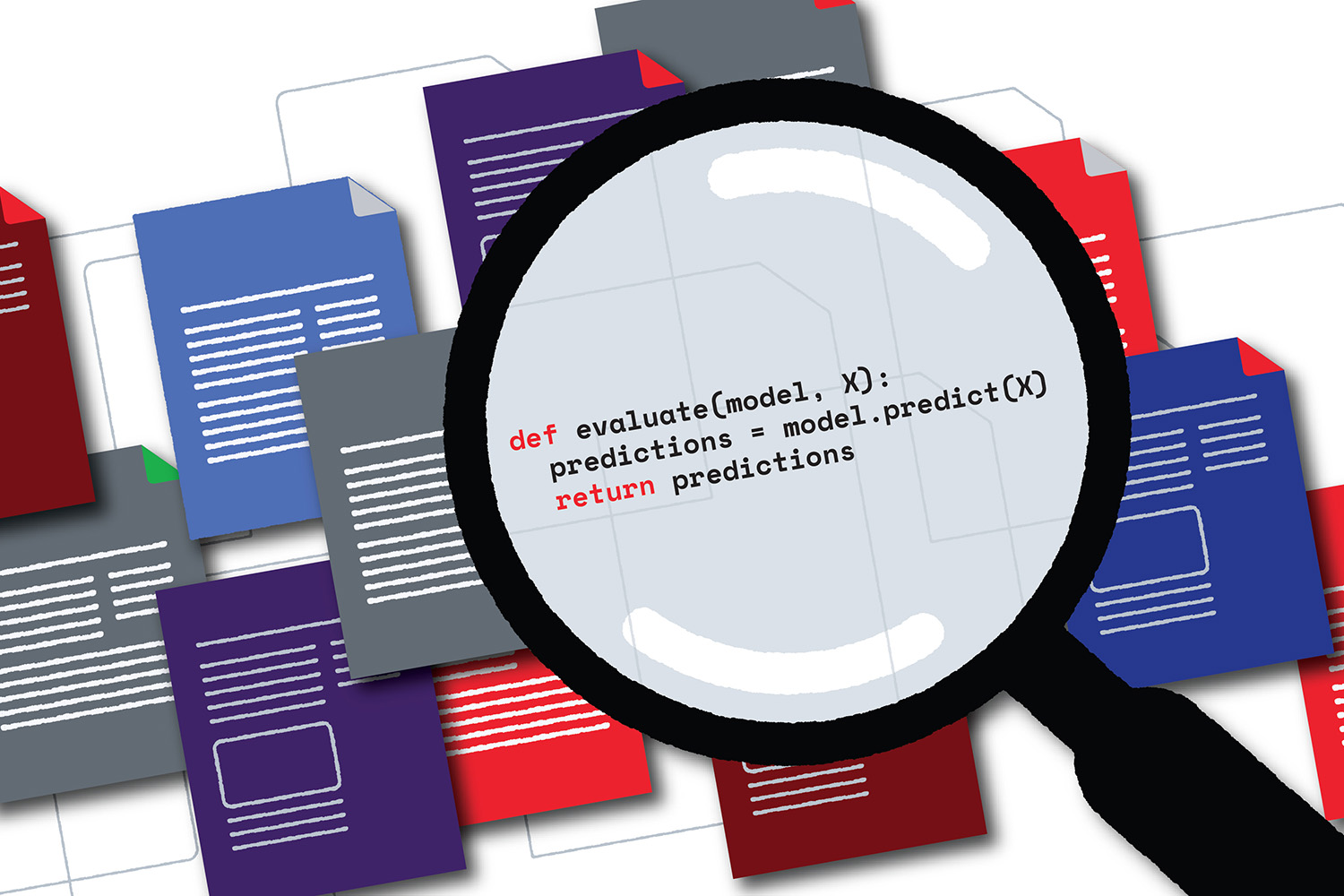
An MIT and Dana-Farber Institute-led team used large language models to examine nearly 4,000 studies and hundreds of code repositories, revealing gaps in the information needed to scrutinize and reuse published research.
We use cookies to run the site and, with your consent, for analytics and to show ads.
See our Cookie Policy.