Skip to content

Sustainable Energy Dispatch Optimization with Threshold-Gated Reinforcement Learning

Oct 2026 · Sustainability · 0 citations
Electric Power System Optimization

Abstract

Ensuring demands are satisfied while minimizing operating costs remains a challenging problem for reinforcement learning (RL), particularly in long-horizon energy management settings. In this work, we propose a unified training framework that combines curriculum learning with a threshold-gated reward mechanism for sequential energy dispatch with battery storage under uncertain operating conditions. Unlike conventional weighted reward formulations that optimize competing objectives simultaneously, the proposed reward design encourages the agent to first minimize demand–supply imbalance. Once a prescribed imbalance threshold is achieved, the learning process focuses on improving secondary objectives, allowing the policy to select lower-cost operating strategies among the solutions that satisfy the primary reliability requirements. Curriculum learning progressively increases task complexity, enabling the agent to gradually learn the desired reliability and economic objectives. Extensive experiments demonstrate that the proposed curriculum-guided threshold-gated framework maintains the absolute value of mean imbalance gaps below 3% while achieving operating costs close to those of the linear programming benchmark. Comparative studies against conventional reward formulations and ablation analyses further show that the framework effectively enforces objective priorities during learning, resulting in improved constraint satisfaction, enhanced renewable energy utilization, and competitive operating costs. These results highlight the framework’s ability to support reliable, cost-effective, and sustainable power system operation.


Read PDF

Similar papers

#machine learning Review Open access Oct 2014

Software development in startup companies: A systematic mapping study

The results indicate that software engineering work practices are chosen opportunistically, adapted and configured to provide value under the constrains imposed by the startup context.

Nicolò Paternoster, Carmine Giardino, M. Unterkalmsteiner et al. · 394 citations · ⚡54
#machine learning Review Open access Jun 2014

Why Early-Stage Software Startups Fail: A Behavioral Framework

This state-of-practice investigation was performed using a literature review followed by a multiple-case study approach and presents how inconsistency between managerial strategies and execution can lead to failure by means of a behavioral framework.

Carmine Giardino, Xiaofeng Wang, P. Abrahamsson · 175 citations · ⚡19
#machine learning Review Open access Oct 2016

“Failures” to be celebrated: an analysis of major pivots of software startups

This study conducts a case survey study based on the secondary data of the major pivots happened in 49 software startups, and demonstrates that customer need pivot is the most common among all pivot types.

Sohaib Shahid Bajwa, Xiaofeng Wang, Anh Nguyen-Duc et al. · 127 citations · ⚡15
#machine learning Review Open access May 2016

Key Challenges in Software Startups Across Life Cycle Stages

It is found that what perceived as biggest challenges by software startups do vary across different life cycle stages, even though its significance decreases when the learning focuses of the startups move from problem to solution and their products mature.

Xiaofeng Wang, Henry Edison, Sohaib Shahid Bajwa et al. · 62 citations · ⚡6

Related blog posts

MIT News · Artificial Intelligence Nov 17, 2026

Learning the language of machine learning

By studying the computational foundations of language learning, Associate Professor Jacob Andreas builds intelligent systems that can communicate effectively with humans.

Microsoft Research Blog Nov 16, 2026

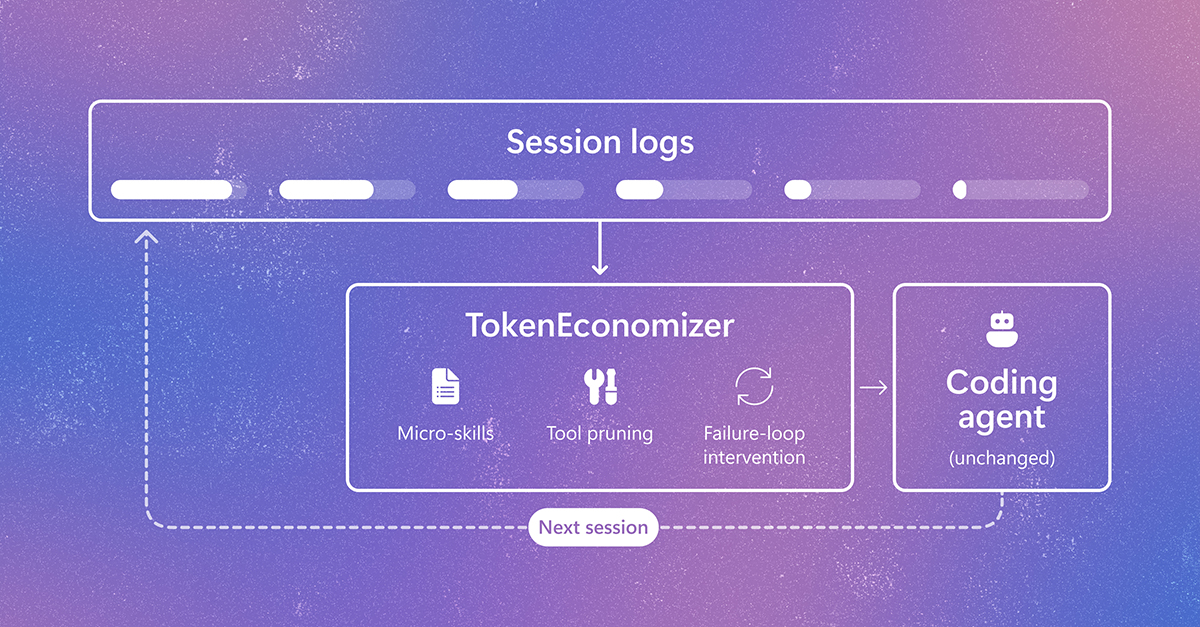
TokenEconomizer: Learning from Experience to Make AI Coding Agents More Efficient

AI coding agents are increasingly help developers fix bugs and build features largely on their own, but every interaction with their models consumes tokens. In each session, an agent sends instructions, tool descriptions, and session history to its model. Most efforts to reduce this cost focus on individual tasks. Yet developers return to the same […] The post TokenEconomizer: Learning from Experience to Make AI Coding Agents More Efficient appeared first on Microsoft Research.

We use cookies to run the site and, with your consent, for analytics and to show ads. See our Cookie Policy.