ReLEAP: Upcycling Vision Datasets through Cross-Task Unification and Semi-Supervised Annotation
Julia SimonDaniel SteiningerAndreas Trondl
Oct 2026
Machine LearningComputer Vision
Abstract
Developing robust vision models requires large amounts of annotated data, especially for tasks involving fine-grained class distinctions under variable environmental conditions. Even in domains with numerous existing datasets, differences in annotation formats, label definitions and targeted learning tasks hinder data reuse and integration. To address this challenge, we introduce ReLEAP, a scalable Python framework for unifying heterogeneous image datasets through data-source abstraction, systematic reuse of annotations across learning tasks, and mapping of labels to a shared hierarchical taxonomy. We demonstrate its applicability in precision agriculture by integrating fifteen diverse datasets covering a broad range of plant species and annotation types. Beyond unification, ReLEAP enables systematic recycling of existing data and provides a robust foundation for learning-based annotation upcycling. Leveraging this foundation, we conduct extensive cross-dataset and fine-tuning experiments to investigate how domain-specific models trained on unified data and foundation models can be used to automatically generate higher-level annotations under unsupervised, weakly supervised and semi-supervised settings, and how dataset characteristics influence their effectiveness. Our results show that unified data access and annotation upcycling substantially expand the pool of reusable training data and annotations while improving data transparency, enabling more sustainable and resource-efficient use of existing datasets. We release the framework and trained models for academic use to support accessible and collaborative research, particularly in data-scarce and heterogeneous domains.

This paper investigates developing real-world perception for active agents, proposes Gibson Environment for this purpose, and showcases a set of perceptual tasks learned therein.
F. Xia, Amir Zamir, Zhi-Yang He et al.· 2018 IEEE/CVF Conference on...· 1,069 citations· ⚡112
This publication proposes a definition and a classification of agile software development approaches and analyses ten software development methods that can be characterized as being "agile" against the defined criterion.
P. Abrahamsson, O. Salo, Jussi Ronkainen et al.· arXiv.org· 727 citations· ⚡54
The study shows that agile practices improve both informal and formal communication, but indicates that, in larger development situations involving multiple external stakeholders, a mismatch of adequate communication mechanisms can sometimes even hinder the communication.
M. Pikkarainen, Jukka Haikara, O. Salo et al.· Empirical Software Engineeri...· 401 citations· ⚡48
The results indicate that software engineering work practices are chosen opportunistically, adapted and configured to provide value under the constrains imposed by the startup context.
Nicolò Paternoster, Carmine Giardino, M. Unterkalmsteiner et al.· Information and Software Tec...· 394 citations· ⚡54
The possibility of inferring high-dimensional data inference in a model that consists of a prior and an auxiliary differentiable constraint given some additional information is considered, thereby allowing a range of potential applications in adapting models to new domains and tasks.
Alexandros Graikos, Esmeralda S. Whitammer, N. Jojic et al.· Neural Information Processin...· 316 citations· ⚡15
Related blog posts
MIT News · Artificial Intelligence· news.mit.eduOct 28, 2026
Professor Paris Smaragdis develops computers with superhuman hearing for applications like speech recognition, music understanding, and environmental monitoring.
Exploring how generative AI could make machine vision more accessible to businesses. The post GenEye in a Box: Making Machine Vision Something You Can Just Ask For appeared first on GPT-Lab.
Microsoft Research Blog· microsoft.comAug 11, 2026
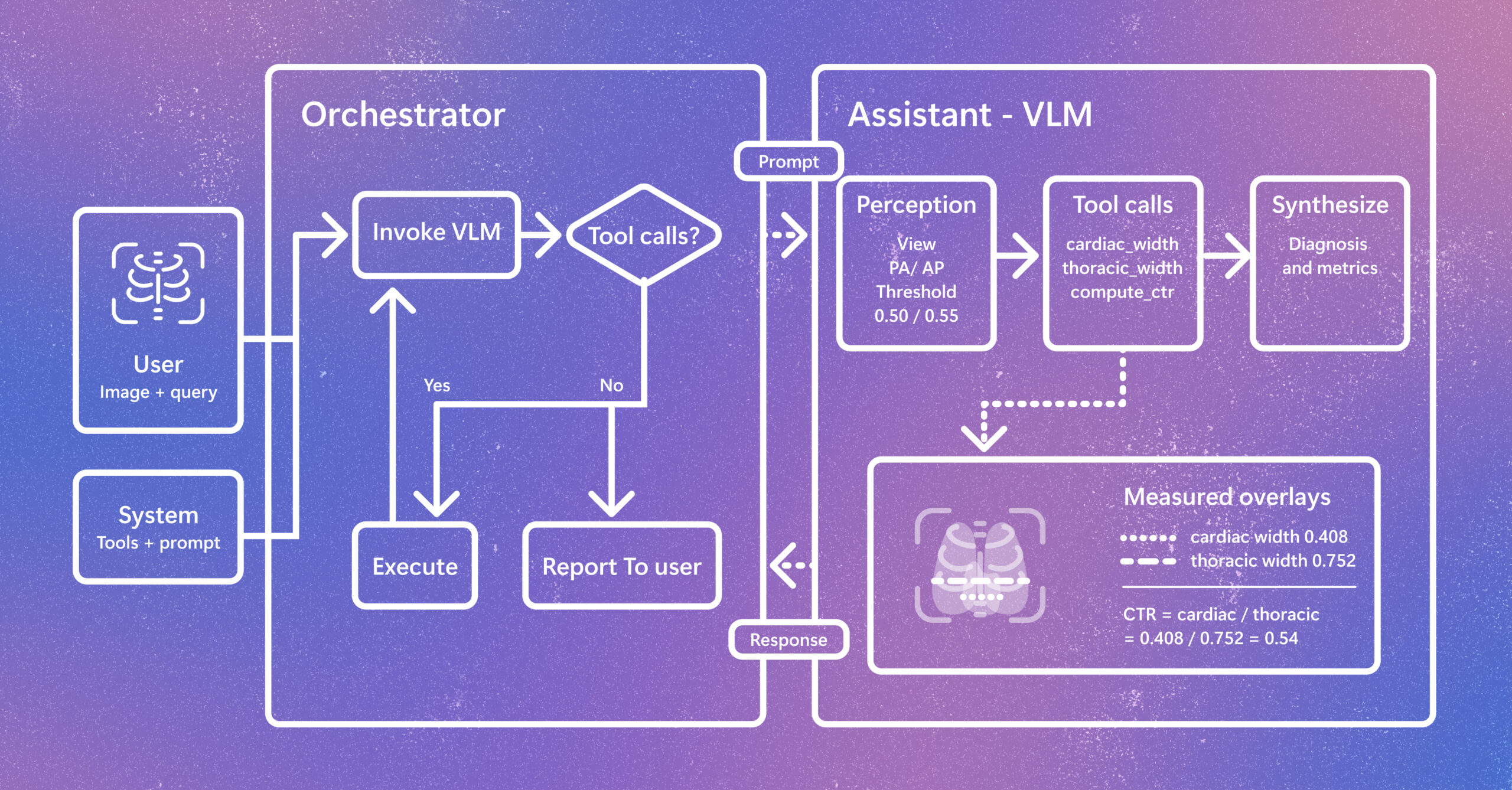
Radiology AI is evolving beyond report generation. CARE-X explores a unified approach that combines flexible reasoning, calibrated predictions, and measurement-based tools for chest X-ray interpretation. The post Introducing CARE-X: Towards Clinically Useful Radiology VLMs with Auxiliary Supervision, Reward-Aligned Learning, and Tool-Augmented Measurement appeared first on Microsoft Research.