Skip to content
#machine learning #computer vision Preprint Open access

BrainRotViT: Transformer-ResNet Hybrid for Explainable Modeling of Brain Aging from 3D sMRI

Wasif Jalal Md Nafiu Rahman Atif Hasan Rahman M. Sohel Rahman
Oct 2026
Machine Learning Computer Vision

Abstract

Accurate brain-age estimation from structural MRI provides a valuable biomarker for studying healthy aging and neurodegenerative disease. We propose BrainRotViT (Brain ResNet over trained Vision Transformer), a two-stage, slice-based (2.5D) framework that approximates volumetric context while combining the strengths of CNNs and transformers. A Vision Transformer is pretrained on an auxiliary age-sex composite classification task and subsequently frozen. Its per-slice embeddings are stacked into a 160 x 768 feature matrix and processed as a pseudo-image by a lightweight 2D residual CNN regressor, with subject sex incorporated at the final prediction layer. Trained and validated on 5,108 samples from 11 multi-site datasets and tested on four independent held-out cohorts comprising 948 samples, BrainRotViT achieves a validation mean absolute error (MAE) of 3.43 years (Pearson r = 0.98, $R^2$ = 0.96, Spearman $\rho$ = 0.97) and cross-cohort MAEs of 4.79-5.35 years, outperforming retrained 3D-ResNet, SFCN, 3D-ViT, Global-Local Transformer, Triamese-ViT, and TSAN baselines. After age-bias correction and covariate adjustment, brain-age gap is significantly associated with Alzheimer's disease, mild cognitive impairment, and autism spectrum disorder. An interpretability pipeline combining ViT attention with guided backpropagation, saliency sanity checks, and AAL3-based anatomical localization identifies aging-related regions including the occipital lobe, cerebellum, precentral and postcentral gyri, temporal lobes, and medial superior frontal gyrus. BrainRotViT thus provides an efficient and interpretable bridge between CNN and transformer paradigms, demonstrating cross-cohort generalization while yielding biologically meaningful insights into brain aging.


View source

Similar papers

#artificial intelligence Conference Open access Jun 2018

Gibson Env: Real-World Perception for Embodied Agents

This paper investigates developing real-world perception for active agents, proposes Gibson Environment for this purpose, and showcases a set of perceptual tasks learned therein.

F. Xia, Amir Zamir, Zhi-Yang He et al. · 1,069 citations · ⚡112
#computer vision Review Sep 2017

Agile Software Development Methods: Review and Analysis

This publication proposes a definition and a classification of agile software development approaches and analyses ten software development methods that can be characterized as being "agile" against the defined criterion.

P. Abrahamsson, O. Salo, Jussi Ronkainen et al. · 727 citations · ⚡54
#computer vision Jun 2008

The impact of agile practices on communication in software development

The study shows that agile practices improve both informal and formal communication, but indicates that, in larger development situations involving multiple external stakeholders, a mismatch of adequate communication mechanisms can sometimes even hinder the communication.

M. Pikkarainen, Jukka Haikara, O. Salo et al. · 401 citations · ⚡48
#machine learning Review Open access Oct 2014

Software development in startup companies: A systematic mapping study

The results indicate that software engineering work practices are chosen opportunistically, adapted and configured to provide value under the constrains imposed by the startup context.

Nicolò Paternoster, Carmine Giardino, M. Unterkalmsteiner et al. · 394 citations · ⚡54

Diffusion models as plug-and-play priors

The possibility of inferring high-dimensional data inference in a model that consists of a prior and an auxiliary differentiable constraint given some additional information is considered, thereby allowing a range of potential applications in adapting models to new domains and tasks.

Alexandros Graikos, Esmeralda S. Whitammer, N. Jojic et al. · 316 citations · ⚡15

Related blog posts

MIT News · Artificial Intelligence Oct 28, 2026

Making machines that can listen

Professor Paris Smaragdis develops computers with superhuman hearing for applications like speech recognition, music understanding, and environmental monitoring.

Microsoft Research Blog Aug 11, 2026

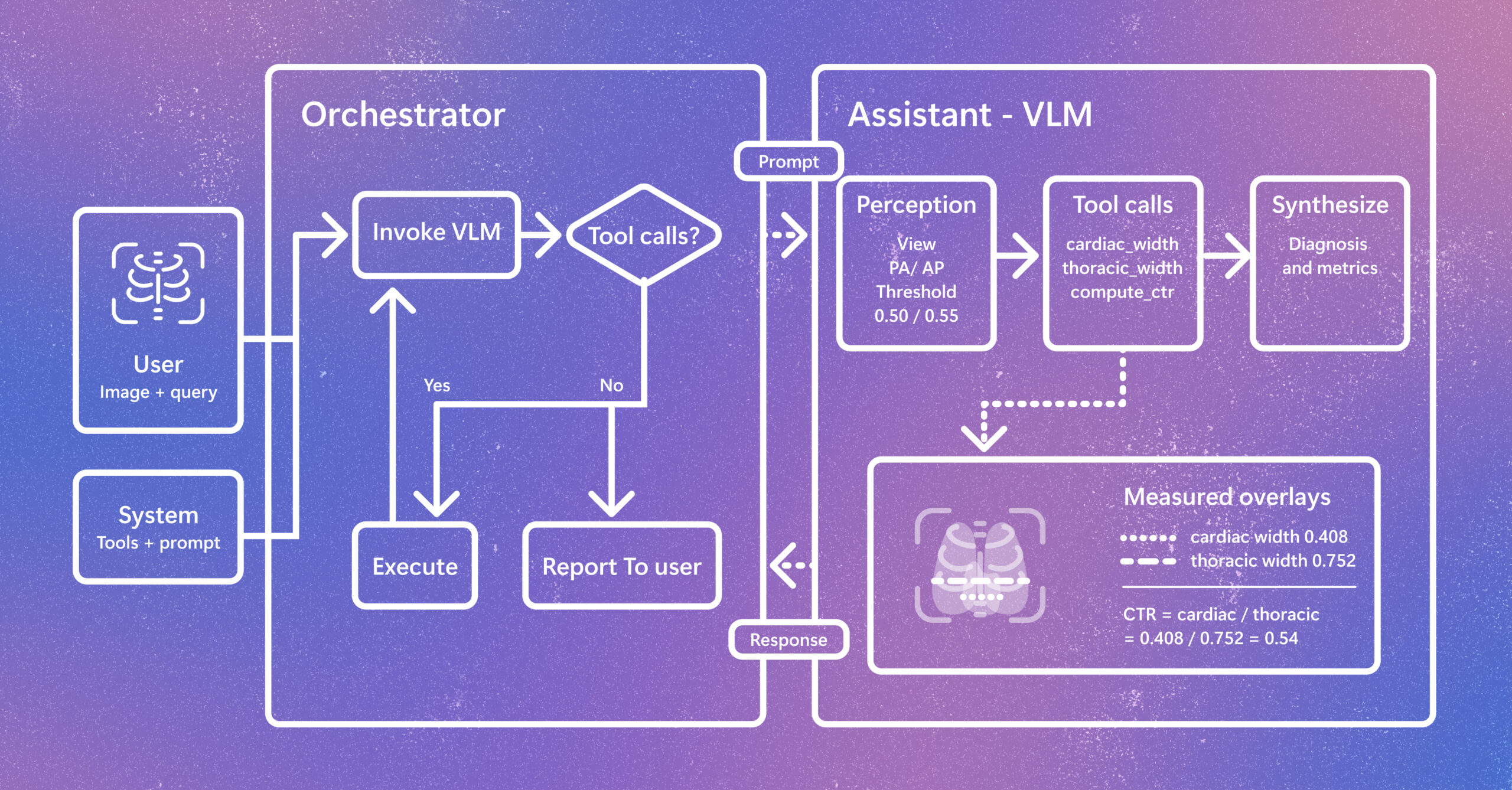
Introducing CARE-X: Towards Clinically Useful Radiology VLMs with Auxiliary Supervision, Reward-Aligned Learning, and Tool-Augmented Measurement

Radiology AI is evolving beyond report generation. CARE-X explores a unified approach that combines flexible reasoning, calibrated predictions, and measurement-based tools for chest X-ray interpretation. The post Introducing CARE-X: Towards Clinically Useful Radiology VLMs with Auxiliary Supervision, Reward-Aligned Learning, and Tool-Augmented Measurement appeared first on Microsoft Research.

We use cookies to run the site and, with your consent, for analytics and to show ads. See our Cookie Policy.