Skip to content
#federated learning Open access

AI-powered framework for advancing 5G and 6G wireless communication

Dec 2026 · International Journal of Informatics and Communication Technology (IJ-ICT) · 0 citations · 24 references
Software-Defined Networks and 5G

TL;DR

The results suggest that AI-driven coordinated optimisation could lead to a more adaptive management of resources, threat detection, and efficient operation of networks compared with traditional methods, paving the way for intelligence, security and energy-efficient 6G communication systems.


Abstract

A shift to 5G to 6G networks would provide better connectivity, transmission capacity, security, and latency, but there are still challenges such as dynamic resource allocation, energy consumption, network optimisation, and cybersecurity issues. This research presents an artificial intelligence (AI)-based approach to enhance the accuracy, efficiency and security of 5G and future 6G wireless networks. Adaptive spectrum and resource allocation is done using deep reinforcement learning (DRL), and AI traffic forecasting and dynamic beamforming helps reduce latency, boost throughput and ensure quality of service (QoS). Federated learning (FL) trains models at the distributed sites while minimizing the amount of raw data transmission, and generative adversarial networks (GANs) create representative samples of data for network and cybersecurity analysis. The anomaly detection feature powered by AI, along with the blockchain-based authentication, helps enhance access control and threat detection. The framework was tested and analyzed in a simulation environment built in Python and in comparison to traditional optimization. It performed an F1-score of 0.94, versus 0.82; AUC–ROC of 0.96, versus 0.86; and resource-allocation success rate (91% versus 75%). These results represent the relative increases of 14.6%, 11.6% and 21.3%. The results suggest that AI-driven coordinated optimisation could lead to a more adaptive management of resources, threat detection, and efficient operation of networks compared with traditional methods, paving the way for intelligence, security and energy-efficient 6G communication systems.
Read PDF

Similar papers

#edge computing Open access Sep 2026

A cognitive network framework for intelligent 5G systems with AI-based traffic analysis and adaptive optimization

This paper describes the design of a secure and sustainable communication framework that is specifically targeted for interactive mobile learning platforms and the data of the users are protected through effectively applying lightweight cryptographic methods, characterizing an adaptive risk based authentication model f...

Ghaida Muttashar Abdulsahib, Zaid Ali Hussein, Ahmed A. F. Osman et al. · 0 citations
Review Sep 2026

An Integrated Survey of Intelligent Security Frameworks for 6G Communication Networks: Reinforcement Learning, Privacy Preservation, Edge Intelligence, and Cross-Layer Optimization

With 6th-generation (6G) wireless communication networks on the horizon, a new era of ultra-low latency, massive device connectivity, intelligent automation, and human-to-human (H2H), human-to-machine (H2M) and machine-to-machine (M2M) communication convergence is approaching. 6G promises new horizons of next-generatio...

Unnati Ukanal · 0 citations
Conference Open access Sep 2026

Security Enhancement and Minimal Usage of Energy in MANETS

The Despite Mobile Ad Hoc Networks (MANETs) being an important communication paradigm, the intrinsic properties of MANETs, such as dynamic nature, lack of sufficient energy, and susceptibility to attacks, make it difficult to ensure security as well as improve efficiency. In this paper, a new framework for the enhancem...

CH V. Nagajyothi, Sunitha H. D. · 0 citations
Review Open access 2026

AI-Based Security Mechanisms for Intelligent Routing in 6G Networks: A Systematic Literature Review

Sixth-generation (6G) networks are expected to integrate artificial intelligence (AI) into distributed and highly adaptive communication infrastructures. This convergence creates opportunities for intelligent routing, but also exposes routing decisions, learning models and trust relationships to complex security threat...

Mohd Hilal Muhammad, Muhammad Khairul Zharif Nor A'Zam, Mohd Zhafri Mohd Zukhi · 0 citations
Conference Open access Sep 2026

Intelligent Resource Allocation Framework for 5G-Enabled Industrial IoT Using Deep Reinforcement Learning

The quickly deployed 5G-enabled systems of IIoT have created systems with unparalleled connectivity, ultra-low Latency, and massively connected devices. However, effective and secure resource allocation continues to be a problem in the face of ever-changing traffic patterns. This paper presents an Intelligent Resource...

Nidhi Mishra, M. Tandi · 0 citations
Review Open access Nov 2026

AI-Aware Physical-Layer Security for Trustworthy 6G: Threats, Evidence, and Assurance Gaps

G gaps are identified in adversarial over-the-air (OTA) validation, cross-layer threat modeling, reproducible Radio-Frequency datasets, and lifecycle evidence for body-centric and time-critical cyber-physical systems.

Jan Herbst, Wen-Qing Dai, Marten Fischer et al. · 0 citations

Related blog posts

MIT News · Artificial Intelligence Nov 17, 2026

Learning the language of machine learning

By studying the computational foundations of language learning, Associate Professor Jacob Andreas builds intelligent systems that can communicate effectively with humans.

Microsoft Research Blog Nov 16, 2026

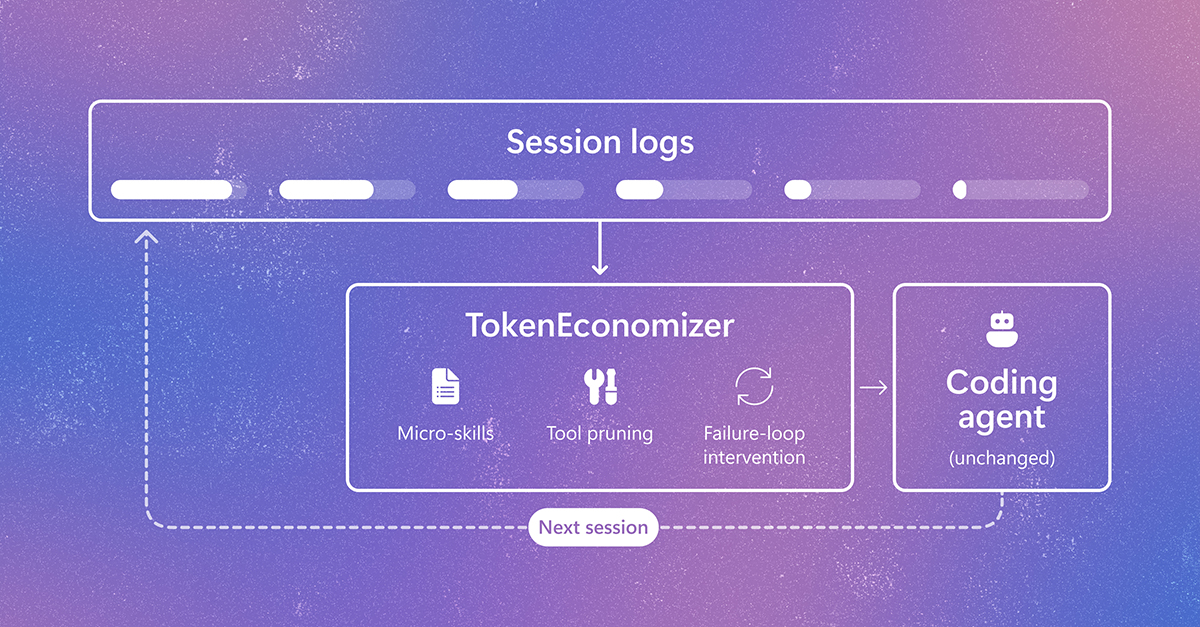
TokenEconomizer: Learning from Experience to Make AI Coding Agents More Efficient

AI coding agents are increasingly help developers fix bugs and build features largely on their own, but every interaction with their models consumes tokens. In each session, an agent sends instructions, tool descriptions, and session history to its model. Most efforts to reduce this cost focus on individual tasks. Yet developers return to the same […] The post TokenEconomizer: Learning from Experience to Make AI Coding Agents More Efficient appeared first on Microsoft Research.

We use cookies to run the site and, with your consent, for analytics and to show ads. See our Cookie Policy.
