Vision-Language Models Are Joint Denoisers in Robotic Action Generation
Xicheng GongWenxuan SongChengze LiuQiwei LiQize YuJiaolong YangHaoang LiYadong Mu
Nov 2026
Artificial IntelligenceComputer VisionRobotics
Abstract
Diffusion-based vision-language-action (VLA) models cascade pretrained vision-language models (VLMs) with diffusion action experts, but typically restrict the VLM to providing static conditioning. This separation limits how much pretrained perception and reasoning can guide action generation, especially in out-of-distribution settings. We introduce JADE, a Joint Action DEnoiser that enables the VLM and action expert to jointly refine actions. Our key insight is that structured action latents allow the VLM to read the current noisy action together with visual observations and language instructions. At every denoising step, the VLM contextualizes the noisy action and guides the action expert through gated cross-attention, so that its guidance evolves with the action being generated. We further supervise the VLM to recover clean action latents from noisy ones, which gives it a direct action-learning signal and couples perception with control. Additionally, joint denoising enables JADE to generate actions with fewer sampling steps, helping offset the additional cost of VLM participation. An adaptive step-size schedule further balances task performance and inference latency. On RoboDojo, JADE achieves an average success rate of 12.67%, the highest among the evaluated $\pi_{0.5}$-based methods, and is competitive with recent VLA and WAM foundation models pretrained at scale. It also improves performance on RoboTwin 2.0 and raises the average success rate across four real-world bimanual tasks by 20.8 percentage points compared with $\pi_{0.5}$.

This paper investigates developing real-world perception for active agents, proposes Gibson Environment for this purpose, and showcases a set of perceptual tasks learned therein.
F. Xia, Amir Zamir, Zhi-Yang He et al.· 2018 IEEE/CVF Conference on...· 1,069 citations· ⚡112
This publication proposes a definition and a classification of agile software development approaches and analyses ten software development methods that can be characterized as being "agile" against the defined criterion.
P. Abrahamsson, O. Salo, Jussi Ronkainen et al.· arXiv.org· 727 citations· ⚡54
The study shows that agile practices improve both informal and formal communication, but indicates that, in larger development situations involving multiple external stakeholders, a mismatch of adequate communication mechanisms can sometimes even hinder the communication.
M. Pikkarainen, Jukka Haikara, O. Salo et al.· Empirical Software Engineeri...· 401 citations· ⚡48
The results indicate that software engineering work practices are chosen opportunistically, adapted and configured to provide value under the constrains imposed by the startup context.
Nicolò Paternoster, Carmine Giardino, M. Unterkalmsteiner et al.· Information and Software Tec...· 394 citations· ⚡54
The possibility of inferring high-dimensional data inference in a model that consists of a prior and an auxiliary differentiable constraint given some additional information is considered, thereby allowing a range of potential applications in adapting models to new domains and tasks.
Alexandros Graikos, Esmeralda S. Whitammer, N. Jojic et al.· Neural Information Processin...· 316 citations· ⚡15
Related blog posts
MIT News · Artificial Intelligence· news.mit.eduJul 30, 2026
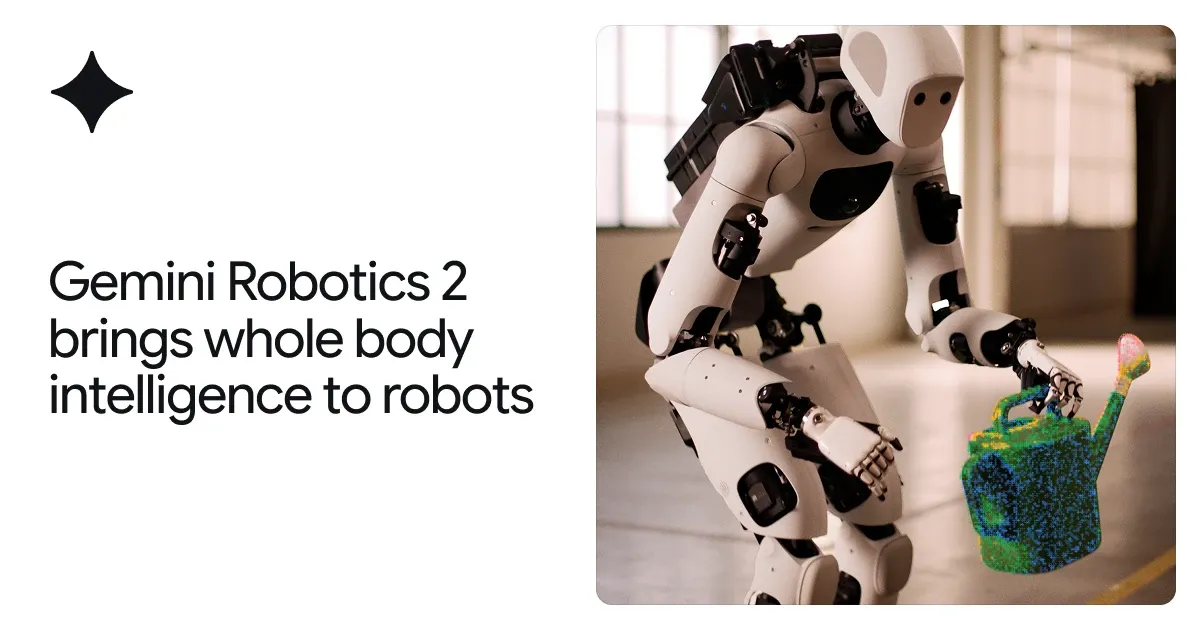
From feet to fingertips — we are teaching robots intelligent whole-body control, fine dexterity, and teamwork to complete a broad range of complex tasks.
Known for his clear and elegant writing style, Bertsekas shaped fields from control and optimization to large-scale computation and artificial intelligence.
We use cookies to run the site and, with your consent, for analytics and to show ads.
See our Cookie Policy.